

Maine cultivation facilities generate more than ordinary commercial trash. Plant trimmings, root balls, spent growing media, branded packaging, pesticides, fertilizers, testing materials, and extraction solvents can all fall under different cannabis, environmental, and hazardous waste rules.
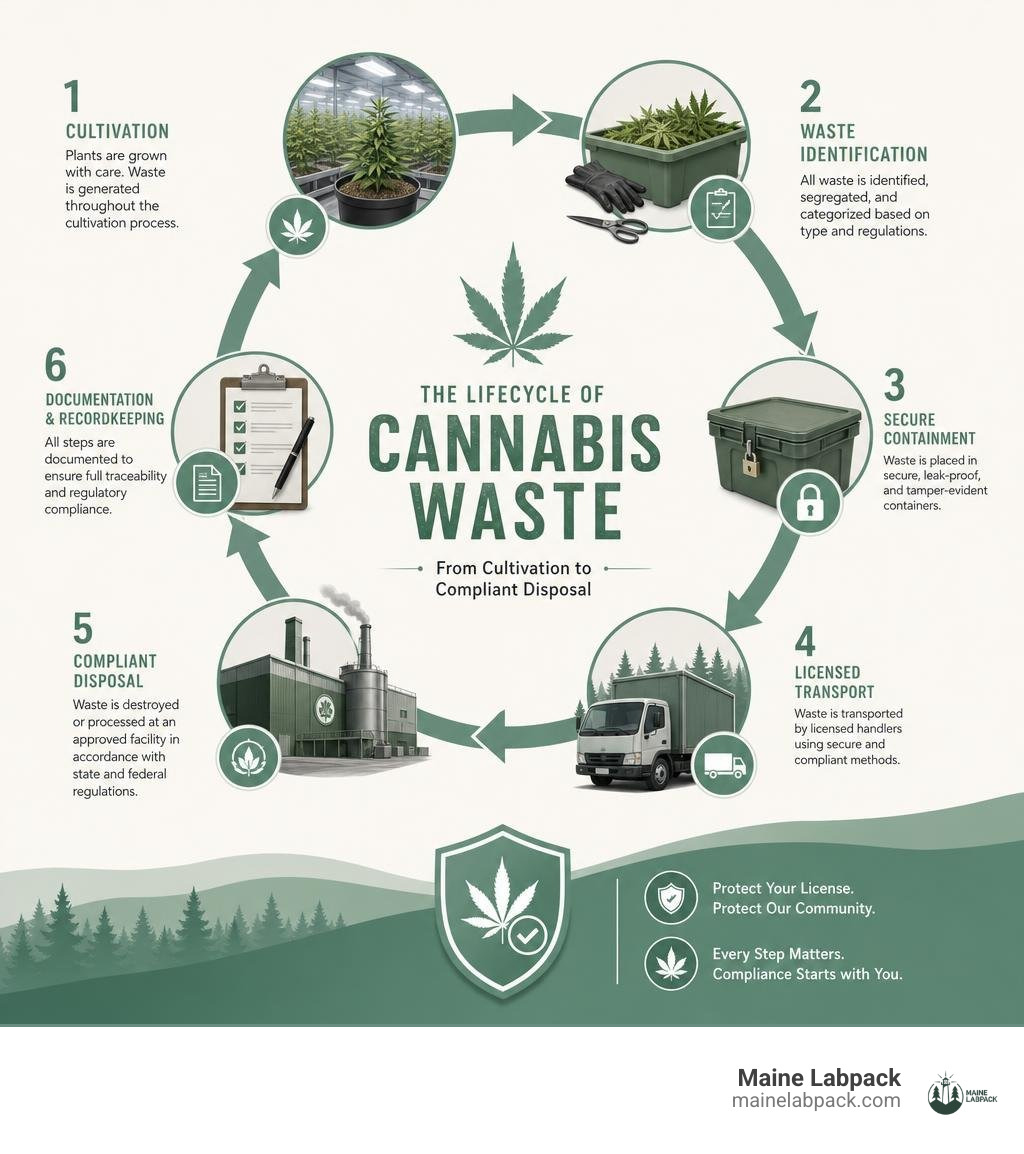
For operators across Maine, compliant disposal is not just housekeeping. Cannabis waste must be tracked, secured, rendered unusable when required, and handled in a way that prevents diversion and protects soil, water, workers, and the public. Standard commercial waste services are generally not designed to manage unprocessed cannabis waste, Metrc documentation, secure destruction, or hazardous chemical streams.
A compliant program starts with identifying each waste stream, separating regulated materials at the source, and working with a provider that understands Maine Office of Cannabis Policy (OCP), Maine Department of Environmental Protection (DEP), and federal hazardous waste requirements.
What Regulations Govern Cannabis Waste Management in Maine?
Cannabis waste in Maine is primarily shaped by OCP rules for cannabis operations and DEP rules for environmental protection. OCP focuses on inventory control, anti-diversion, storage, destruction, and seed-to-sale tracking. DEP requirements become especially important when waste includes solvents, pesticides, fertilizers, laboratory chemicals, or other materials that may qualify as hazardous waste.
Maine cannabis businesses must use Metrc to document regulated cannabis waste. Facilities should record the waste type, weight, reason for disposal, destruction date, and final handling method. Waste should remain secure and traceable until it is rendered unusable and unrecognizable or otherwise transferred for compliant disposal.
For detailed operational guidance, Maine operators can review this Guide to Cannabis Waste Management in Maine and A Practical Guide to Cannabis Waste Management.
Rendering Organic Plant Waste
Maine cannabis plant waste typically must be made unusable and unrecognizable before disposal. This often involves grinding or mixing cannabis material with enough non-cannabis material that it cannot be recovered or consumed.
Common mixing materials include soil, sawdust, mulch, food waste, shredded paper, cardboard, or other approved non-cannabis waste. This Rendering step helps satisfy anti-diversion requirements before the material moves to composting, landfilling, or another approved disposal pathway.
Hazardous Waste and Solvent Rules
Organic plant waste is often the largest waste stream, but chemical waste can create the highest compliance risk. Extraction solvents, pesticides, fertilizers, lab reagents, and contaminated testing materials may be regulated under the federal Resource Conservation and Recovery Act (RCRA) and Maine DEP hazardous waste rules.
These materials should not be mixed with plant waste, placed in ordinary trash, or poured down drains. They must be identified, containerized, labeled, stored, transported, and disposed of according to applicable hazardous waste requirements.
Which Waste Management Firms Serve Cannabis Facilities in Maine?
Traditional trash haulers may handle ordinary commercial waste, but most are not equipped to manage cannabis-specific compliance. They generally do not assist with Metrc documentation, secure destruction, rendering support, hazardous waste classification, or transportation to permitted treatment, storage, and disposal facilities.
Maine cannabis operators typically need a specialized provider that understands both cannabis regulations and hazardous waste handling. Maine Labpack provides Cannabis Waste Management Services for cultivation, extraction, and testing operations across Maine and New England. Their team can support organic plant waste rendering, secure packaging destruction, solvent disposal, laboratory waste, and related compliance documentation.

Specialized Providers vs. Traditional Haulers
The main difference is liability. A traditional hauler moves trash; a specialized cannabis and hazardous waste firm helps manage regulated materials from generation through final disposal.
Specialized providers can help facilities classify waste, choose proper containers, coordinate pickup schedules, maintain manifests, and reduce the risk of disposal violations. For a broader planning framework, see From Plant to Plan: Crafting Your Cannabis Waste Management Strategy.
What Types of Cannabis Waste Must Maine Cultivators Manage?
Cultivation facilities should separate waste streams as soon as they are generated. Mixing incompatible materials can increase costs, create safety risks, or trigger avoidable regulatory issues.
| Waste Category | Typical Materials | Disposal/Recycling Method | Oversight |
|---|---|---|---|
| Organic Plant Waste | Stems, leaves, root balls, failed flower | Rendering, composting, or landfilling | Maine OCP & Metrc |
| Agricultural Media | Soil, coco coir, rockwool | Recycling, composting, or disposal | Maine DEP |
| Hazardous Chemical Waste | Solvents, pesticides, reagents | Licensed hazardous waste transport to approved facility | EPA, RCRA, Maine DEP |
| Packaging & Consumer Waste | Branded boxes, jars, vape-related materials | Secure destruction, recycling, or landfilling | Maine OCP & local rules |
For practical day-to-day guidance, review Disposing of Grow Room Waste: A Pocket Guide.
Plant Waste, Soil, and Growing Media
Plant trimmings, stalks, root balls, and spent growing media are common outputs from cultivation. If soil or media contains cannabis root fragments or residue, it may need to be handled as cannabis waste before composting or disposal.
Solvents, Lab Waste, and Chemicals
Extraction and testing operations may generate spent solvents, contaminated containers, reagents, microbiology materials, or other regulated waste. Maine Labpack supports Solvent Testing Waste, Testing Lab Waste, and Microbiology Waste that requires specialized handling.
Packaging and Secure Destruction
Branded packaging, labels, and product containers can create diversion and misuse concerns. Secure Destruction helps prevent unauthorized reuse by shredding, destroying, or otherwise rendering materials unusable.
How Do Specialized Waste Firms Support Maine Cannabis Facilities?
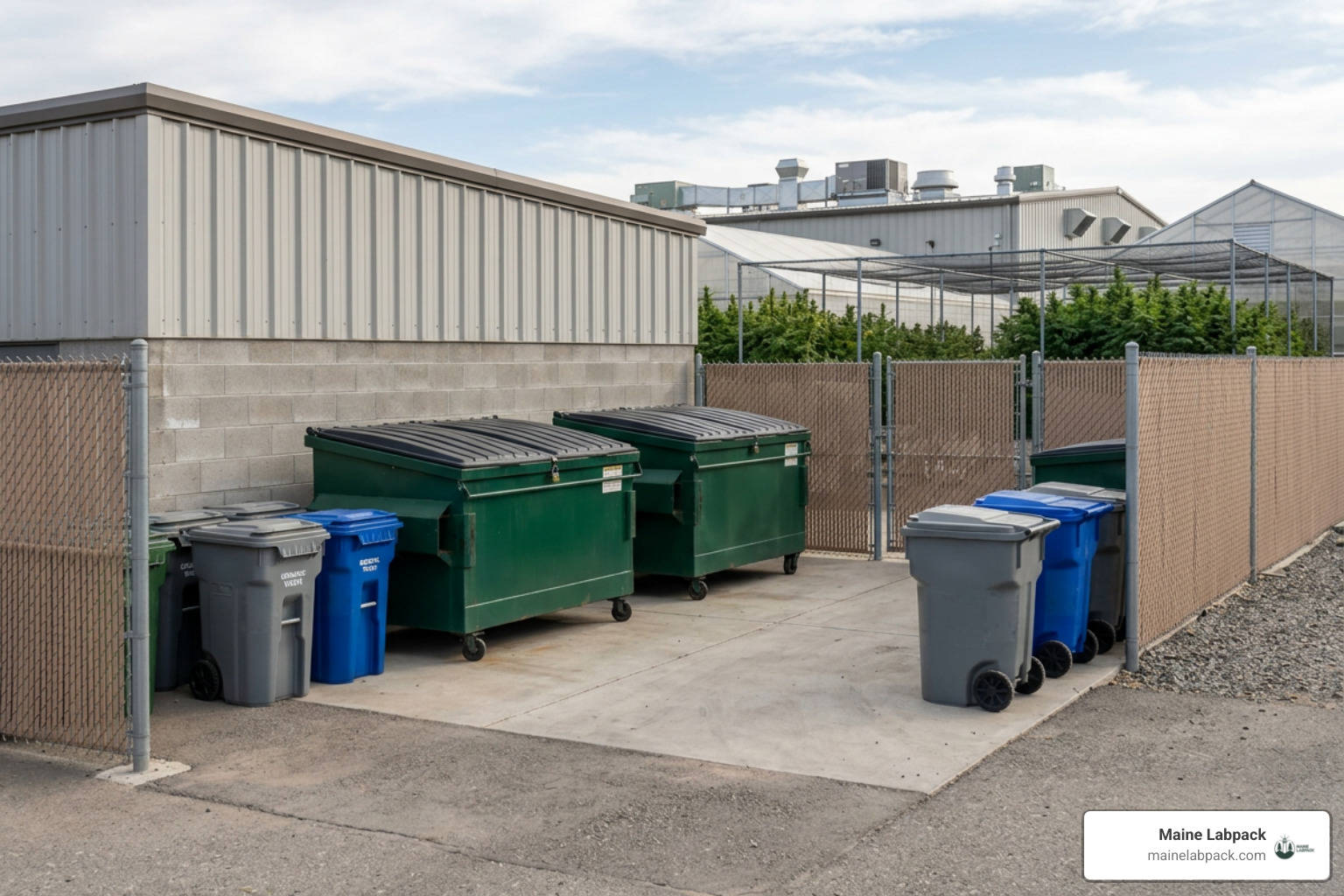
Specialized waste firms act as compliance partners, not just pickup vendors. They help cannabis facilities build disposal workflows that match harvest cycles, extraction schedules, storage limits, and documentation needs.
Secure Containers and Storage
Cannabis waste should be stored in secure, limited-access areas while awaiting pickup or destruction. Specialized providers can supply lockable containers for cannabis waste and appropriate drums, buckets, or other approved containers for hazardous chemical waste.
On-Site Rendering and Pickup Schedules
Facilities may generate waste weekly, seasonally, or in large batches after harvest. A specialized provider can coordinate recurring or on-call pickups and, when appropriate, assist with on-site rendering so waste is made unusable before it leaves the facility.
Frequently Asked Questions About Cannabis Waste in Maine
Can Cannabis Waste Go in a Standard Commercial Dumpster?
Not unless it has first been handled in accordance with applicable cannabis waste rules. Unprocessed cannabis waste should not be placed in ordinary trash because it can create diversion and compliance risks.
What Does Rendering Cannabis Waste Mean?
Rendering means making cannabis waste unusable and unrecognizable, often by grinding or mixing it with non-cannabis material such as soil, compost, sawdust, cardboard, or shredded paper.
How Should Extraction Solvents and Lab Chemicals Be Managed?
Solvents, fertilizers, pesticides, and lab reagents may qualify as hazardous waste. They should be stored in compatible, labeled containers and managed through a qualified hazardous waste provider rather than mixed with plant waste or poured down drains.
Need a Compliant Cannabis Waste Plan in Maine?
Maine Labpack helps cannabis cultivation, extraction, and testing facilities manage regulated waste safely and efficiently. As a hazardous waste management company serving Maine and New England, Maine Labpack can support plant waste rendering, secure destruction, solvent disposal, laboratory waste, compliant containers, pickup scheduling, and documentation.
If your facility needs a safer, simpler way to manage cannabis waste, explore Maine Labpack’s Cannabis Waste Management Category or contact Maine Labpack to discuss a customized disposal plan.