
Last updated on June 3rd, 2026 at 02:52 pm
Disposing of grow room waste requires following strict state and federal regulations to render plant material unusable, properly categorize waste streams, and ensure environmental compliance. Here’s what you need to know:
Key Steps for Disposing of Grow Room Waste:
- Categorize your waste – Separate plant matter, hazardous chemicals, and universal waste
- Render plant waste unusable – Mix cannabis with approved materials at a 50:50 ratio
- Choose an approved disposal method – Composting, landfill, or incineration based on local regulations
- Handle hazardous waste properly – Use licensed professionals for solvents, pesticides, and chemicals
- Document everything – Maintain records to prove regulatory compliance
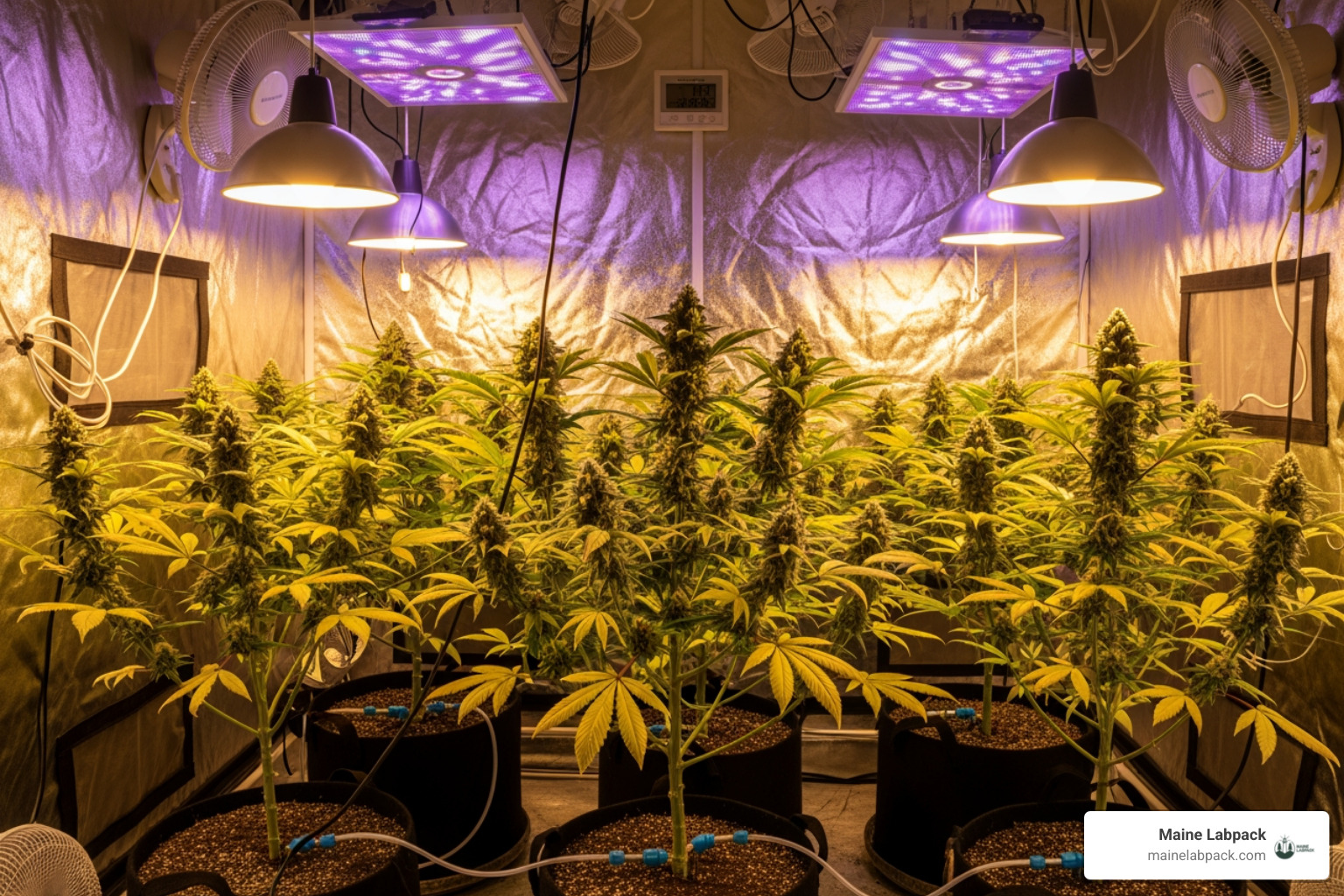
The rapidly growing cannabis industry carries a serious responsibility: managing the waste generated by every cultivation facility. From plant stalks and used growing media to spent solvents and burned-out lights, improper waste disposal is more than an environmental issue—it’s a compliance risk that can lead to hefty fines, license suspension, or even criminal penalties.
Waste disposal rules vary by type, state, and even county. This guide breaks down how to identify, categorize, and dispose of every type of waste your grow room produces. Whether you’re dealing with plant trimmings, hazardous extraction solvents, or old equipment, you’ll learn the right way to handle it—protecting your business, your community, and the environment.
Step 1: Identify and Categorize Your Grow Room Waste
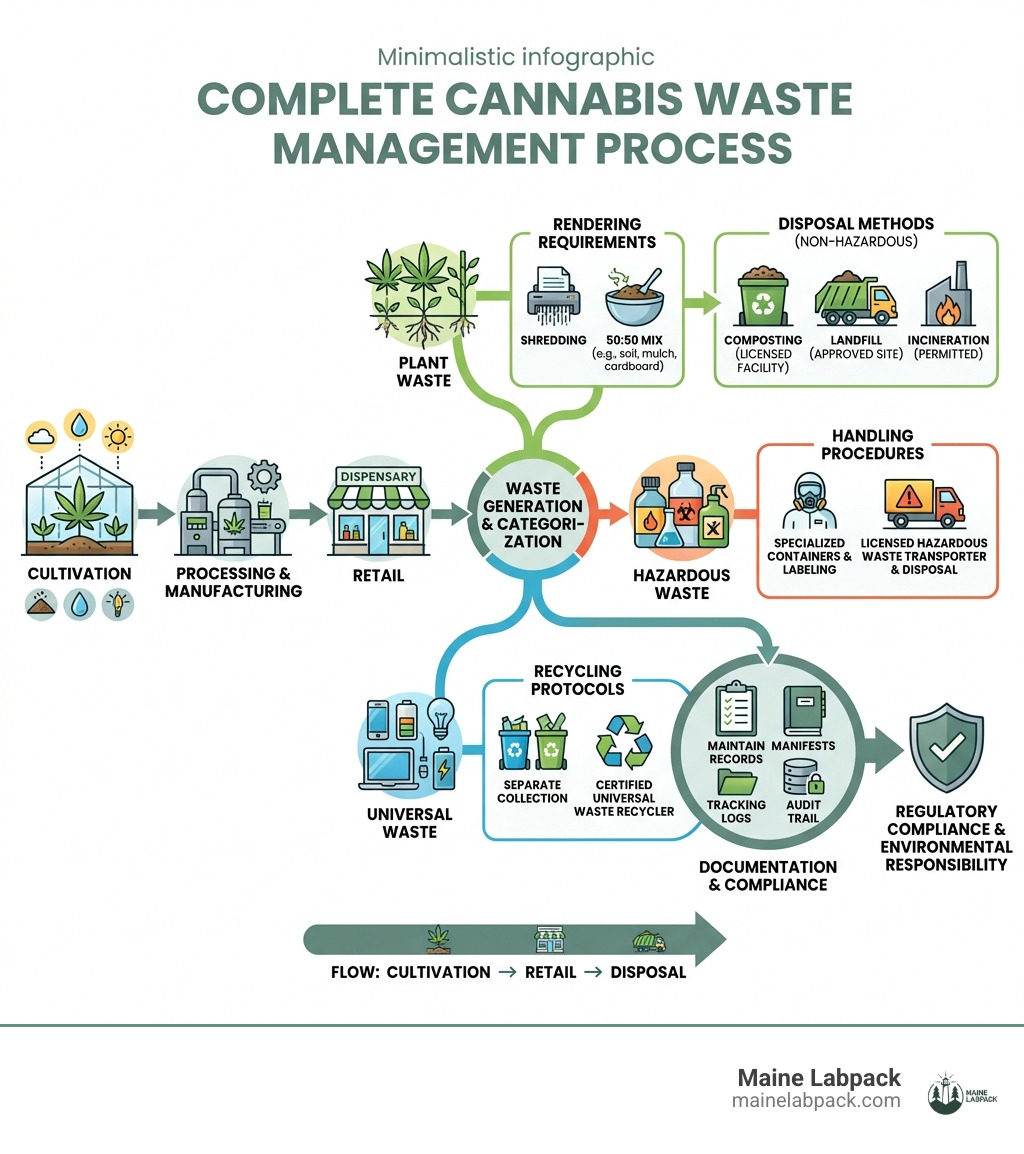
Before moving waste from your facility, you must know what you’re dealing with. Proper identification and categorization are the bedrock of compliant and environmentally responsible disposing of grow room waste. Like sorting laundry, different types of waste require different handling, but the stakes are much higher.
Cannabis waste, in the eyes of regulators, is broadly defined as any material that has come into contact with cannabis plants during cultivation, processing, or dispensing. This can include everything from the plant itself to the soil it grew in, and even the chemicals used to keep it healthy.
Understanding the different types of waste is crucial because each category has its own set of rules for handling, storage, and disposal. For a deeper dive into these classifications, Maine Labpack offers a comprehensive resource: A guide to cannabis waste management in Maine.
What is Non-Hazardous Cannabis Waste?
Most grow room waste is non-hazardous, primarily organic plant material. While it doesn’t pose a chemical threat, it requires specific handling due to its cannabis origins.
Non-hazardous cannabis waste often includes:
- Plant material: Stalks, stems, leaves, roots, and any other parts of the cannabis plant that are not intended for sale or consumption. This also includes “usable trim” that might not meet quality standards for sale but still needs proper disposal.
- Growing media: Soil, coco coir, rockwool, or other inert substrates used to grow the plants. As long as these haven’t been contaminated with hazardous chemicals, they typically fall into this category.
While these materials might seem benign, they are still considered cannabis waste and must be rendered unusable and unrecognizable before disposal to prevent diversion. This is a critical step in disposing of grow room waste compliantly.
What is Hazardous Cannabis Waste?
Hazardous cannabis waste includes any material posing a risk to human health or the environment due to its chemical properties. This category demands stringent handling, storage, and disposal protocols, often requiring specialized companies like Maine Labpack.
Common hazardous waste streams in a grow room setting include:
- Extraction solvents: Butane, ethanol, propane, isopropyl alcohol, and other chemicals used in the extraction process to create concentrates. These are often ignitable, corrosive, or toxic.
- Pesticides and chemical fertilizers: Any unused, expired, or contaminated pesticides, herbicides, fungicides, and synthetic fertilizers. Even empty containers that previously held these substances can be classified as hazardous.
- Contaminated materials: Wipes, gloves, protective equipment, or absorbent materials that have come into contact with hazardous chemicals.
- Testing Lab Waste: Laboratories that test cannabis products generate a unique set of hazardous wastes, including solvent testing waste and chemical reagents. Maine Labpack specializes in testing lab waste disposal.
Ignoring hazardous waste regulations can lead to severe penalties. For comprehensive guidance on managing these materials, Maine Labpack offers expert services in hazardous waste disposal.
Don’t Forget Universal Waste
Universal waste is an often-overlooked but important category. It includes common hazardous materials subject to relaxed, but not non-existent, management rules. These items require proper recycling and disposal.
Typical universal wastes from a grow room include:
- Grow lamps and bulbs: Fluorescent tubes, high-intensity discharge (HID) lamps, and LED bulbs often contain mercury, lead, or other heavy metals.
- Batteries: Rechargeable batteries from equipment, emergency lighting, or even personal devices can contain hazardous metals.
- Ballasts: Used in older HID lighting systems, these can contain PCBs (polychlorinated biphenyls), which are highly toxic.
- Electronics: Old computers, monitors, and other electronic equipment that are no longer functional.
These items cannot simply be thrown in the regular trash. They require specialized recycling to prevent harmful substances from leaching into landfills.
Step 2: Render Plant Waste Unusable and Unrecognizable
This step is a unique and critical aspect of disposing of grow room waste compared to other industries. To prevent diversion into the illicit market, regulators require all cannabis plant waste to be rendered unusable and unrecognizable before it leaves your facility. Simply throwing it in a dumpster is not enough; it must be transformed.
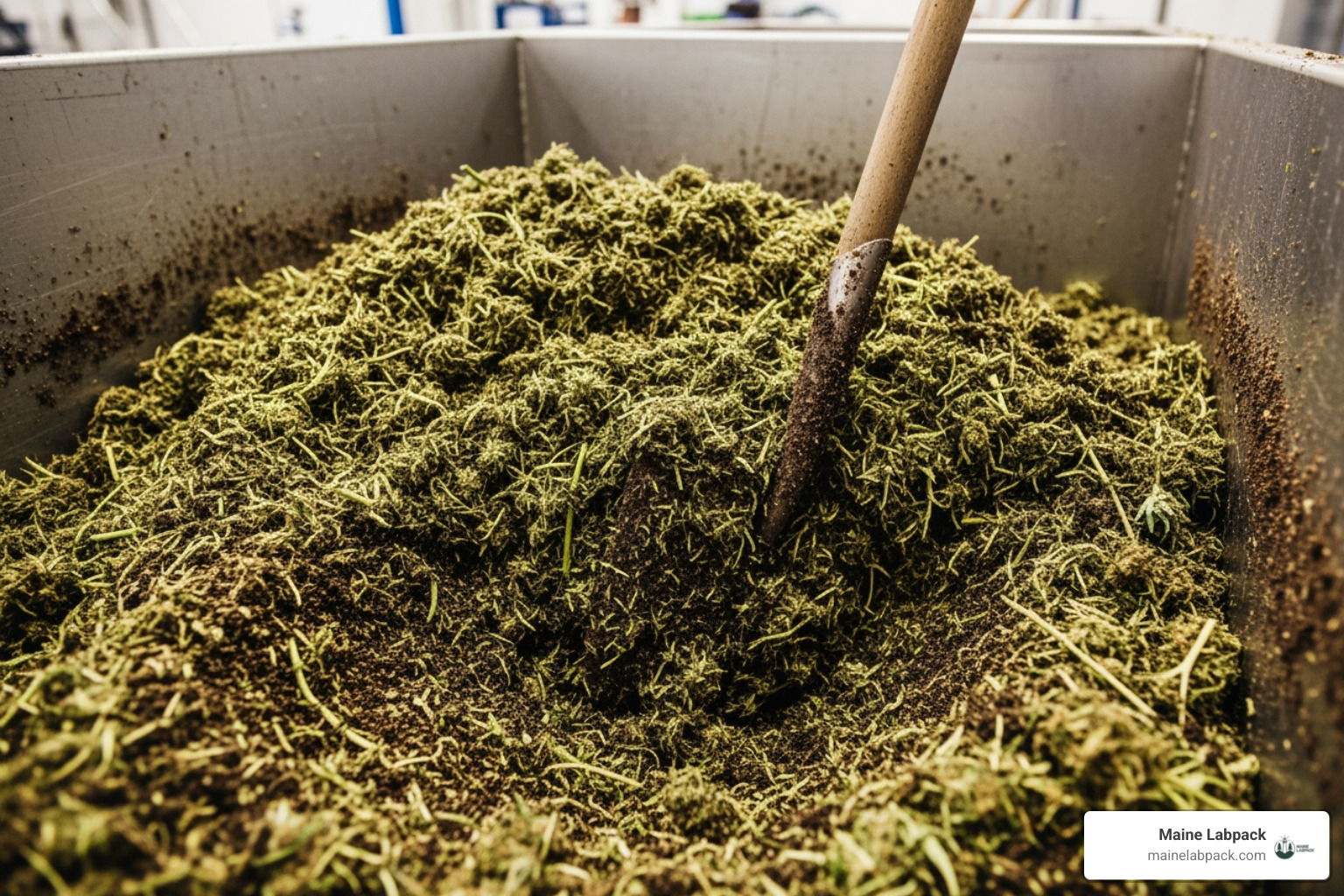
The core principle is ensuring no one can extract usable cannabis from the waste or even identify it as such. This requirement is a cornerstone of compliance across New England.
The most common method involves grinding the cannabis plant material and thoroughly mixing it with other approved, non-cannabis waste. The general rule, often called the “50:50 ratio rule,” dictates that cannabis waste must be mixed with at least an equal amount (by weight or volume, depending on state regulations) of non-cannabis waste. This ensures a homogenous mixture where the cannabis is effectively diluted and obscured.
Many facilities use industrial shredders or grinders to break down the plant material. This shredded material is then combined with other waste, often in large bins or dumpsters, and thoroughly mixed. Some states even require video surveillance of this rendering process to provide an auditable record of compliance. While specifics can vary, the intent is universal: eliminate any possibility of diversion. For an example of detailed destruction guidelines, you can refer to resources like the Cannabis Destruction Guide. Maine Labpack also offers expertise in Rendering services.
Acceptable Mixing Materials
Choosing the right mixing materials is important. They need to be readily available, non-hazardous, and effective at obscuring the cannabis waste. Common acceptable mixing materials include:
- Food waste: Leftover food scraps from employee lunches or other non-cannabis food processing.
- Yard debris: Grass clippings, leaves, small branches, or other organic garden waste.
- Soil: Used potting soil or fresh soil. This is a very common and effective mixing agent.
- Sand: Inexpensive and dense, sand works well to create a uniform mixture.
- Cardboard: Shredded cardboard can be an excellent absorbent and bulking agent.
- Cat litter: Its absorbent properties and fine texture make it a good mixing material.
- Compostable materials: Any other non-cannabis organic materials that are suitable for composting.
- Non-compostable materials: In some cases, non-compostable items like paper or general trash can be used, provided they effectively render the cannabis unusable and unrecognizable.
The key is to create a mixture so thoroughly combined that separating the cannabis becomes impractical. Once rendered, this mixed waste can proceed to the next step of disposal, typically as general solid waste.
Step 3: Choose an Approved Method for Disposing of Grow Room Waste
After rendering your plant waste unusable, select an approved disposal method in accordance with your state and local rules. Compliance documentation is essential, and many jurisdictions require you to work with licensed waste haulers (or approved facilities) that understand cannabis-specific handling, chain-of-custody, and recordkeeping.
Composting
Composting is an environmentally friendly method for disposing of grow room waste, particularly for rendered, non-hazardous plant material. It transforms organic waste into nutrient-rich soil amendments, reducing landfill burden and promoting a circular economy.
- On-site composting: Some larger operations may opt for on-site composting with the proper space and permits. This requires careful management to be effective and avoid pests or odors.
- Off-site facilities: More commonly, facilities partner with permitted off-site composting facilities equipped to handle large volumes of organic waste.
The environmental benefits are clear: composting reduces greenhouse gas emissions from landfills, conserves landfill space, and creates valuable soil. For more insights, the Cannabis Waste Management Factsheet offers a good overview.
Landfill
For rendered waste that isn’t composted, disposal in a permitted landfill is a common option. This method is straightforward but still requires strict adherence to regulations.
The key is that only the rendered and mixed cannabis waste can go to a landfill. It must be indistinguishable from other solid waste to prevent diversion and meet the landfill’s acceptance criteria. Your chosen waste hauler will transport this mixed material to an approved solid waste disposal facility.
In-Vessel Digestion and Incineration
In-vessel digestion and incineration are advanced, controlled options for disposing of grow room waste, particularly for large volumes or specific waste types.
In-Vessel Digestion: Also known as anaerobic digestion, this process breaks down organic material in an enclosed, oxygen-free system. It produces biogas (a renewable energy source) and a nutrient-rich digestate. Some regions have permitted in-vessel digestion centers that can accept rendered cannabis waste.Incineration: This involves burning waste at high temperatures in specialized incinerators. It significantly reduces waste volume and can sometimes generate energy, but it must be done in licensed facilities to control emissions. Incineration is useful for certain hazardous wastes or for ensuring complete destruction of plant material. Some companies offer specialized incinerators for medical marijuana waste. The resulting ash must also be properly disposed of.

Both methods require specialized facilities and are typically handled by third-party waste management companies.
Step 4: Manage Hazardous and Special Waste Streams
Managing hazardous waste is the most complex and risk-laden aspect of disposing of grow room waste. Improper management carries significant environmental and legal liabilities. Facilities in New England must comply with the federal Resource Conservation and Recovery Act (RCRA) and state-specific hazardous waste regulations.
RCRA compliance dictates how hazardous waste is identified, stored, transported, and disposed of. A critical component is determining your “generator status” (e.g., Conditionally Exempt, Small Quantity, Large Quantity), which dictates the specific rules you must follow. Maine Labpack has an excellent resource explaining How Generator Status Impacts Hazardous Waste Collection.
Partnering with professional disposal services for hazardous waste is often a legal necessity. Specialists like Maine Labpack have the expertise, permits, and equipment to safely handle, transport, and dispose of dangerous materials, ensuring your facility remains compliant and protected. Avoiding common pitfalls is key; learn more about preventing issues in 6 Common Hazardous Waste Handling Mistakes and How to Avoid Them.
Handling Hazardous Waste from Your Grow Room
Let’s break down the specific types of hazardous waste you might encounter and how they need to be handled:
- Solvent-soaked materials: Any rags, wipes, or absorbent materials used to clean up spills of extraction solvents (butane, ethanol, etc.) are considered hazardous. They must be collected in appropriate containers and disposed of as hazardous waste. This also applies to Solvent Testing Waste from lab operations.
- Ignitable waste: Many solvents and some cleaning agents are ignitable and must be stored in fire-safe containers, away from ignition sources.
- Corrosive waste: Acids and bases used for pH adjustment or cleaning can be corrosive and require specialized storage to prevent leaks.
- Toxic waste: Pesticides, certain fertilizers, and heavy metals are toxic and must be handled with extreme care to prevent exposure and contamination.
- Chemical Lab Pack: For diverse small quantities of hazardous chemicals, a chemical lab pack service is often used. This involves safely packaging various materials into drums for compliant disposal. Maine Labpack offers comprehensive Chemical Lab Pack services.
Proper storage is critical. Hazardous waste must be kept in compatible, labeled containers, in designated areas, and for no longer than permitted by your generator status. For specific guidance on storage requirements in Maine, refer to Maine Hazardous Waste Storage Requirements.
Managing Wastewater and Fertigation Runoff
Wastewater and fertigation runoff present another significant challenge. This water can contain high levels of nutrients, salts, and residual contaminants, making direct discharge into sewers or waterways problematic.
- Wastewater hauling costs: For smaller operations, wastewater may need to be collected and hauled off-site by a licensed waste hauler, which can be costly.
- Publicly Owned Treatment Works (POTW): Discharging to a municipal POTW requires a permit and often pre-treatment to reduce contaminant levels to meet local ordinances.
- On-site treatment: Larger facilities might invest in on-site wastewater treatment systems, from simple filtration to more advanced technologies.
- Reverse Osmosis (RO): RO removes dissolved solids and salts, allowing water reuse or safer discharge, but it produces a concentrated brine waste that also requires disposal.
- Thermal evaporation: This energy-intensive process heats wastewater to evaporate clean water, leaving a concentrated sludge that reduces liquid waste volume.
- Zero Liquid Discharge (ZLD): ZLD systems aim to treat and recycle all wastewater on-site, eliminating liquid discharge. While expensive, ZLD offers maximum environmental protection and compliance.
The substantial costs of wastewater management, especially hauling, make investing in on-site treatment or water efficiency a smart long-term strategy.
Best Practices for Sustainable Cannabis Waste Management
Beyond compliance, sustainable practices for disposing of grow room waste can lead to operational efficiencies, cost savings, and an improved brand reputation. It’s about moving from simply “getting rid of it” to “managing it smartly.”
Waste Minimization
The best waste management strategy is to generate less waste. This involves:
- Optimizing grow processes: Efficient nutrient delivery, precise watering, and disease prevention can reduce plant loss and the need for chemical treatments.
- Careful purchasing: Buying only what you need reduces expired chemicals and unused supplies.
- Equipment longevity: Investing in durable equipment and performing regular maintenance reduces electronic waste.
Waste Tracking and Record Keeping
Meticulous record-keeping is a regulatory requirement in the cannabis industry. Every gram of cannabis waste, from generation to final disposal, must be accounted for.
- Manifests: Hazardous waste shipments require detailed manifests that track the waste from your facility to its final disposal site.
- Disposal logs: Maintain comprehensive logs of all waste types, quantities, dates of generation, rendering activities, and final disposal methods.
- Certificates of Destruction: Always obtain and retain certificates of destruction or disposal from your waste management partners.
These records prove your compliance during audits and protect your business from liability. For a practical guide on documentation, Maine Labpack provides Disposing of Grow Room Waste: A Pocket Guide. Maintaining overall Hazmat Compliance is key for any facility dealing with chemicals.
Recommended Personal Protective Equipment (PPE)
Safety first! When handling any type of waste, especially hazardous materials, appropriate Personal Protective Equipment (PPE) is non-negotiable.
- Gloves: Chemical-resistant gloves (nitrile, neoprene, or butyl rubber) are essential when handling solvents, pesticides, or corrosive substances.
- Goggles/Face Shields: Protect eyes from splashes, dust, or flying debris.
- Coveralls/Protective Clothing: Disposable or washable coveralls protect skin and clothing from contamination.
- Respirators: Required when working with airborne particulates or chemical fumes. Ensure proper fit testing and cartridge selection.
- Boots: Steel-toed or chemical-resistant boots protect feet from spills and punctures.
- Ear protection: Important when operating noisy machinery like shredders.
Always consult Safety Data Sheets (SDS) for specific chemicals to determine the required PPE.
Opportunities for Waste Reduction and Repurposing
Innovative facilities look beyond disposal to reduction and even revenue generation from their waste streams.
| Strategy | Description | Benefits |
|---|---|---|
| Composting | Changing rendered plant material and organic growing media into nutrient-rich soil amendments. | Reduces landfill waste, creates valuable soil, lowers disposal costs. |
| Repurposing Stalks | Processing cannabis stalks and stems into fibers for textiles, bioplastics, or animal bedding. | Creates new products, generates potential revenue, reduces waste volume. |
| Wastewater Recycling | Treating and reusing irrigation runoff and facility washdown water within the grow operation. | Conserves water, reduces discharge, lowers water utility costs. |
- Improve water efficiency: Implement closed-loop irrigation, optimized watering schedules, and efficient fixtures to reduce wastewater.
- Repurpose rendered stalks: Shredded stalks can be used as absorbent animal bedding or a growing medium for other crops.
- Explore construction materials: Hempcrete is a sustainable building material. While specific to hemp, similar applications for cannabis stalks could emerge.
- Generate revenue from waste: Turning waste into by-products like fiber, biofuel, or activated carbon is an exciting frontier for the industry.
By adopting these best practices, cannabis cultivators can meet their regulatory obligations for disposing of grow room waste and operate more sustainably and efficiently.
Frequently Asked Questions about Disposing of Grow Room Waste
Navigating the rules for disposing of grow room waste can be tricky, and many common questions arise. Here are answers to some of the most frequent queries:
Can I put cannabis plant waste in my regular trash?
No, you generally cannot put raw cannabis plant waste directly into your regular trash. This often leads to violations. State regulations across New England prohibit disposing of identifiable cannabis plant material as general solid waste unless it is first rendered unusable and unrecognizable.
The core rule is the “rendering unusable” requirement, often involving grinding the plant material and mixing it with at least an equal amount (50:50 ratio) of non-cannabis waste (like soil, food waste, or cat litter). This mixture must be homogenous. Only after this process can the combined material typically be disposed of as solid waste in an approved landfill or composting facility. Ignoring this rule can lead to significant fines and penalties.
How do I dispose of old grow lights and bulbs?
Old grow lights and bulbs are classified as universal waste, meaning they cannot be thrown into your regular trash. Many grow lights, like fluorescent tubes and HID (High-Intensity Discharge) lamps, contain hazardous materials such as mercury or lead. Even some LEDs may contain components that require special recycling.
Universal waste must be recycled through a specialized program. Many hazardous waste management companies, including Maine Labpack, offer Universal Waste Recycling services for these items. They will collect your spent lamps, bulbs, and ballasts and ensure they are processed according to environmental regulations. For detailed information on electronics, you can consult the Universal Waste Guide: Electronics.
What are the rules for disposing of hemp waste?
While both are from the Cannabis sativa plant, the key difference between hemp and cannabis waste disposal lies in THC concentration. Hemp is legally defined as cannabis with a delta-9 THC concentration of 0.3% or less on a dry weight basis, a distinction that significantly impacts disposal rules.
In general, hemp waste is not subject to the same strict “rendering unusable” rules as high-THC cannabis waste, provided it consistently tests below the 0.3% THC threshold. If your hemp tests above this limit, it is considered “hot” and must be disposed of as if it were illegal marijuana.
The USDA provides Hemp Remediation and Disposal Guidelines. For compliant hemp, typical disposal methods can include on-farm composting, tilling into the soil, or disposal as general agricultural waste. However, you should still verify with your state’s agricultural department, as local rules can still apply.
Stay Compliant, Protect Your Team, and Simplify Disposal
Proper grow room waste disposal is about more than “getting rid of stuff.” It’s how you prevent diversion, avoid expensive compliance problems, and protect employees and the environment. If you take nothing else from this guide, remember the basics: sort waste correctly, render cannabis plant material unusable and unrecognizable, use an approved disposal method, and treat hazardous and universal wastes as their own regulated streams.
When you’re dealing with spent solvents, pesticide-contaminated materials, lab chemicals, or universal waste like lamps and batteries, the safest move is partnering with a specialist who can manage documentation and compliant end disposal.
If you want help building a waste plan that actually works in the real world, contact Maine Labpack for expert cannabis waste management solutions and get guidance custom to your facility, waste streams, and schedule.
Navigating the complexities of disposing of grow room waste is an essential part of running a compliant, responsible, and sustainable cannabis business. We’ve walked through the critical steps: categorizing your waste, rendering plant material unusable, choosing approved disposal methods, and managing hazardous and special waste streams.
Compliance cannot be overstated. Adhering to regulations protects your business from fines and demonstrates your commitment to environmental stewardship. Your waste decisions impact your reputation, community, and the planet.
For complex hazardous materials like spent solvents, contaminated lab waste, or large volumes of universal waste, partnering with a specialist is crucial. Maine Labpack provides comprehensive services to ensure your facility remains compliant and safe, offering expert guidance and efficient solutions for all your cannabis waste management needs across New England.
Ready to craft a robust and compliant waste management strategy for your grow room? Contact us for expert cannabis waste management solutions today.