
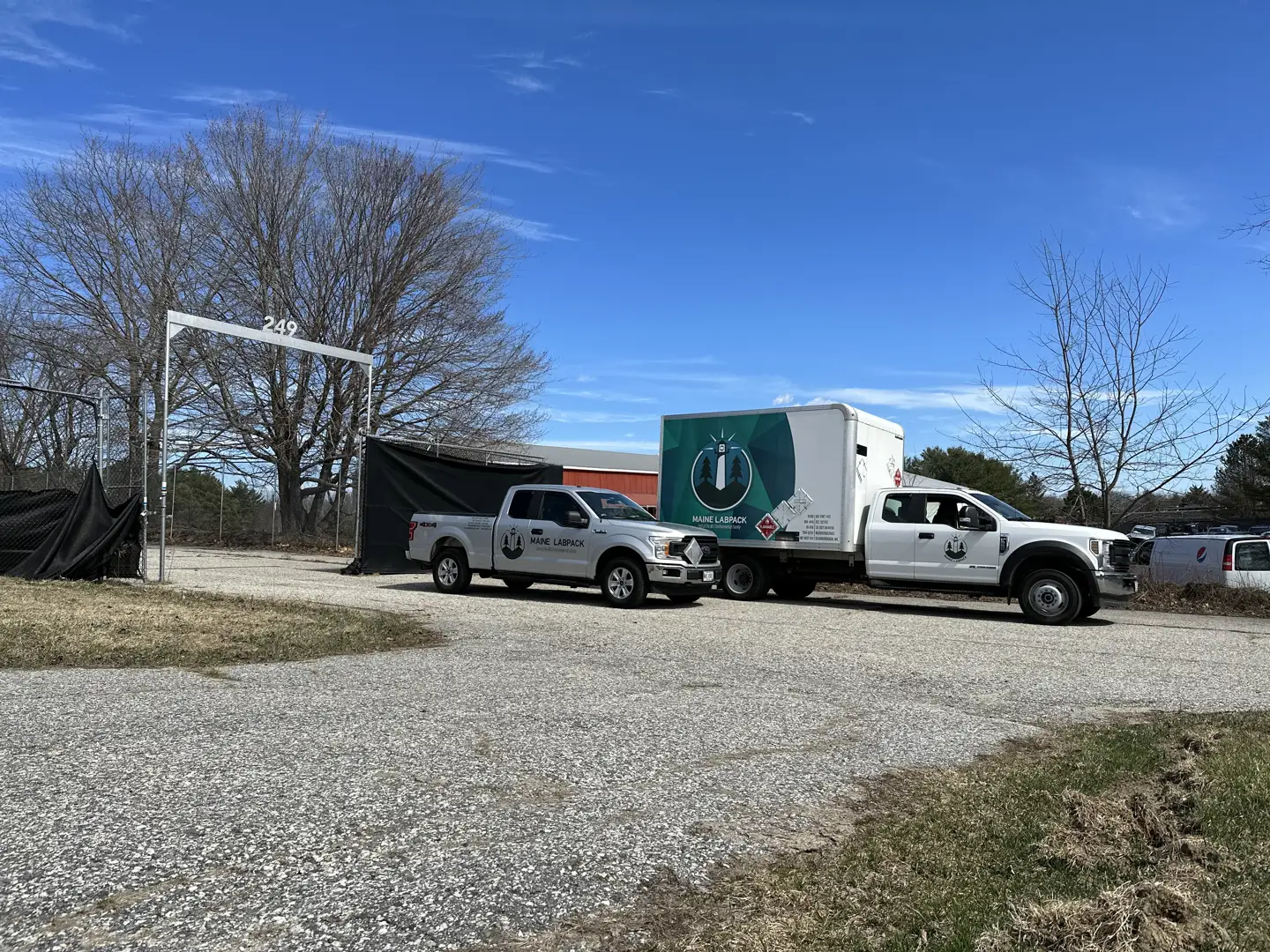
Lab relocation services are specialized solutions for safely moving laboratory equipment, chemicals, biological samples, and sensitive instruments from one facility to another — without damaging assets, violating regulations, or losing months of research progress.
A lab move is one of the highest-risk operational events a facility can face. Unlike a standard office relocation, a single mistake — an unmonitored temperature spike, an improperly packed centrifuge, or a missing chain-of-custody record — can destroy irreplaceable samples, void years of research, or trigger regulatory penalties.
As one industry expert put it, managing a lab relocation is like “changing the wheels on a car while it’s moving.” Many labs must stay partially operational throughout the process, which adds enormous complexity.
The risks aren’t just physical. Regulatory exposure is real. Labs handling hazardous chemicals, biological materials, or controlled substances must comply with OSHA, EPA, DOT, and potentially FDA requirements — all at the same time, across every phase of the move.
That’s why facilities managers, lab directors, and EH&S teams increasingly turn to professional lab relocation providers rather than attempting to manage the process internally.
Why Specialized Lab Relocation Services Are Essential
When organizations attempt to use general commercial movers for a laboratory relocation, they quickly run into major roadblocks. Standard office movers are highly skilled at wrapping desks and stackable chairs, but they do not possess the scientific training or specialized equipment required to handle delicate analytical instruments.
High-precision laboratory equipment—such as mass spectrometers, gas chromatographs, and high-performance liquid chromatography (HPLC) systems—is built with extremely sensitive internal alignments, lasers, and optical sensors. Even minor vibrations during transit can throw these instruments out of alignment, resulting in a complete loss of calibration. When this happens, a lab faces weeks of unexpected downtime and expensive recalibration services before research can resume.
Hiring specialized lab relocation services ensures that your research is protected from start to finish. Experienced lab movers understand the specific physical and environmental vulnerabilities of scientific instrumentation. They design custom packaging, utilize specialized transit vehicles, and coordinate directly with equipment manufacturers to preserve the integrity of your assets.
Before starting the process, it helps to review the most important factors to evaluate before moving your lab, including inventory, compliance, timing, and risk management.
Key Challenges Solved by Lab Relocation Services
The primary objective of any professional lab relocation is to minimize operational downtime, protect high-value assets, and mitigate regulatory risk. Specialized providers solve these challenges by addressing several critical pain points:
- Downtime Reduction: Professional providers use detailed sequencing and phased scheduling so that critical laboratory operations can continue while non-essential areas are moved.
- Asset Protection: By using custom-built crates, shock-absorbing materials, and specialized transport, movers prevent mechanical and structural damage to fragile equipment.
- Risk Mitigation: Specialized movers are trained in Environmental Health and Safety (EH&S) protocols, ensuring that hazardous chemicals, biological samples, and pressurized gases are handled in full compliance with local and federal laws.
For a practical overview of how to keep a relocation on track, review these essential lab relocation planning steps before building your move schedule.
How to Budget for Lab Relocation Services
Budgeting for a laboratory move requires looking far beyond the simple cost of transporting boxes. Failing to account for hidden costs can quickly derail a project’s financial planning. When building your budget, make sure to anticipate the following factors:
- Permitting and Regulatory Compliance: Transporting hazardous materials (HAZMAT) or biological samples across state lines in New England requires specific permits and certified manifests.
- Vendor and OEM Fees: Original Equipment Manufacturers (OEMs) often require their own certified technicians to decommission and recommission high-value instruments to keep warranties valid.
- Post-Move Recertification: Budgeting for post-move calibration, validation, and cleanroom certification is essential for returning to regulatory-compliant operations.
| Cost Category | Internal Move (Hidden Risks & Costs) | Professional Relocation Services |
|---|---|---|
| Packing & Materials | High risk of damage due to improper packing materials | Custom crating, anti-static wraps, and temperature-controlled shippers |
| Regulatory Fines | High risk of DOT/EPA violations if HAZMAT is moved incorrectly | Turnkey compliance, proper manifesting, and permitted transport |
| Equipment Warranty | Risk of voided warranties if handled by uncertified staff | Coordinated OEM deinstallation and reinstallation |
| Operational Downtime | Extended downtime due to trial-and-error troubleshooting | Structured, phased scheduling to keep key workflows active |
Top 10 Lab Relocation Services: A Detailed Review
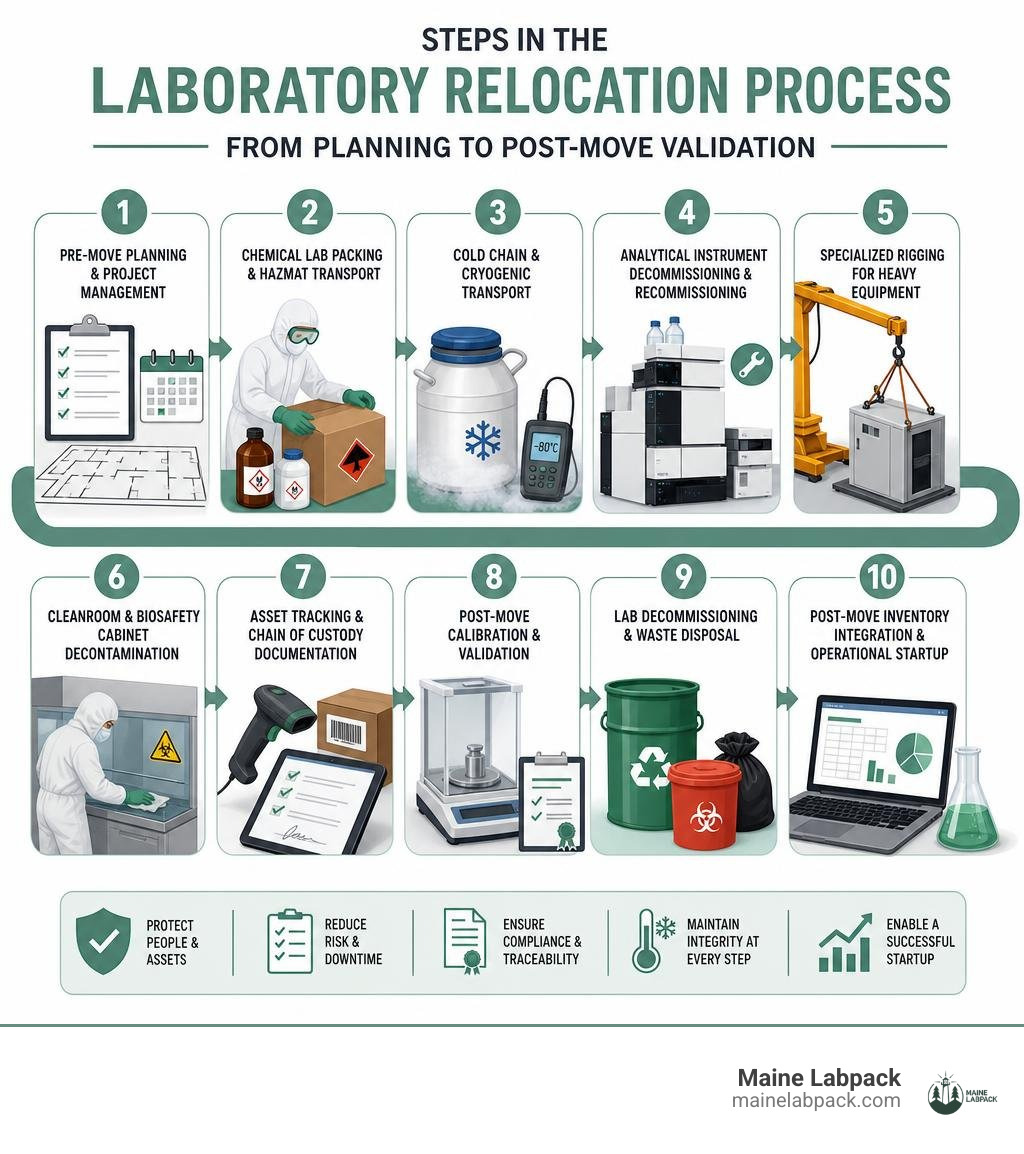
A successful laboratory relocation relies on a suite of specialized services designed to protect your physical assets, maintain regulatory compliance, and ensure scientific continuity. Below are detailed reviews of the ten essential services that professional lab relocation providers offer.
1. Pre-Move Planning And Project Management
Every successful laboratory relocation begins long before the first box is packed. A dedicated relocation project manager or specialist acts as the central coordinator, bridging the gap between your laboratory staff, facilities managers, design teams, and external vendors.
During the pre-move planning phase, the specialist conducts a comprehensive asset survey to build a detailed asset matrix. This matrix tracks every piece of equipment, its exact dimensions, power and utility requirements, calibration status, and sensitivity levels. By planning the sequence of the move down to the hour, the project manager ensures that your lab experiences minimal disruption and that the new facility is fully prepared to receive each instrument.
2. Chemical Lab Packing And HAZMAT Transport
Moving chemicals is one of the most highly regulated aspects of a lab relocation. Standard commercial movers are legally prohibited from transporting hazardous chemicals, which means you need a specialized partner certified in chemical lab packing.
This service involves identifying, sorting, and packaging chemicals in strict accordance with Department of Transportation (DOT) and Environmental Protection Agency (EPA) regulations. Incompatible chemicals must be carefully segregated to prevent dangerous reactions during transit.
For professional assistance in New England, make sure your relocation plan includes safe, compliant chemical transportation procedures for every regulated material in your inventory.
3. Cold Chain And Cryogenic Transport
Biological specimens, tissue samples, enzyme kits, and active pharmaceutical ingredients (APIs) are highly sensitive to temperature fluctuations. A single breakdown in the cold chain can ruin years of invaluable research.
Professional lab movers utilize specialized cold chain and cryogenic transport services to move ultra-low temperature (ULT) freezers, liquid nitrogen (LN2) dewars, and temperature-sensitive materials. Using generator-powered vehicles, providers can keep ULT freezers plugged in and running at -80°C throughout the entire journey.
For high-value biological assets, providers use validated dry shippers and real-time temperature data loggers to guarantee that samples remain within their required temperature ranges. This ensures continuous monitoring and complete thermal protection from origin to destination.
4. Analytical Instrument Decommissioning And Recommissioning
Analytical instruments like HPLCs, gas chromatographs, and mass spectrometers cannot simply be unplugged and loaded onto a truck. They require a meticulous process of decommissioning before the move and recommissioning afterward.
Professional lab relocation services coordinate directly with field engineers and OEMs to properly shut down instruments, drain internal fluids, secure internal moving parts, and pack sensitive components separately. Once the equipment arrives at the new facility, technicians level the instruments, reconnect utilities, and perform initial startup testing to ensure they are fully operational.
5. Specialized Rigging For Heavy Equipment
Many laboratories house heavy, oversized, or highly awkward equipment, such as biosafety cabinets, large autoclaves, centrifuges, and imaging systems. Moving these assets requires specialized rigging services.
Professional riggers utilize precision lifting equipment, custom cranes, and heavy-duty dollies to safely navigate narrow corridors, freight elevators, and loading docks. They design custom wooden crates and use foam-in-place packaging to protect these heavy investments from structural damage or excessive vibration during transport.
6. Cleanroom And Biosafety Cabinet Decontamination
Before cleanroom equipment or biosafety cabinets (BSCs) can be disassembled and moved, they must undergo thorough decontamination to protect relocation personnel and prevent cross-contamination at the new site.
Specialized providers work closely with Environmental Health and Safety (EH&S) teams to perform gaseous decontamination (such as hydrogen peroxide vapor or formaldehyde gas) on BSL-2 and cleanroom equipment. This process ensures that all biological agents are neutralized, and the equipment is certified safe for transport.
7. Asset Tracking And Chain Of Custody Documentation
Maintaining a strict chain of custody is essential for regulatory compliance, insurance protection, and audit readiness. Professional lab relocation services utilize serialized tracking systems to monitor every asset throughout the relocation process.
Each instrument, chemical container, and sample box receives a unique barcode tracking ID. Technicians take timestamped, pre-move condition photos and log every hand-off, from deinstallation to final placement. This level of documentation provides complete visibility and ensures that your lab is fully prepared for FDA, GLP, or CLIA audits.
8. Post-Move Calibration And Validation
Once your analytical instruments are placed in their new locations, they must be calibrated and validated before they can be used for active research or diagnostic testing.
Relocation providers coordinate Installation Qualification, Operational Qualification, and Performance Qualification (IQ/OQ/PQ) protocols. Performing these qualifications ensures that the instruments perform to the manufacturer’s exact specifications in the new environment, minimizing audit risks and protecting data integrity.
9. Lab Decommissioning And Waste Disposal
Relocating to a new facility often reveals accumulated chemical waste, obsolete equipment, and materials that are no longer needed. A complete lab relocation service includes comprehensive lab decommissioning and hazardous waste disposal.
This service involves identifying unwanted chemicals, organizing lab cleanouts, and ensuring that the old facility is left entirely free of hazardous residues. It also requires careful attention to lab decommissioning requirements so the vacated space is safe, documented, and ready for turnover.
10. Post-Move Inventory Integration
The final step in a successful lab relocation is integrating your moved assets back into your laboratory information management system (LIMS) or facility inventory tracking software.
Professional relocation partners provide comprehensive post-move inventory reports. These reports confirm the final location, serial numbers, and calibration status of every asset, allowing your scientific staff to locate materials instantly and return to their work without delay.
Compliance, Safety, And Regulatory Standards In Lab Moves
Navigating the regulatory landscape during a laboratory relocation is highly complex. Depending on the nature of your research, your move may fall under the jurisdiction of several federal and state regulatory bodies, including OSHA, the EPA, the DOT, and the FDA.
For example, transporting hazardous chemicals requires strict adherence to DOT HAZMAT regulations, including proper packaging, labeling, and shipping manifests. For authoritative federal guidance, review the DOT Pipeline and Hazardous Materials Safety Administration’s hazardous materials transportation rules. If your laboratory handles biological materials or select agents, you must secure the appropriate CDC or USDA permits before transport.
Additionally, laboratories operating under Good Laboratory Practice (GLP) or Good Manufacturing Practice (GMP) standards must maintain continuous documentation, such as 21 CFR Part 11-compliant temperature logs, to prove that sample integrity was never compromised during the move.
Specialized testing labs may also need industry-specific plans for regulated waste handling during relocation, especially when hazardous materials, samples, or testing residues must be removed before equipment is moved.
Frequently Asked Questions About Lab Relocation
Planning a lab move often brings up many questions. Here are answers to some of the most common concerns.
How long does a typical laboratory relocation take?
The timeline for a laboratory relocation depends heavily on the size and complexity of the facility. A small research lab with 10 to 20 pieces of equipment typically requires 2 to 4 weeks of planning and execution. Medium-sized facilities with 50 to 100 items generally take 4 to 8 weeks, while large university, hospital, or biotech complexes can require 3 to 6 months of phased planning to minimize operational disruption.
How are temperature-sensitive samples protected during a move?
Temperature-sensitive samples are protected using specialized cold chain logistics. This includes utilizing generator-powered transport vehicles that keep ultra-low temperature freezers powered and running during transit. For cryogenic samples, providers use validated liquid nitrogen dry shippers equipped with continuous, alarmed temperature monitoring systems to ensure the cold chain remains unbroken.
What insurance and liability coverage is required for lab moves?
Standard moving insurance is typically based on weight (often only $0.60 per pound), which is entirely inadequate for high-value scientific equipment. Professional lab relocation providers carry substantial general liability coverage (often up to $10 million) and offer specialized transit valuation protection. This ensures that the full replacement and calibration costs of your high-value instruments are completely covered in the event of unforeseen damage.
Ready for a Safer, Smoother Lab Relocation?
Relocating a laboratory is a highly complex, high-stakes project that requires specialized knowledge, precise coordination, and strict regulatory compliance. Attempting to manage a move internally or relying on standard commercial movers often leads to costly equipment damage, regulatory violations, and extended research downtime. Partnering with a professional lab relocation service ensures that your valuable instruments, sensitive chemical inventories, and irreplaceable samples are moved safely, efficiently, and in full compliance with all local and federal laws.
If you are planning a laboratory move in New England — whether in Portland, Maine; Boston, Massachusetts; Manchester, New Hampshire; Burlington, Vermont; or Providence, Rhode Island — Maine Labpack is here to help. As New England’s trusted hazardous waste management and chemical transport specialist, we provide professional, safe, and sustainable solutions tailored to your lab’s unique needs.
Ready to start planning your lab relocation? Partner with Maine Labpack for professional chemical lab pack support that keeps your chemical inventory handled with the highest level of regulatory care and safety.