

Why Disposing of Hazardous Waste the Right Way Matters
Disposing of hazardous waste incorrectly can create costly compliance, safety, and environmental problems. Whether you are clearing old products from a home or managing accumulated chemicals at a facility, the safest process starts with identification, separation, and the right disposal route.
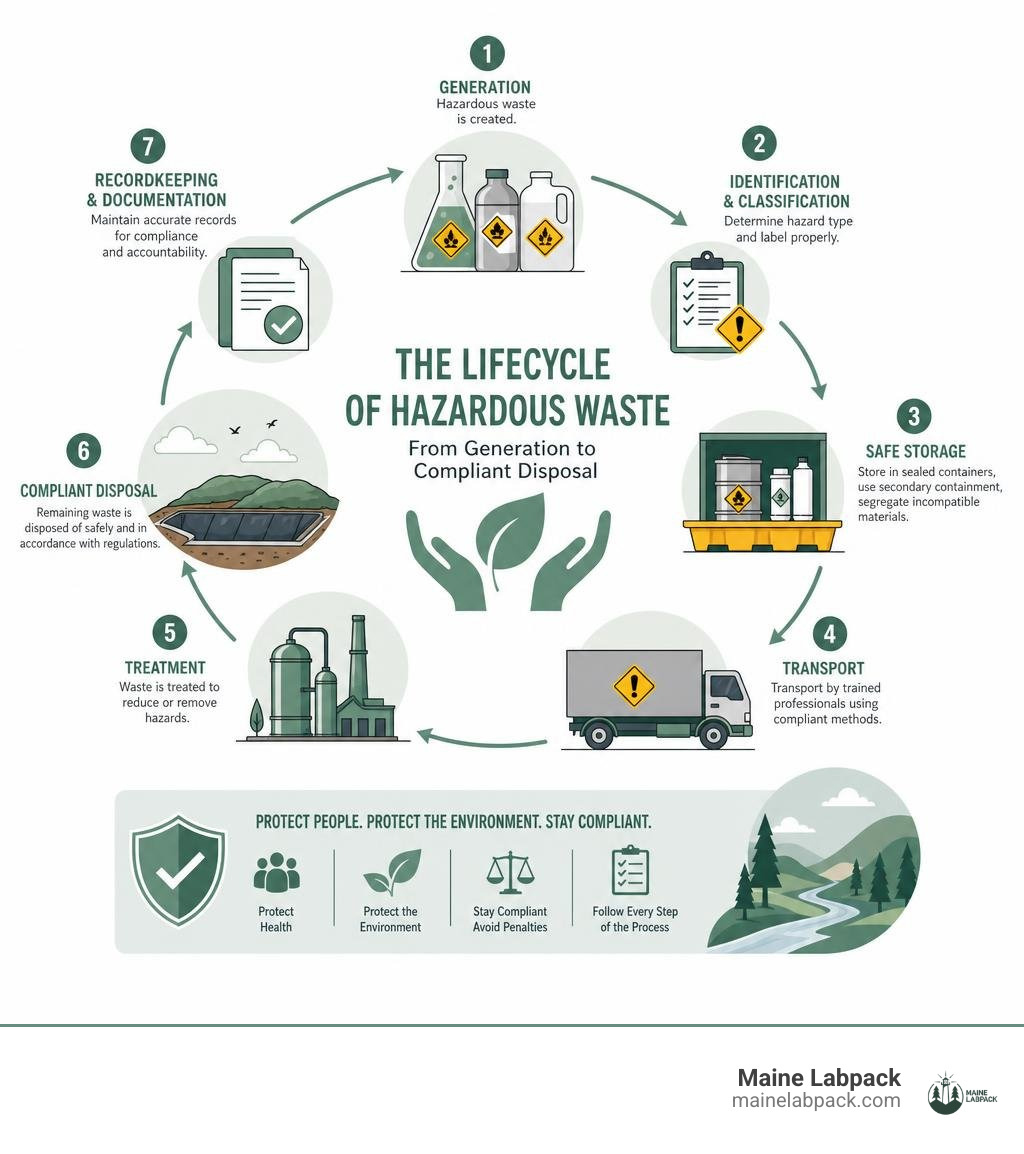
Here is a quick overview of how to dispose of hazardous waste safely:
- Identify the waste — Determine whether it is ignitable, corrosive, reactive, or toxic.
- Keep it in original containers — Do not mix chemicals or transfer them to unmarked containers.
- Store it safely — Use secondary containment, keep containers sealed, and separate incompatible materials.
- Choose the right disposal option — Use a local household hazardous waste collection site, licensed waste hauler, or professional labpack service.
- Follow residency or generator rules — Households and businesses have different requirements.
- Never dump it — Pouring hazardous waste down drains, into trash, or onto the ground is dangerous and often illegal.
The EPA defines hazardous waste as material that is dangerous or potentially harmful to human health or the environment. For facilities, improper disposal can also trigger fines, operational delays, and liability exposure.
This guide explains what to do, whether you are a homeowner with old cleaners or a facility manager dealing with chemical buildup.
Understanding the Risks of Disposing of Hazardous Waste
When hazardous materials are tossed into regular trash or poured down drains, they can contaminate soil, groundwater, and wastewater systems. In landfills, chemical leachate may migrate into local water resources, creating risks for homes, municipalities, and ecosystems.
Waste workers also face immediate hazards when unsegregated chemicals spill, react, or release vapors inside trucks and sorting facilities. Acid burns, toxic fumes, and fires can occur when incompatible products mix.
To avoid these risks, households should follow the EPA’s Household Hazardous Waste (HHW) guidance, while businesses should review professional disposal requirements in Maine Labpack’s guide to hazardous waste disposal.
How to Identify Household Hazardous Waste
Before disposal, determine whether a product has one or more hazardous characteristics:
- Ignitability: Liquids with low flashpoints or solids that can catch fire through friction or moisture. Examples include gasoline, solvent-based adhesives, and some aerosols.
- Corrosivity: Highly acidic or basic materials that can corrode containers or damage tissue, such as battery acid, oven cleaners, and drain openers.
- Reactivity: Unstable chemicals that may explode, react with water, or generate toxic gases, including pool chemicals and some pressurized containers.
- Toxicity: Substances that can harm people, wildlife, or soil and water quality, such as pesticides, mercury devices, and lead-based paints.
For more detail, use the EPA’s hazardous waste basics and Maine Labpack’s guide to hazardous waste determination.
Common Household Items Requiring Special Disposal
Many everyday products should not go in regular trash or recycling carts, including:
- Lawn and Garden Chemicals: Pesticides, herbicides, chemical fertilizers, and weed killers.
- Automotive Fluids: Used motor oil, coolant, transmission fluid, and gasoline.
- Paints and Solvents: Oil-based paints, varnishes, stains, thinners, and strippers.
- Household Batteries: Rechargeable, lithium-ion, nickel-cadmium, and button-cell batteries.
- Mercury Devices: Thermometers, thermostats, fluorescent tubes, and CFLs.
Step-by-Step Guide to Disposing of Hazardous Waste From Your Home
For homeowners, the safest disposal path is usually a municipal or regional household hazardous waste program.
- Check residency requirements: Collection sites often require proof of residency. For example, Riverside Recycling hazardous waste serves Portland, Maine residents, while South Portland’s household hazardous waste program serves local residents.
- Confirm accepted items and hours: Schedules and accepted materials vary. Check the Maine DEP household hazardous waste portal or regional resources such as ecomaine special waste disposal before you go.
- Respect quantity limits: Many programs limit total gallons per visit and container size.
- Transport safely: Keep products upright in a sturdy box or bin, leave them in labeled containers, and avoid placing loose chemicals in plastic garbage bags.
For broader household collection guidance, review the EPA’s Household Hazardous Waste Quick Start Guide.
Safe Storage and Packaging Guidelines Before Disposal
Proper packaging helps prevent spills, reactions, and exposure while waste is stored or transported.
- Keep Materials in Original Containers: Original packaging is designed for the product. If a label is damaged, clearly mark the contents and hazards.
- Segregate Incompatible Chemicals: Do not store acids near bases or oxidizers near flammable solvents.
- Use Secondary Containment: Place liquid containers in a plastic bin or tray to capture leaks.
- Leave Headspace: Keep 5% to 10% empty space in liquid containers so contents can expand safely.
These basics help avoid common handling errors. For more practical guidance, see Maine Labpack’s article on hazardous waste handling mistakes and its hazardous waste labeling guide.
Preparing Electronic Waste and Special Items
Some items need separate handling even if they are not managed like standard chemical waste.
- Electronic Waste: Computers, televisions, monitors, phones, and tablets may contain lead, cadmium, mercury, or other metals. Bangor residents can review the city’s electronic and hazardous waste disposal guidance. Always wipe or destroy hard drives before recycling devices.
- Batteries: Tape terminals on lithium-ion and high-voltage batteries to prevent sparks during transport.
- Mercury-Containing Devices: Keep fluorescent bulbs, CFLs, and mercury thermostats intact. If a bulb breaks, seal the debris and wipe the area carefully.
Commercial and Institutional Hazardous Waste Management
Businesses, schools, laboratories, and institutions must follow stricter rules than households and generally cannot use residential household hazardous waste events.
Under the Resource Conservation and Recovery Act (RCRA), commercial generators are responsible for waste from the moment it is created through transport, treatment, and final disposal. Facility managers must understand how local, state, and federal rules overlap, as explained in Maine Labpack’s overview of EPA waste rules.
Commercial Regulations for Disposing of Hazardous Waste
Commercial generators need structured processes for waste characterization, labeling, shipping, and records.
- Waste Profiling: Analytical testing or process knowledge determines how waste should be packaged, labeled, transported, and treated.
- Uniform Hazardous Waste Manifest: Most commercial hazardous waste shipments require a federal manifest that tracks waste from the generator to the treatment, storage, and disposal facility.
- Land Disposal Restrictions: LDR rules require generators to certify that certain wastes meet EPA treatment standards before land disposal.
Small businesses can start with the EPA’s Managing Your Hazardous Waste guide and review Maine Labpack’s list of common RCRA compliance violations.
Generator Status and Compliance Requirements
A business’s requirements depend on how much hazardous waste it generates in a calendar month:
- Very Small Quantity Generators: VSQGs generate less than 100 kilograms of hazardous waste per month and must not accumulate more than 1,000 kilograms on-site.
- Small Quantity Generators: SQGs generate 100 to 1,000 kilograms per month and can usually accumulate waste for up to 180 days, or 270 days if shipping more than 200 miles.
- Large Quantity Generators: LQGs generate more than 1,000 kilograms of hazardous waste, or more than 1 kilogram of acutely hazardous waste, per month and face the strictest planning, reporting, and storage requirements.
For help determining the operational impact, read Maine Labpack’s guide to generator status and hazardous waste collection.
Frequently Asked Questions About Hazardous Waste Disposal
Can I Dispose of Latex Paint in the Regular Trash?
Yes, if it is completely dry. Latex paint is water-based and is generally not classified as hazardous waste, but liquid paint can spill during transport.
To prepare it, open the can, add kitty litter, sawdust, or paint hardener, and let it solidify. Once fully dry, the open can can usually go in regular household trash.
What Should I Do with Expired Medications?
Do not flush expired or unwanted medications or pour them down the sink. Instead, look for prescription take-back kiosks at pharmacies or police stations.
If no take-back option is available, mix medications with coffee grounds or cat litter, seal the mixture in a plastic bag, and place it in household trash. Scratch out personal information on the bottle first.
Do I Need Special Training to Handle Hazardous Waste?
Household residents do not need formal training, but they should follow safety guidelines and local disposal rules.
Commercial workers may need OSHA HAZWOPER, RCRA, or DOT hazardous materials training if they identify, package, label, move, or ship hazardous waste.
Schedule Safe Hazardous Waste Disposal With Maine Labpack
Whether you are cleaning out a garage in South Portland or managing a facility in New England, safe hazardous waste disposal starts with proper identification, storage, and compliance.
For businesses and institutions, Maine Labpack provides professional, on-time, and sustainable chemical and hazardous materials disposal across New England. As a one-stop shop, the team comes directly to your site to handle labpacks, chemical inventories, and larger waste removal needs.
Ready to protect your facility and stay compliant? Schedule professional hazardous waste disposal services with Maine Labpack today.