

Last updated on February 2nd, 2026 at 05:38 pm
Why Proper Hazardous Waste Labeling Matters
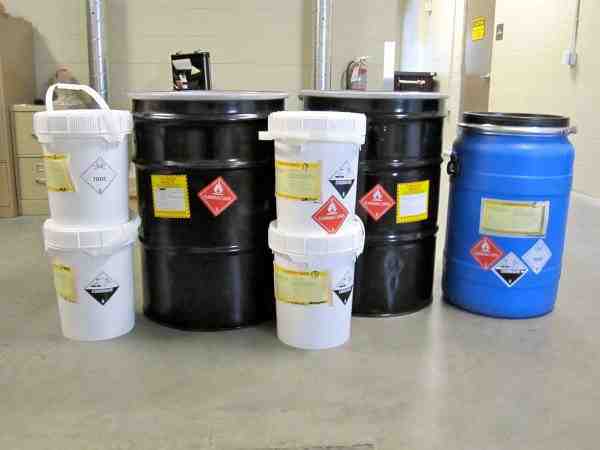
How to complete a hazardous waste label is a critical compliance skill for any facility that generates hazardous waste. A properly completed label protects your workers, ensures regulatory compliance, and prevents costly fines from the EPA and DOT.
Steps To Complete a Hazardous Waste Label
- Generator Information – Your facility name, address, EPA ID number, and phone number
- Accumulation Start Date – The exact date waste was first added to the container
- Waste Composition – Full chemical names and percentages (totaling 100%)
- Hazard Characteristics – Check all that apply: Ignitable, Corrosive, Reactive, or Toxic
- DOT Labels – Affix the appropriate diamond-shaped hazard class label(s)
Every container holding hazardous waste must be labeled before you begin accumulating waste. This isn’t just a best practice—it’s federal law under the Resource Conservation and Recovery Act (RCRA).
The stakes are high. Improper labeling can result in EPA violations, DOT penalties, rejected shipments, and serious safety incidents. Emergency responders need to immediately understand what’s in a container if there’s a spill or fire. Your waste hauler won’t accept improperly labeled drums. And inspectors will check your labels during facility audits.
The good news? Once you understand the five essential fields and follow a simple process, completing hazardous waste labels becomes straightforward. This guide breaks down exactly what information goes where, how to avoid common mistakes, and how to stay compliant with both EPA marking requirements and DOT labeling rules.
The Anatomy of a Label: 5 Essential Fields
A hazardous waste label isn’t just a sticker; it’s a vital communication tool that conveys critical information about the container’s contents and potential dangers. Think of it as the container’s ID card and safety manual rolled into one. Understanding each section is the first step in learning how to complete a hazardous waste label correctly.
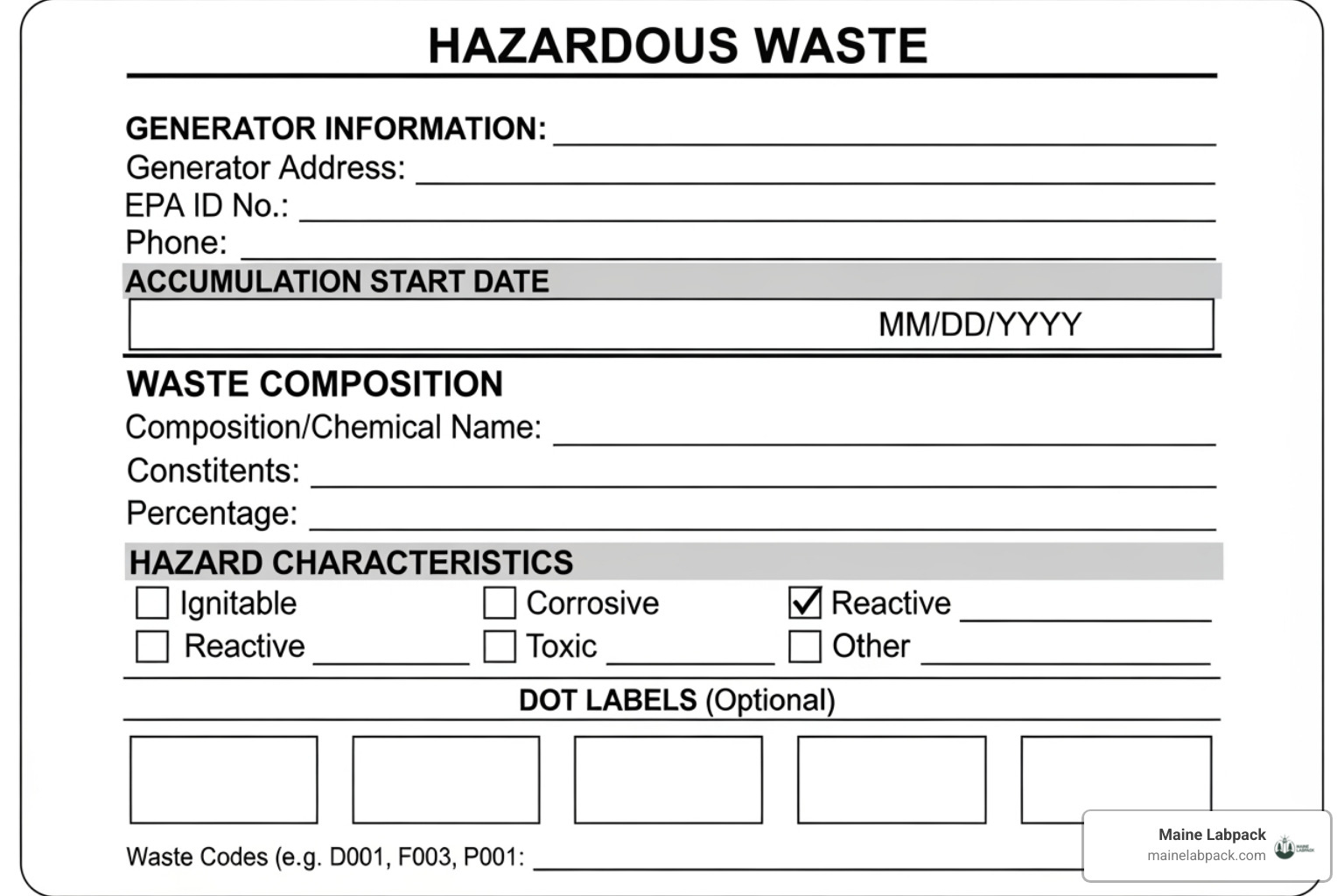
Generator Information (Who You Are)
The “who” behind the waste is crucial. This section identifies the entity responsible for generating the hazardous waste. It must clearly state the generator’s name, the facility address, and the EPA Identification Number. Additionally, an emergency contact phone number is often required to ensure that in case of an incident, the right people can be reached immediately. This information is essential for traceability and accountability throughout the waste management process. For more details on the components of these labels, explore the Anatomy of a Hazardous Waste Label.
Accumulation Start Date (When It Started)
This seemingly simple date is one of the most critical elements on a hazardous waste label. The accumulation start date marks the exact day hazardous waste was first placed into the container. It’s not the date the container becomes full, but the very beginning of its waste-holding life. This date is vital because federal and state regulations impose strict time limits on how long hazardous waste can be stored on-site. For instance, generators in New England, like those in Maine, must adhere to specific timelines. For Large Quantity Generators (LQGs) and Small Quantity Generators (SQGs), this date allows regulatory agencies to verify that waste isn’t stored longer than permitted. Failing to include it can lead to violations. Special considerations apply for satellite accumulation areas (SAAs) and central accumulation areas (CAAs), where the dating might differ slightly based on accumulation limits and transfer to a main storage area. For detailed storage requirements, especially in Maine, refer to Maine Hazardous Waste Storage Requirements.
Waste Composition & Properties (What It Is)
This section provides a clear picture of the waste itself. It requires a detailed list of all chemical constituents, using their full chemical names (no abbreviations allowed!). For mixtures, the percentage of each component by volume must be specified, and these percentages must add up to 100%. Even non-hazardous ingredients, like water, should be listed if they are part of the mixture. The physical state of the waste (e.g., solid, liquid, gas, sludge) should also be indicated. This detailed composition information is vital for proper waste characterization, safe handling, and appropriate disposal methods. Understanding the basics of waste determination helps ensure this section is accurate, as discussed in Basics of Hazardous Waste Determination.
Hazard Characteristics
Identifying the specific hazards of the waste is paramount for safety. This section typically involves checking boxes that correspond to the waste’s primary characteristics. The most common characteristics are:
- Ignitable: Waste that can readily catch fire.
- Corrosive: Waste that can dissolve other materials or burn skin.
- Reactive: Waste that is unstable and can explode, generate toxic gases, or react violently under normal conditions.
- Toxic: Waste that is harmful or fatal if ingested, inhaled, or absorbed through the skin. This can also include “Acutely Toxic” for substances that are extremely hazardous even in small doses.
It’s crucial to check all applicable characteristics. If a waste exhibits multiple hazards, all of them must be indicated. Safety Data Sheets (SDS) are your best friend here, providing comprehensive information on a substance’s properties and hazards, guiding you on which boxes to check.
Your Step-by-Step Guide on How to Complete a Hazardous Waste Label
Learning how to complete a hazardous waste label is a systematic process. By following these steps, you can ensure your labels are accurate, compliant, and effectively communicate necessary safety information.
Step 1: Prepare the Container and Select a Label
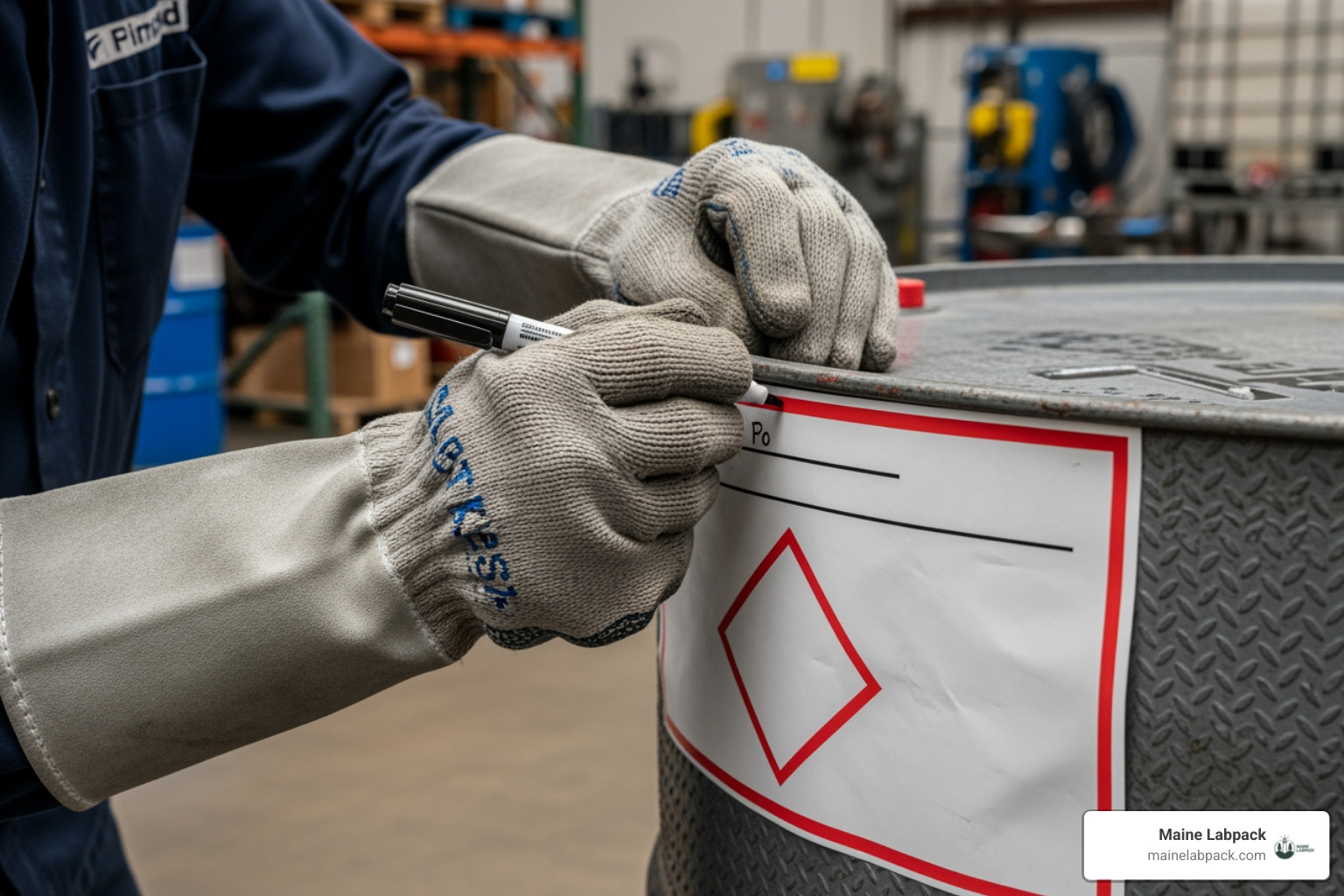
Before you even begin filling out information, ensure your container is ready. The surface where the label will be affixed must be clean, dry, and free of any debris or grease. If you’re reusing a container, all old markings, labels, or placards must be completely removed or thoroughly obscured (e.g., painted over) to prevent confusion. Choose a label made of durable, weather-resistant material that can withstand the storage environment without fading, peeling, or becoming illegible. Labels should be at least 4″ x 4″ to ensure visibility. Many providers offer downloadable templates that can help you meet these requirements, ensuring you have the correct format. You can download free hazardous waste label templates from Maine Labpack to get started.
Step 2: How to complete a hazardous waste label with Generator and Date Information
Once your label is ready, use legible, permanent ink (like a permanent marker) to fill in the required details. Handwriting must be clear and readable.
- Generator Information: Accurately provide your facility’s full name, physical address, and your EPA Identification Number. Include an emergency contact phone number.
- Accumulation Start Date: This is paramount. Record the exact date the first drop or piece of hazardous waste was placed into that specific container. This date is critical for tracking accumulation time limits set by regulators. For continuously used containers that are emptied daily, some regulations may allow for “daily” to be written in the date field.
Step 3: Detail the Waste Composition and Check Hazard Boxes
This step requires precision and a good understanding of your waste stream.
- Waste Composition: List every chemical component within the container. Use full chemical names; abbreviations are a no-go. For mixtures, indicate the percentage by volume for each component. All percentages must add up to 100%. Don’t forget to include non-hazardous ingredients like water if they are part of the waste. Also, specify the physical state (liquid, solid, gas, sludge).
- Hazard Characteristics: Based on your waste determination and Safety Data Sheets (SDS), check all applicable hazard characteristics. This includes Ignitable, Corrosive, Reactive, and Toxic. Understanding How Toxic Waste is Defined by DOT, RCRA, and OSHA is crucial for accurate hazard identification.
Step 4: Apply the Correct DOT Hazard Labels
In addition to the EPA-mandated text markings, the U.S. Department of Transportation (DOT) requires specific hazard labels for containers destined for off-site transport.
- Primary Hazard: Identify the primary hazard class of your waste.
- Affix Labels: Affix the corresponding 4″x4″ diamond-shaped DOT label to the container. These labels visually communicate the immediate hazard to handlers and emergency responders.
- Subsidiary Hazards: If your waste has multiple hazards, subsidiary hazard labels must also be applied. Best practice dictates placing the primary hazard label above and to the left of any subsidiary hazard labels, with about six inches of space between them if multiple labels are necessary. For a comprehensive guide on these labels, see Dangerous Goods Labels and Markings.
Marking vs. Labeling: Understanding EPA and DOT Rules
While often used interchangeably, “marking” and “labeling” have distinct meanings within hazardous waste regulations, particularly when differentiating between EPA and DOT requirements.
| Feature | EPA “Marking” Requirements | DOT “Labeling” and “Placarding” Requirements |
|---|---|---|
| Purpose | To identify the container as hazardous waste, provide generator information, accumulation date, and specific federal warnings for on-site management and initial transport preparation. Ensures compliance with RCRA. | To visually communicate the specific hazard class(es) of the material for safe transport. Ensures compliance with 49 CFR Part 172. |
| Content | Words “HAZARDOUS WASTE,” “Federal Law Prohibits Improper Disposal. If found, contact the nearest police or public safety authority or the U.S. Environmental Protection Agency,” Generator’s Name and Address, Generator’s EPA Identification Number, Accumulation Start Date, Manifest Tracking Number (for off-site shipment), and EPA Hazardous Waste Numbers (if applicable). Often on a yellow background. | Diamond-shaped graphics with symbols, numbers, and colors representing hazard classes (e.g., flammable liquid, corrosive). Includes hazard class number and sometimes division number. |
| Format & Size | Typically text-based. No specific size requirement for the entire marking, but must be clearly legible. Often on a yellow background. | Labels: 4″ x 4″ (100 mm x 100 mm) diamond-shaped for non-bulk packages (e.g., drums, carboys). Placards: 10.75″ x 10.75″ (273 mm x 273 mm) diamond-shaped for bulk packages (e.g., totes, tanks) and transport vehicles. |
| Placement | Clearly visible on the container. One marking per drum, or two markings on opposite sides for larger containers like totes or cubic yard boxes. | Clearly visible on the container or transport vehicle. For multiple hazards, primary hazard label is placed above and to the left of subsidiary labels. Placards on all four sides of a transport vehicle. |
| Regulatory Body | U.S. Environmental Protection Agency (EPA) under RCRA. | U.S. Department of Transportation (DOT). |
| Example | Yellow sticker with “HAZARDOUS WASTE,” generator details, date, and federal warning text. | Red diamond with a flame symbol and “3” for flammable liquid; white/black diamond with skull and crossbones and “6” for toxic substance. |
EPA “Marking” Requirements
The EPA’s requirements, primarily driven by RCRA, focus on identifying the container as hazardous waste and providing essential information about its origin and accumulation. For containers 119 gallons or less, the EPA mandates specific wording:
- The words “HAZARDOUS WASTE”
- A federal warning statement: “Federal Law Prohibits Improper Disposal. If found, contact the nearest police or public safety authority or the U.S. Environmental Protection Agency.”
- The generator’s name and address
- The generator’s EPA Identification Number
- The accumulation start date
- The manifest tracking number (once the waste is prepared for off-site shipment)
- The applicable EPA Hazardous Waste Numbers (e.g., D001 for ignitable waste)
These markings are typically text-based and often appear on a yellow background. They ensure that anyone handling the waste on-site, or encountering it improperly disposed of, knows exactly what it is and whom to contact. To see a representative example of how these elements come together, you can View a sample EH&S Waste Label.
DOT “Labeling” and “Placarding” Requirements
The DOT steps in when hazardous waste is transported off-site, focusing on communicating immediate hazards for safety during transit. This involves diamond-shaped hazard pictograms.
- Labels: For non-bulk containers (e.g., drums, carboys, typically 119 gallons or less), 4″ x 4″ diamond-shaped labels are required. These labels depict symbols, numbers, and colors corresponding to specific hazard classes (e.g., a red flame for flammable liquids, a skull and crossbones for toxic substances).
- Placards: For bulk containers (e.g., totes, tanks, cubic yard boxes) or transport vehicles, much larger 10.75″ x 10.75″ diamond-shaped placards are used. These serve the same purpose as labels but are scaled up for visibility on larger conveyances. They must be placed on all four sides of a transport vehicle.
The DOT requirements ensure that transporters, emergency responders, and the public are immediately aware of the dangers posed by the material being moved. For more on these regulations, refer to Hazardous Waste Regulations.
How Generator Status Affects Requirements
The specific requirements for hazardous waste labeling can vary based on your facility’s generator status, as defined by EPA regulations:
- VSQG (Very Small Quantity Generator): These generators generate the least hazardous waste. While they must still label containers with “Hazardous Waste” and indicate the hazards, some of the more stringent documentation and dating requirements for accumulation may be reduced compared to larger generators. If a VSQG sends waste to an LQG under the same control, specific labeling is still required.
- SQG (Small Quantity Generator): SQGs have more detailed requirements than VSQGs. They must label satellite accumulation containers with “Hazardous Waste” and a hazard label indicating the hazards. For central accumulation areas, the full EPA marking requirements, including the accumulation start date, apply.
- LQG (Large Quantity Generator): LQGs are subject to the most comprehensive labeling and marking requirements. All containers in both satellite and central accumulation areas must be fully marked and labeled in accordance with EPA and DOT standards, including precise accumulation start dates and detailed waste characteristics.
Understanding your generator status is key to ensuring compliance. Even in satellite accumulation areas, where waste is initially collected near the point of generation, basic labeling with “Hazardous Waste” and a hazard indicator is required for both SQGs and LQGs.
Avoiding Common Pitfalls and Special Situations
Even with a clear understanding of the rules, mistakes happen. However, when it comes to hazardous waste, mistakes can be costly—leading to fines, rejected shipments, and serious safety incidents.
Top 5 Labeling Mistakes to Avoid
- Missing Accumulation Start Date: This is one of the most common and easily avoidable violations. Regulatory agencies use this date to ensure you’re not storing waste longer than allowed. Without it, you’re immediately non-compliant.
- Illegible Handwriting: If an inspector or emergency responder can’t read your label, it’s as good as missing. Use clear, permanent markers and ensure all text is easily decipherable.
- Using Unapproved Abbreviations: While convenient, abbreviations can cause confusion and misinterpretation. Always use full chemical names and standardized terms for hazards.
- Obscuring the Label: Labels must be entirely visible. Never place a label where it’s partially hidden by another object, sign, or by the way the container is stored.
- Incomplete Composition Information: Not listing all constituents, or failing to ensure percentages add up to 100%, can lead to improper waste characterization and potential compatibility issues during disposal.
Avoiding these mistakes is a critical part of 6 Common Hazardous Waste Handling Mistakes and How to Avoid Them.
The Consequences of Improper Labeling
The implications of improper hazardous waste labeling can be severe and far-reaching:
- Regulatory Violations and Fines: Both the EPA and DOT can levy substantial fines for non-compliance. These penalties can range from hundreds to thousands of dollars per violation per day, quickly adding up and significantly impacting a business.
- Rejected Shipments: Waste haulers and disposal facilities will refuse to accept containers improperly labeled. This can lead to delays, additional storage costs, and disruptions to your waste management schedule.
- Workplace Safety Incidents: Unlabeled or mislabeled containers pose significant risks to employees, transporters, and emergency responders. In an emergency, a lack of accurate information can lead to inappropriate handling, chemical exposures, fires, or explosions.
- Environmental Contamination: Without proper identification, waste may be mishandled or improperly disposed of, leading to spills or environmental contamination that can be costly and difficult to remediate.
Understanding and avoiding common RCRA compliance violations, which often include labeling issues, is crucial for any generator. You can learn more about these in 5 Common RCRA Compliance Violations.
Frequently Asked Questions about Hazardous Waste Labels
Can I print my own hazardous waste labels?
Yes, absolutely! While you can purchase pre-printed labels, you can also print your own hazardous waste labels. The key is that they must contain all the required EPA and DOT information and be durable enough to remain legible and affixed to the container throughout its accumulation period and transport. Many businesses find printing their own labels more convenient and cost-effective, especially when needing labels quickly or customizing them for specific waste streams.
What is the difference between a label and a placard?
The primary difference between a hazardous waste label and a placard lies in their size and intended use:
- Label: A hazardous waste label is a 4″x4″ (100 mm x 100 mm) diamond-shaped sticker. It is used on individual, non-bulk containers, such as 55-gallon drums, smaller containers, or carboys, to indicate the specific hazard(s) of the contents.
- Placard: A hazardous waste placard is a much larger 10.75″x10.75″ (273 mm x 273 mm) diamond-shaped sign. Placards are used on bulk packaging (such as large totes, tanks, or cubic-yard boxes) and on transport vehicles (trucks, railcars) to communicate the hazards of the materials being shipped. Essentially, a placard is a larger version of a label, designed for greater visibility from a distance.
How do I label a container with multiple hazards?
If a container holds waste that exhibits more than one hazard characteristic (e.g., both ignitable and corrosive), the label must clearly indicate all applicable hazards. For DOT diamond labels, the regulation specifies a hierarchy and placement: the label describing the primary hazard should be placed above and to the left of any labels describing subsidiary hazards. If multiple labels are necessary, place them next to each other, typically with about 6 inches of spacing between them, to ensure all are clearly visible.
Contact the Hazardous Waste Experts at MLI Environmental
Proper hazardous waste labeling is not merely a bureaucratic hurdle; it’s a fundamental pillar of safety, compliance, and environmental stewardship. It ensures that everyone who interacts with hazardous waste—from generators and on-site personnel to transporters and emergency responders—has the critical information needed to handle it safely and responsibly.
For professional assistance with waste characterization, labeling, and disposal in New England, trust the experts at Maine Labpack. We specialize in providing professional, on-time, and sustainable chemical and hazardous materials disposal services, acting as a one-stop shop that comes to your site. Contact us today!