
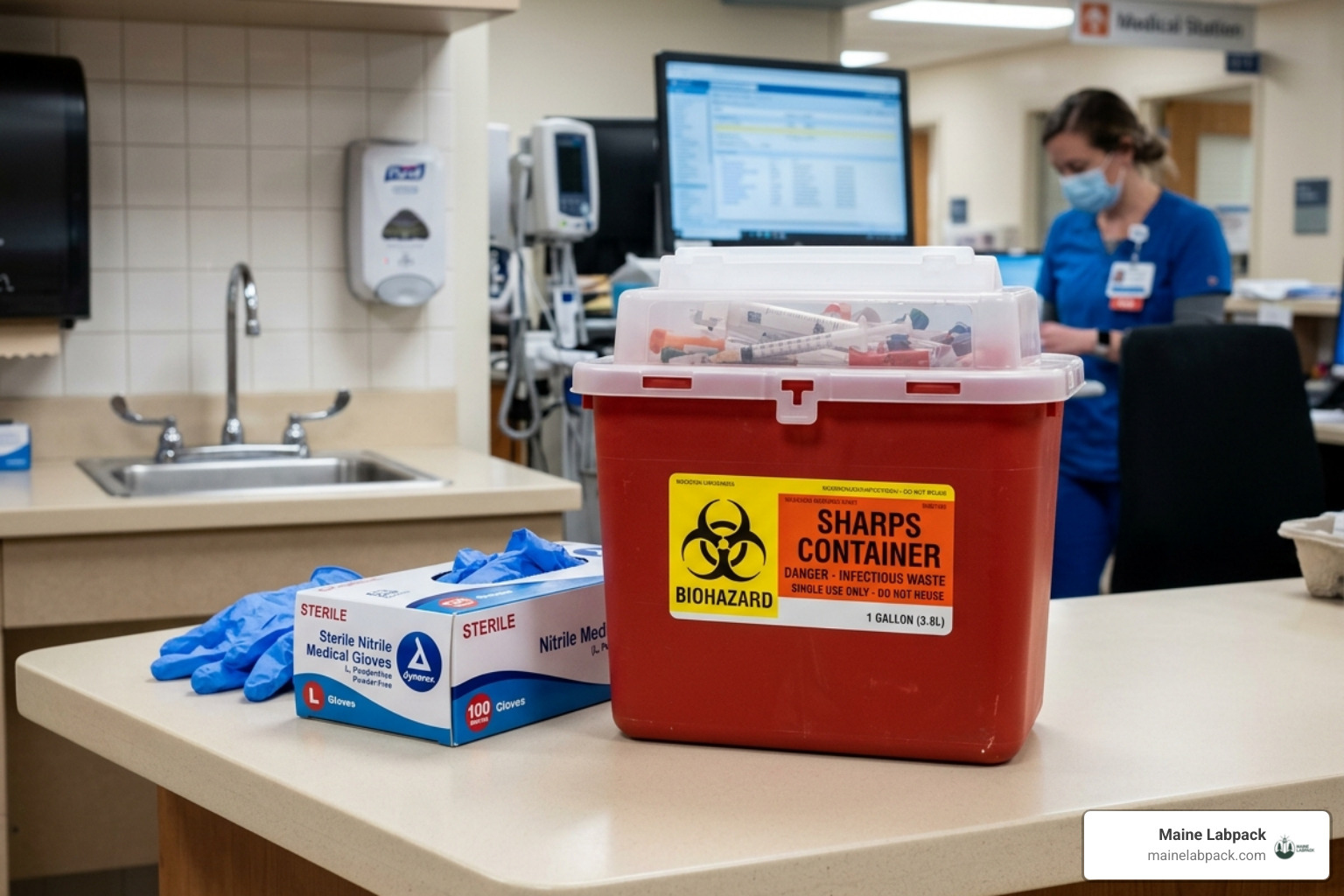
A sharps container is a puncture-resistant, leak-proof biohazard container used to collect needles, syringes, lancets, scalpels, and other sharps waste before compliant disposal.
For clinics, labs, dental offices, veterinary practices, and other healthcare facilities, choosing the right size and disposal method helps prevent needlestick injuries, keeps waste contained, and supports OSHA, DOT, and state compliance.
| Container Size | Best For | Approx. Syringe Capacity (1CC) | Typical Disposal Path |
|---|---|---|---|
| 1 Gallon | Exam rooms, treatment rooms, small clinics | 215-225 | Mail-back or pickup |
| 2 Gallon | Nurse stations, small labs, moderate-use areas | ~400-450 | Mail-back or pickup |
| 18 Gallon | Hospitals, surgical centers, high-volume facilities | Bulk | On-site pickup |
Key points for facility managers:
- Match container size to actual sharps volume and room workflow.
- Never fill containers past the marked fill line, typically around 75-80% full.
- Use wall brackets, stabilizers, or cabinets in patient-facing or high-traffic areas.
- Keep documentation such as manifests or certificates of destruction.
- Confirm whether mail-back services are allowed in your location and appropriate for your waste stream.
Choosing too small a container can lead to frequent changeouts and overfilling risk. Choosing too large a container for a low-volume room can waste space and delay timely disposal. The right fit protects staff, supports inspections, and keeps clinical operations moving.
Sharps Container Sizes, Capacity, and Fit
A 1 gallon sharps container is often the best fit for exam rooms, treatment rooms, and smaller clinical spaces because it offers useful capacity without taking over the counter or wall area. Many 1 gallon models hold about 215-225 standard 1CC syringes or 120-130 larger 3CC syringes, depending on needle size and how the contents settle.
| Feature | 1 Gallon Container | 2 Gallon Container | 18 Gallon Drum |
|---|---|---|---|
| Typical Dimensions | About 10.5″L x 7″W x 6″H | About 10″L x 10″W x 10″H | About 18″D x 26″H |
| Best Use | Exam and treatment rooms | Small labs and nurse stations | Utility rooms and high-volume facilities |
| Capacity | 215-225 1CC syringes | ~400-450 1CC syringes | Bulk sharps waste |
| Placement | Countertop or wall-mounted | Countertop, cart, or wall-mounted | Floor-standing |
Capacity should never be judged by total container volume alone. Facilities must stop using the container once waste reaches the fill line, usually about three-quarters full. Overfilling increases the risk of protruding sharps, lid failure, and staff exposure during handling.
For more details on compliant planning, see Sharps Waste Management: Your Guide to Compliant Disposal Services.
Safety Features That Matter in Professional Settings
Professional-grade sharps containers are built from durable plastic, commonly heavy-duty polypropylene, with puncture-resistant sides, leak-resistant construction, and secure lids. These features help contain biohazardous waste from the point of generation through storage, transport, and treatment.
Important features include:
- Closable lids: Help prevent exposure between uses and during transport.
- Final locking mechanisms: Seal the container once it reaches the fill line.
- Puncture-resistant construction: Reduces the risk of needles or lancets piercing the container.
- Leak-resistant bottoms and sides: Help contain residual fluids.
- Biohazard labeling or color-coding: Supports proper identification and handling.
Placement matters too. In busy clinical areas, wall brackets, tabletop stabilizers, and locking cabinets can keep containers upright, visible, and out of reach of patients or visitors. For facilities in Portland, Bangor, Lewiston, Boston, Manchester, or elsewhere in New England, the right placement can be just as important as the container size.
For safe handling guidance, refer to Sharps Disposal Best Practices: Medical Waste Management.
Mail-Back vs. On-Site Pickup
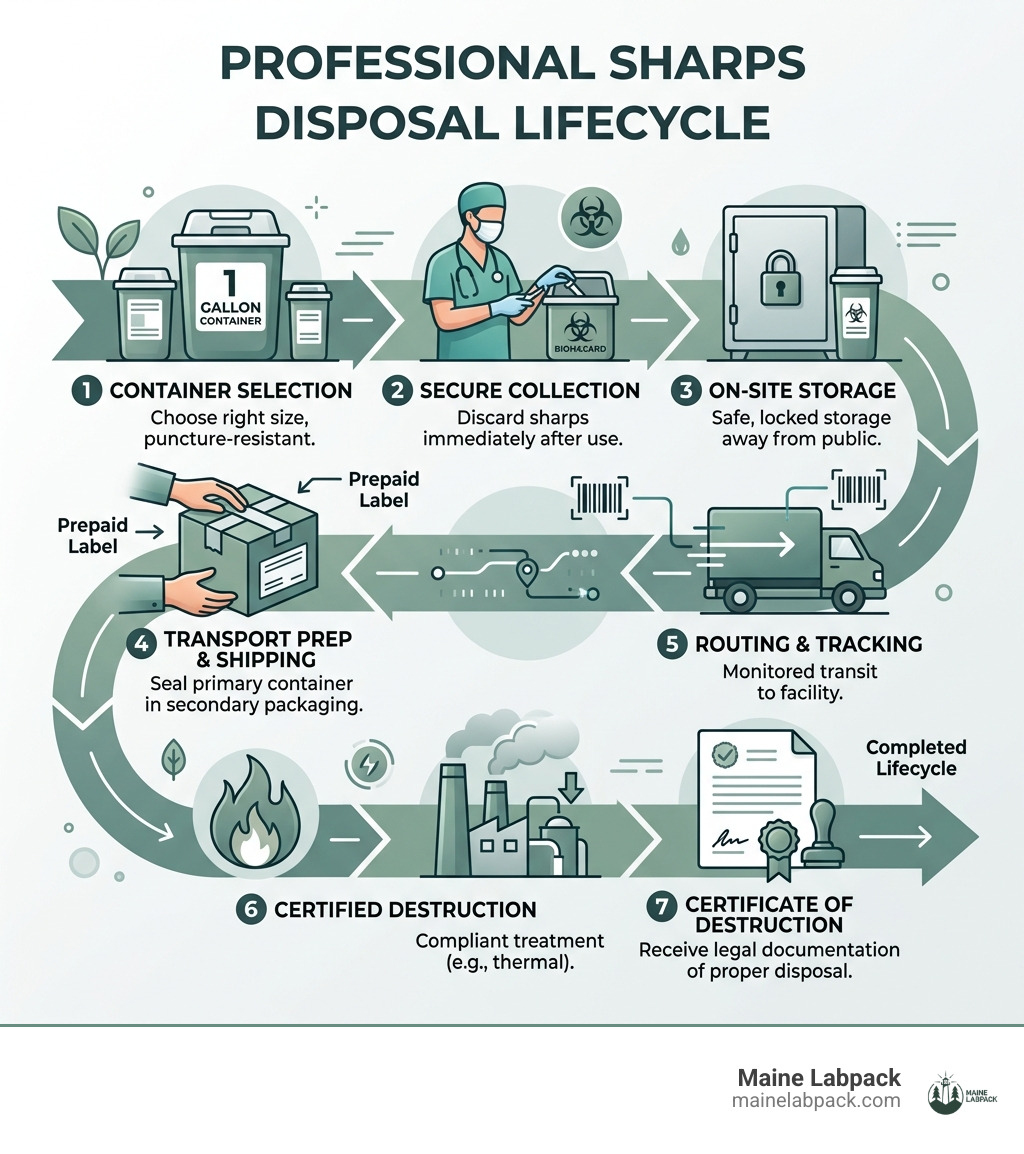
After selecting the container, facilities need a disposal plan. The right option depends on waste volume, location, internal procedures, and documentation needs.
A mail-back system typically includes the container, approved return packaging, prepaid shipping, tracking, treatment, and a certificate of destruction. This can work well for lower-volume facilities that generate sharps waste steadily but not in bulk.
On-site pickup is usually better for larger practices, hospitals, surgical centers, laboratories, or multi-site operations. A hazardous waste partner can collect full containers, manage documentation, and help align pickups with the facility’s actual waste volume.
Mail-back kits may have weight limits, often around 8-10 pounds depending on the provider and kit. Heavy items such as glass vials can push a container over the limit, so facilities should review instructions before shipping. Some providers also restrict service in certain states or territories, making local compliance review important.
Compliance Basics for Sharps Containers
Sharps containers must support safe handling and regulatory compliance from first use through final disposal. OSHA’s Bloodborne Pathogens Standard requires sharps containers to be closable, puncture resistant, leak-proof on the sides and bottom, and labeled or color-coded.
For day-to-day use, facilities should follow a simple protocol:
- Place containers close to the point of use.
- Keep containers upright and secured.
- Do not force sharps into the opening.
- Stop use at the marked fill line.
- Engage the final lock before removal.
- Store and transport full containers according to applicable requirements.
- Keep disposal records, manifests, or certificates of destruction.
State requirements can vary across Maine, New Hampshire, Vermont, Massachusetts, Rhode Island, and other service areas. For more detail, see Sharps Disposal Regulations by State.
Frequently Asked Questions
How many syringes fit in a 1 gallon sharps container?
A typical 1 gallon sharps container holds about 215-225 1CC syringes or 120-130 larger 3CC syringes. Actual capacity depends on syringe size, needle type, and how the waste settles.
When should a sharps container be replaced?
Replace or remove the container when it reaches the marked fill line, generally around 75-80% full. Do not shake, compress, or force additional sharps into the container.
Can a 1 gallon sharps container be wall-mounted?
Yes. Many 1 gallon containers are compatible with locking wall brackets, which helps save counter space and keeps sharps waste secure in exam rooms and treatment areas.
Is mail-back disposal right for every facility?
Not always. Mail-back can be convenient for lower-volume generators, but high-volume facilities often need scheduled on-site pickup. Weight limits, packaging rules, and state restrictions should be reviewed before choosing a mail-back program.
Need Help Choosing the Right Sharps Container?
Choosing the right sharps container is a practical safety and compliance decision. The best option fits the room, matches the facility’s waste volume, stays below the fill line, and connects to a reliable disposal process.
For many healthcare settings, a 1 gallon sharps container is the right balance of capacity and convenience. Larger facilities may need 2 gallon containers, 18 gallon drums, or scheduled pickup support to manage higher-volume waste streams.
Maine Labpack provides professional hazardous waste and sharps waste management services across New England, including Maine, New Hampshire, Vermont, Massachusetts, and Rhode Island. If your facility needs help selecting containers, managing pickup, or documenting compliant disposal, contact Maine Labpack for a solution tailored to your workflow.