
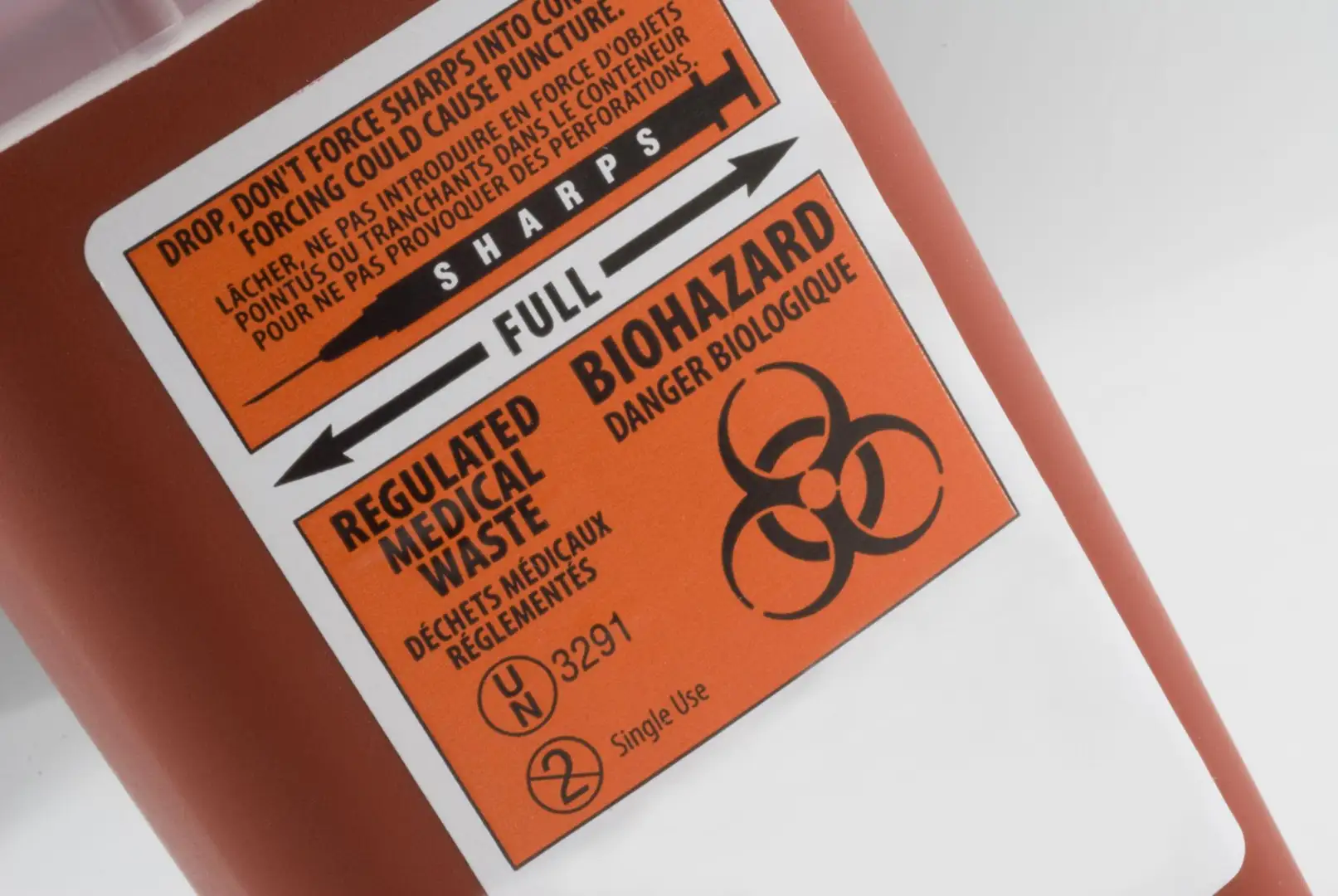
Why Proper Sharps Waste Management Matters
Sharps waste management is the safe handling, storage, transportation, and disposal of medical devices or objects that can puncture or cut skin. If you’re looking for compliant disposal services, here’s what you need to know:
Quick Answer: What You Need for Compliant Sharps Disposal
- Use puncture-resistant, color-coded containers at the point of use
- Never dispose of sharps in regular trash – this is illegal in most states
- Partner with a licensed waste management company for pickup and treatment
- Maintain documentation including manifests and certificates of destruction
- Train staff on proper handling procedures and safety protocols
Every day, healthcare facilities, dental offices, veterinary clinics, and laboratories generate sharps waste. These items – needles, syringes, scalpel blades, lancets, and broken glass vials – pose serious risks when improperly handled.
The stakes are high. A single needlestick injury can transmit bloodborne pathogens like HIV, Hepatitis B, or Hepatitis C. Waste handlers, sanitation workers, and the general public face these dangers when sharps end up in regular trash or recycling bins.
But the risks extend beyond immediate injury. Improper disposal violates federal and state regulations, exposing your organization to substantial fines and legal liability. The EPA, OSHA, DOT, and state agencies all have jurisdiction over different aspects of sharps waste management, creating a complex web of compliance requirements.
This guide walks you through everything you need to know about sharps waste management – from understanding what qualifies as sharps waste to choosing the right disposal partner for your facility. Whether you generate 10 pounds or 10,000 pounds of sharps waste monthly, you’ll learn how to protect your staff, comply with regulations, and dispose of sharps safely and responsibly.
Understanding Sharps Waste: Definitions and Risks
Navigating waste disposal can be complex, but for sharps waste management, clarity is crucial. Let’s define what sharps waste is and why it requires careful attention.
What Exactly is Sharps Waste?
Sharps waste includes any medical item sharp enough to puncture or cut skin, especially those that have come into contact with blood, bodily fluids, or other potentially infectious materials.
Common examples include:
- Needles and syringes
- Lancets
- Scalpel blades
- Broken glass vials
- Razors used for surgical prep
This waste is generated in professional settings such as hospitals, clinics, and laboratories (facility-generated sharps). Regardless of origin, all sharps must be handled cautiously and disposed of properly to prevent injury and contamination. For more information on what constitutes medical waste, you can explore more info about medical waste.
The Dangers of Improper Disposal
When sharps are not managed correctly, the risks are significant and widespread:

- Needlestick Injuries: The most direct danger, a puncture from a contaminated sharp can cause pain and lead to serious infections.
- Disease Transmission: Contaminated sharps can transmit bloodborne pathogens like HIV, Hepatitis B, and Hepatitis C. This risk affects healthcare workers, waste handlers, and the public.
- Environmental Contamination: Improperly discarded sharps can pollute soil and water, harming ecosystems and public health.
- Legal and Financial Penalties: Organizations violating sharps waste management regulations face substantial fines, legal action, and reputational damage.
Effective sharps disposal is a critical component of public health, environmental safety, and regulatory compliance.
Differentiating Hazardous vs. Non-Hazardous Sharps Waste
While all sharps pose a physical risk, their classification for disposal depends on contamination.
- Hazardous Sharps Waste: These are sharps contaminated with infectious materials (blood, bodily fluids), certain pharmaceutical residues, or cytotoxic drugs (e.g., chemotherapy agents). These require specific, stringent disposal protocols.
- Non-Hazardous Sharps Waste: These are sharps that are not contaminated with infectious or hazardous chemical agents but still pose a puncture risk (e.g., an unused, broken needle). In a medical setting, it’s safest to assume most used sharps are hazardous.
Proper segregation at the point of use is essential to prevent cross-contamination and ensure each waste type is treated correctly.
The Regulatory Landscape of Sharps Waste Management
The rules governing sharps waste management are complex, spanning federal, state, and local jurisdictions. Understanding this regulatory framework is essential for any entity that generates sharps waste, ensuring safety and avoiding costly penalties.
National Regulations and Guidelines
At the federal level, several key agencies dictate how sharps waste should be managed:
- OSHA Bloodborne Pathogens Standard: The Occupational Safety and Health Administration (OSHA) sets standards to protect workers from exposure to bloodborne pathogens, mandating safe handling practices and the use of approved sharps containers.
- EPA Regulations: The Environmental Protection Agency (EPA), under the Resource Conservation and Recovery Act, regulates hazardous waste from “cradle-to-grave.” This means generators are accountable for their waste throughout its lifecycle, including sharps contaminated with certain hazardous chemicals or pharmaceuticals.
- DOT Transportation Rules: The Department of Transportation regulates the packaging, labeling, and secure transport of hazardous materials, including medical waste, to prevent spills or exposures during transit.
Generators bear the ultimate responsibility for their waste, a concept known as “generator liability.” For more on biological waste guidelines, visit our page on More info about biological waste guidelines.
State-Specific Requirements
While federal guidelines provide a baseline, individual states often have their own, more stringent regulations. In New England, where Maine Labpack operates, states like Maine, New Hampshire, Massachusetts, Vermont, and Rhode Island each have specific medical waste management rules. These can cover:
- Permitting requirements for generators.
- Specific packaging and labeling standards.
- Approved treatment and disposal methods.
It is crucial for any organization in New England to consult its state’s environmental protection or public health department for the most accurate information. For a broader overview of state regulations, our guide on Sharps Disposal Regulations by State provides valuable insights.
How Organizations Can Ensure Compliance
Ensuring compliance is an ongoing commitment. Key strategies include:
- Robust Staff Training: All personnel handling sharps must be trained on proper segregation, container use, safety protocols, and emergency procedures.
- Implementing Safety Plans: A written safety plan should detail procedures for handling sharps and responding to incidents like needlestick injuries.
- Maintaining Meticulous Documentation: Keep thorough records, including waste manifests and certificates of destruction, to prove compliant disposal.
- Partnering with a Certified Vendor: Working with a licensed waste management company is the most effective way to steer complex regulations. A good partner ensures every step, from segregation to final treatment, adheres to legal requirements.
For more detailed information on managing specific types of waste, refer to our guide on pathological waste disposal.
Compliant Disposal Methods and Services
Once you understand the regulations, the next step is implementing compliant disposal methods, from using the right containers to choosing professional services.
The Role of Color-Coded Sharps Containers
The first and most critical step in compliant sharps waste management is segregation at the point of use. Color-coded, puncture-resistant sharps containers are the frontline defense against injury and contamination.
Each color typically signifies a different waste type, directing it to the proper treatment pathway:
- Red Containers: For biohazardous sharps contaminated with blood or other potentially infectious materials.
- Yellow Containers: Often used for sharps contaminated with trace chemotherapy waste or non-hazardous pharmaceuticals.
- Black Containers: Reserved for RCRA hazardous pharmaceutical waste that requires incineration.
While these are common conventions, color codes can vary by state or facility. Proper use includes immediate disposal after use, never overfilling (adhering to the fill line), and securely sealing containers when full. Diligent segregation prevents cross-contamination and ensures each waste stream is treated appropriately. For more on regulated medical waste, check out our guide on regulated medical waste.
Professional Sharps Waste Management Services
Most facilities require professional waste management services that offer solutions custom to different needs.
- Route-Based Pickup Services: Ideal for larger generators like hospitals and clinics, this service involves a licensed company performing scheduled pickups of full sharps containers and providing empty replacements. This ensures a consistent, compliant disposal process.
- Mail-Back Disposal Programs: A convenient option for small-quantity generators or remote locations. These programs provide specialized mail-back kits that include the container, instructions, and prepaid shipping and disposal. The customer fills the container and mails it back to a licensed treatment facility, receiving proof of destruction.
Professional providers ensure compliance, safety, and proper documentation, offering expertise to guide clients through complex requirements.
Choosing the Right Sharps Waste Disposal Partner
Selecting a partner for sharps waste management is a critical decision that impacts your facility’s safety, compliance, and budget. It’s about more than just waste removal; it’s about gaining peace of mind.
Key Considerations for Your Facility
When evaluating potential partners, consider these factors:
- Waste Volume and Type: Does the provider offer solutions custom to your specific waste volume and type, including hazardous or pharmaceutical sharps?
- Vendor Compliance Record: Your partner must have a perfect compliance record. Ask for proof of licenses, permits, and insurance. A reputable company will be transparent about its regulatory adherence.
- Service Flexibility: Look for a partner that offers flexible services, such as both route-based pickups and mail-back options, with adaptable pickup schedules.
- Geographic Coverage: Ensure the provider serves your location. Maine Labpack proudly serves businesses across New England, including Maine, New Hampshire, Massachusetts, Rhode Island, and Vermont.
- Proof of Destruction: A reliable partner provides comprehensive documentation, including waste manifests and certificates of destruction, which are crucial for your records.
For more on how a waste management company can help, read our article on how a waste management company can help.
Understanding the Costs of Professional Sharps Waste Disposal
The cost of sharps waste management varies based on several factors:
- Waste Volume and Frequency: The amount of waste and frequency of service are primary cost drivers.
- Container and Transportation Fees: The cost of containers and secure transport contribute to the price.
- Disposal Method: Treatment methods like autoclaving or incineration have different costs.
- Pricing Structure: Be wary of hidden fees for fuel, compliance, or documentation. Look for partners who offer transparent, all-inclusive pricing for predictable costs.
When requesting a quote, ask for a detailed breakdown of all charges to ensure complete transparency.
The Benefits of a Single-Source Provider
Choosing a single-source provider like Maine Labpack can streamline your entire waste management process. The benefits include:
- Handling Multiple Waste Streams: A single partner can manage sharps, pharmaceutical waste, and other hazardous materials, ensuring consistent compliance.
- Simplified Compliance: Juggling multiple vendors increases administrative burden and risk. A single partner simplifies contracts, invoicing, and regulatory adherence.
- Single Point of Contact: Having one number to call for all waste management needs improves communication and efficiency.
- Potential Cost Savings: Consolidating services can lead to efficiencies and cost savings through bundled services or reduced administrative overhead.
For more on managing healthcare waste, visit our page about healthcare waste disposal.
Frequently Asked Questions about Sharps Disposal
Let’s address some common questions about sharps waste management.
Can sharps containers be reused?
Generally, no. Most sharps containers are single-use. However, some professional waste management services offer specialized reusable containers as part of a closed-loop system. In these systems, the containers are professionally emptied, sanitized, and inspected before being returned for use. If considering this option, ensure it’s managed by a certified provider and meets all regulatory standards.
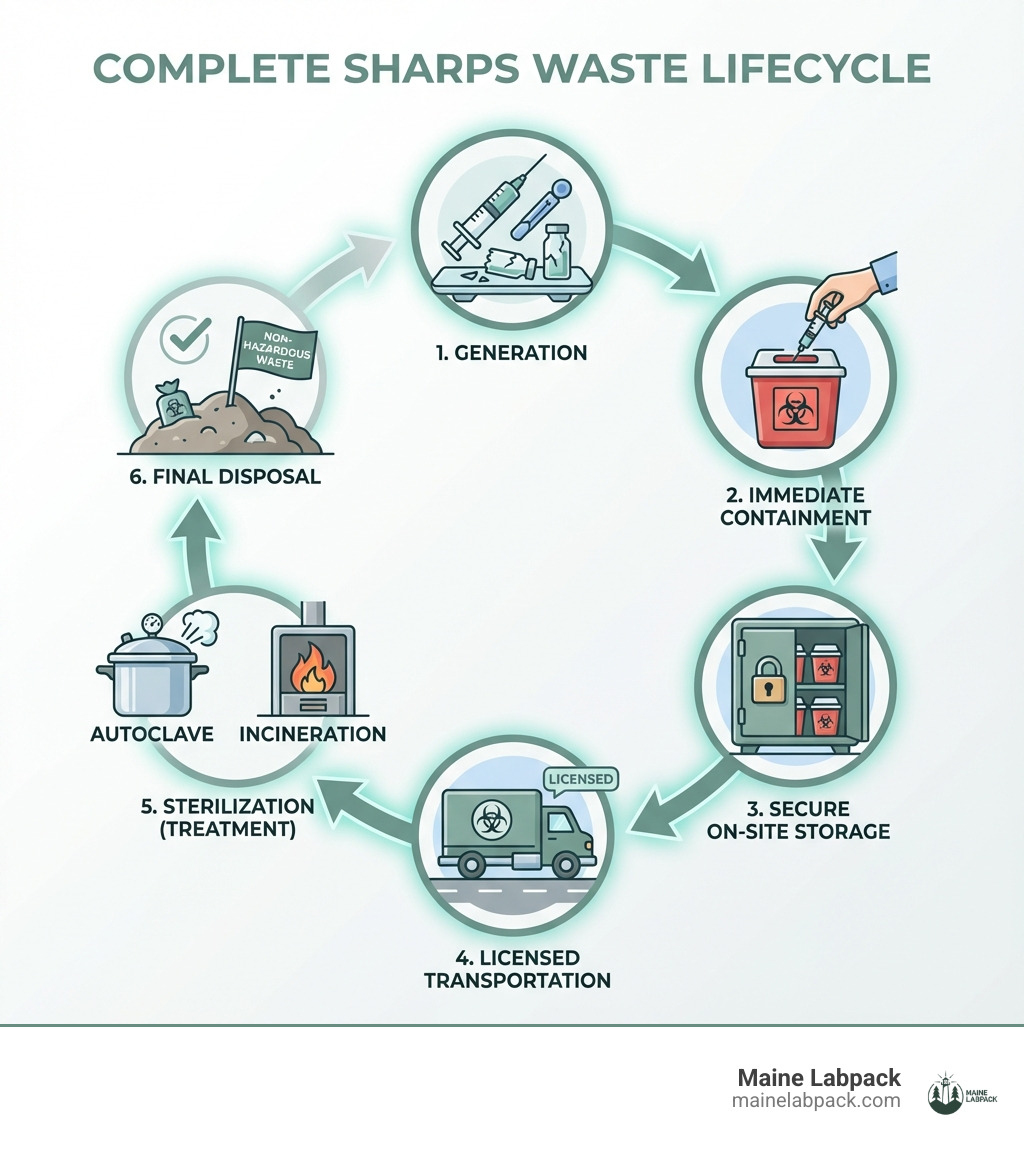
What happens to sharps waste after it’s collected?
After collection by a licensed hauler, sharps waste is securely transported to a treatment facility. There, it is rendered non-infectious, typically through autoclaving (steam sterilization) or incineration. After treatment, the waste is considered ordinary solid waste and is disposed of in a sanitary landfill. A certificate of destruction is issued to the generator, providing proof of compliant disposal.
What should I do in case of a needlestick injury?
A needlestick injury requires immediate action:
- First Aid: Immediately wash the area thoroughly with soap and water. Do not squeeze the wound.
- Medical Attention: Contact your supervisor and seek prompt medical evaluation from an occupational health provider or emergency room. Post-exposure treatment may be necessary to prevent infection.
- Report the Incident: Follow your workplace’s protocol for reporting the injury. This is crucial for your health and for preventing future incidents.
Always err on the side of caution and seek professional medical advice after any needlestick injury, even if the risk seems low.
Partnering with Maine Labpack for Safe and Compliant Disposal
Effective sharps waste management is more than just a regulatory hurdle; it’s a fundamental aspect of protecting human health, safeguarding the environment, and upholding your organization’s ethical responsibilities. From understanding the definition and risks of sharps waste to navigating the intricate web of national and state-specific regulations, the journey towards compliant disposal can seem daunting.
However, the core principles remain clear: meticulous segregation at the source using color-coded containers, adherence to strict handling protocols, and thorough documentation are non-negotiable. For businesses and healthcare facilities, the legal and ethical duty to manage sharps responsibly underscores the critical importance of a reliable partner.
That’s where Maine Labpack comes in. As a hazardous waste management company based in Maine and serving all of New England, we specialize in providing professional, on-time, and sustainable chemical and hazardous materials disposal. We act as your one-stop shop, coming directly to your site to handle your sharps waste and other regulated medical waste with expertise and precision.
By partnering with an experienced and compliant provider, you ensure that your sharps waste management practices are not only safe but also fully compliant with all applicable federal and state regulations. This allows you to focus on your primary mission, confident that your waste is being handled responsibly, from collection to final destruction.
Ensure the safety of your staff, your community, and the environment. Take the proactive step towards compliant and sustainable sharps waste management.