
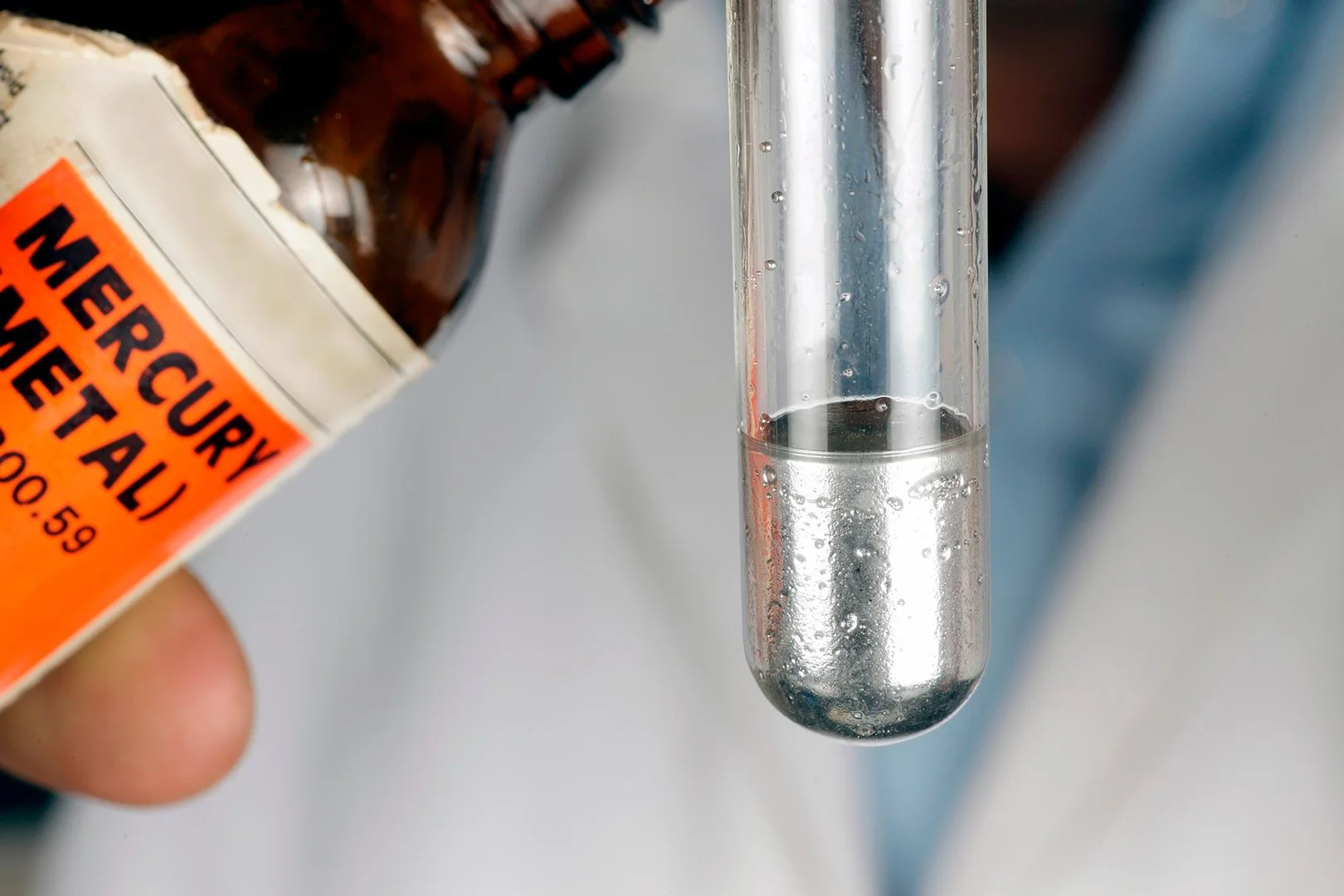
Mercury Recycling: What You Need to Know Right Away
Mercury recycling is the process of safely collecting, transporting, and reclaiming mercury from used products so it stays out of landfills, waterways, and the air. If you need to find a recycling location or drop-off site quickly, here are your fastest options:
- Use Earth911.com – search by zip code for local mercury drop-off sites
- Contact your local Household Hazardous Waste (HHW) program – most counties run collection events
- Visit thermostat-recycle.org – find thermostat-specific drop-off locations near you
- Call a licensed hazardous waste company (like Maine Labpack) for on-site pickup and compliant disposal
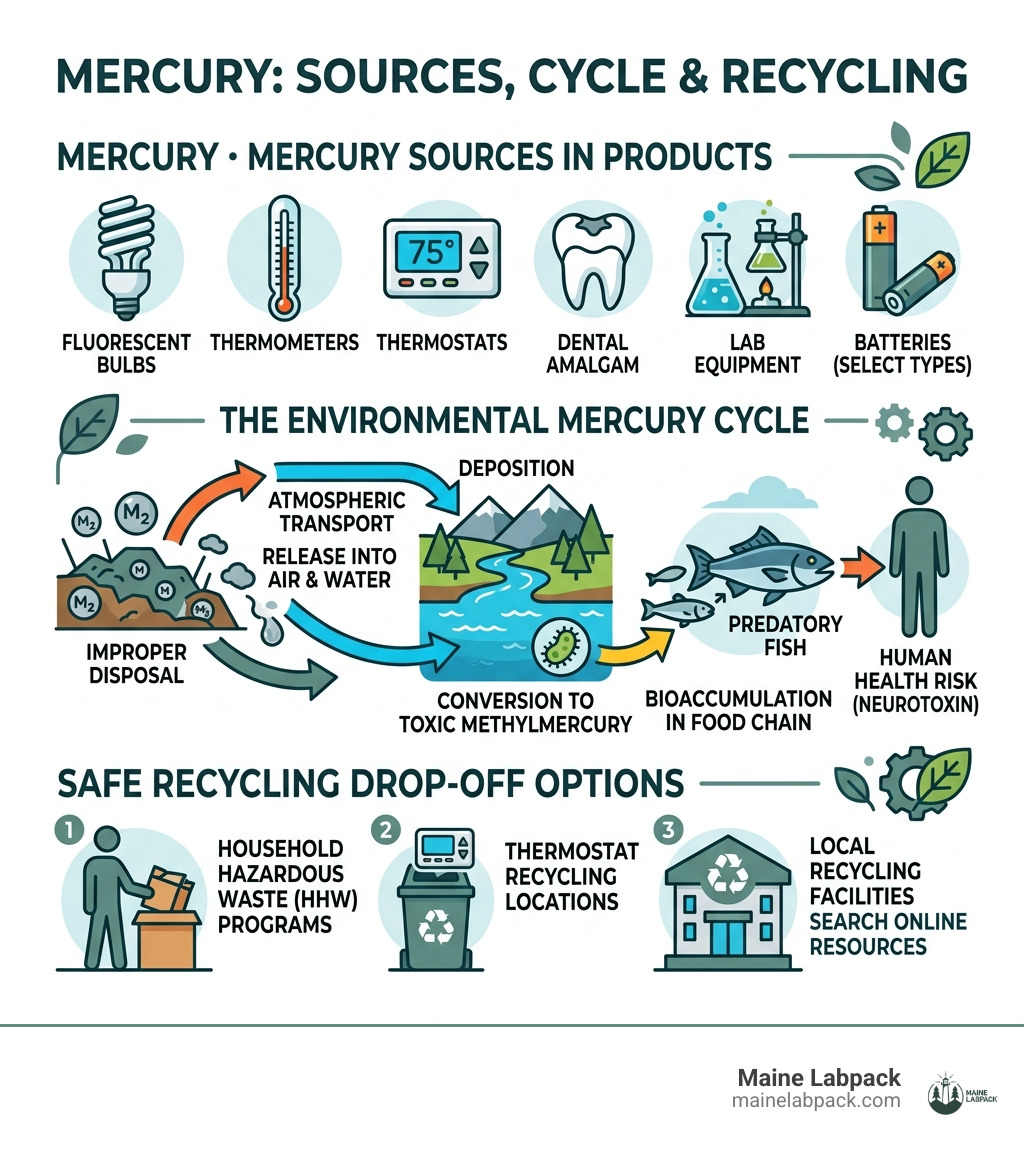
Mercury is found in everyday items most people don’t think twice about — fluorescent bulbs, old thermostats, dental fillings, lab equipment, and more. When these products are thrown in the trash, mercury doesn’t disappear. It persists in the environment indefinitely, contaminating soil, water, and air.
The scale of the problem is significant. In the early 1990s, U.S. manufacturers used between 500 and 600 metric tons of mercury per year. That figure has dropped to an estimated 200 metric tons or less annually — but a large amount of mercury is still in circulation inside aging products at homes, hospitals, schools, and industrial facilities right now.
For facilities managing accumulated hazardous materials, improper mercury disposal isn’t just an environmental issue — it’s a compliance risk that can trigger fines and operational disruption.
This guide walks you through everything you need to know: what products contain mercury, how regulations apply to your situation, how to store and transport it safely, and where to find recycling services.
Why Mercury Recycling is Essential for Health and Safety
Mercury is a naturally occurring element, but its presence in our homes and businesses is far from “natural.” It is a potent neurotoxin that never breaks down into a harmless substance. Because it persists indefinitely, every gram of mercury tossed into a standard dumpster contributes to a global cycle of pollution.
When mercury enters the environment—often through landfill leachate or incinerator emissions—it undergoes a transformation. Microorganisms in water and soil convert it into methylmercury, a highly toxic organic form. This is where the real danger begins. Through a process called bioaccumulation, methylmercury moves up the food chain. Small organisms absorb it, larger fish eat those organisms, and eventually, predatory fish like tuna or swordfish contain mercury levels up to a million times higher than the surrounding water.
The Health Risks of Exposure
Exposure to mercury can occur through inhaling vapors (elemental mercury), ingestion (methylmercury in fish), or skin contact (inorganic mercury compounds). The health effects are severe and often permanent:
- Neurotoxicity: Mercury damages the central nervous system, leading to tremors, memory loss, and cognitive impairment.
- Developmental Hazards: Even low-level exposure is dangerous for pregnant women, as it can impair the brain development of a fetus.
- Organ Damage: Inorganic mercury is particularly harmful to the kidneys and gastrointestinal tract.

Due to these risks, at least 40 states have issued fish consumption advisories. By prioritizing mercury recycling, we prevent this toxic metal from entering the atmospheric and aquatic cycles in the first place. According to Scientific research on mercury recycling in the United States, the efficiency of mercury recovery was estimated at 62 percent in 2000. While that number has improved, there is still a significant gap that leads to environmental leakage.
Table: Mercury Risk Comparison
| Form of Mercury | Common Source | Primary Risk Path | Major Health Impact |
|---|---|---|---|
| Elemental | Thermometers, Switches | Inhalation of Vapors | Nervous system damage |
| Inorganic | Industrial Chemicals | Ingestion/Skin Contact | Kidney & GI tract damage |
| Organic (Methylmercury) | Contaminated Fish | Ingestion | Fetal brain development |
Identifying Mercury-Containing Products in Your Facility
Many modern facilities are surprised to find how much mercury they still have on-site. While many manufacturers have phased out mercury, legacy equipment remains in use throughout New England, from the textile mills of Massachusetts to the laboratories in Vermont.
Identifying these items is the first step toward a successful mercury recycling program. For a deeper dive into specific equipment, you can find More info about Mercury Devices on our dedicated service page.
Common Items Requiring Mercury Recycling
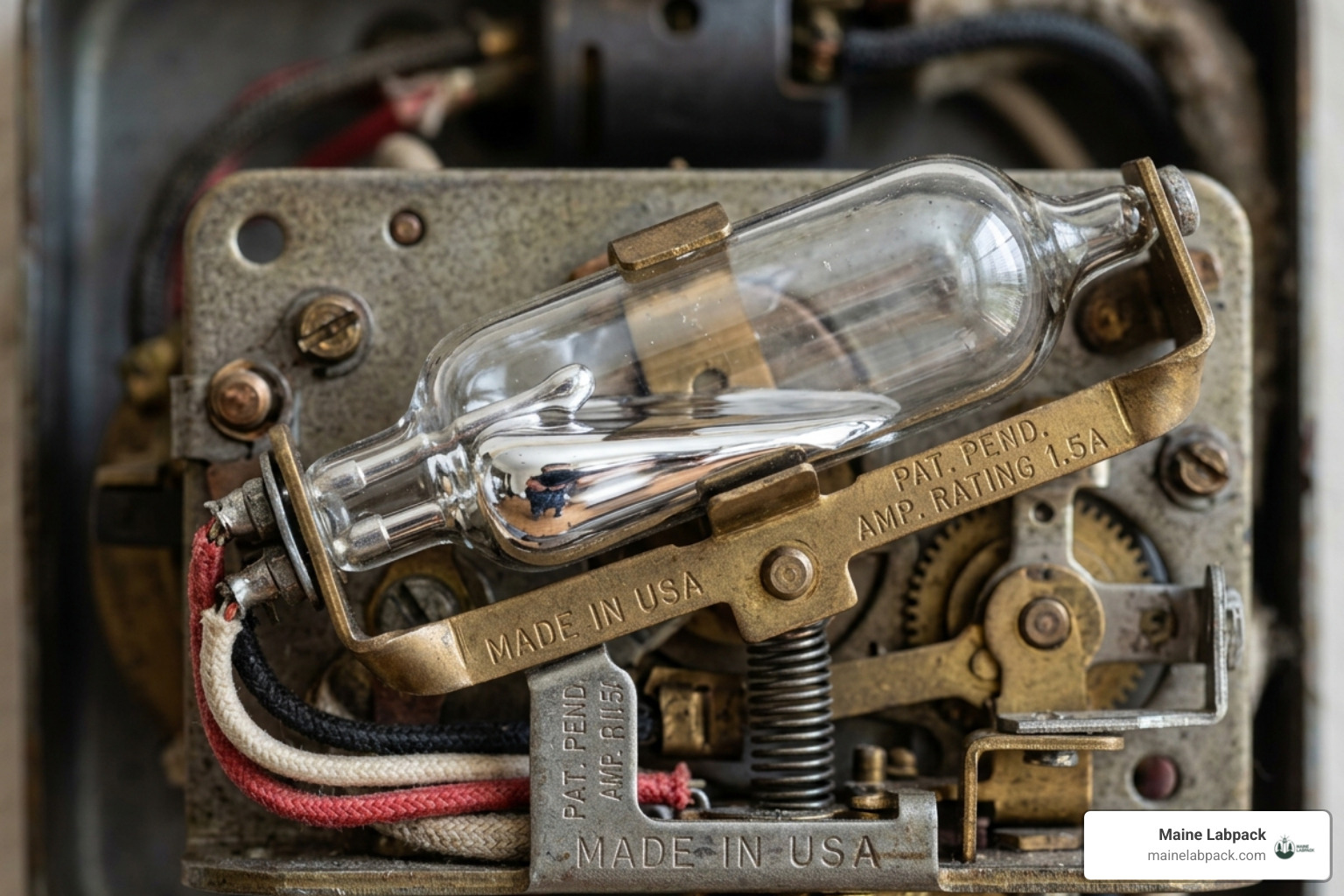
- Thermostats: Older “round” thermostats contain a glass tilt switch filled with liquid mercury. A single thermostat can contain several grams of the metal.
- Fluorescent Lamps and HID Bulbs: All fluorescent tubes (CFLs, HID, metal halide, and neon lights) contain mercury vapor. If they break, the vapor is released immediately.
- Medical Equipment: Sphygmomanometers (blood pressure cuffs) and thermometers are classic sources. A single sphygmomanometer can contain over 9 milliliters of mercury.
- Dental Amalgam: Traditional “silver” fillings are actually 43-54% mercury. Dental offices must use amalgam separators to prevent this waste from entering the sewer system.
- Switches and Sensors: Found in everything from old chest freezers to industrial “tilt” sensors and flame sensors in gas appliances.
- Laboratory Chemicals: Many older reagents and compounds (like mercuric chloride) are still tucked away in school and industrial lab cabinets.
Navigating Regulations and Universal Waste Compliance
Managing mercury isn’t just a good deed; it’s a legal requirement. The primary federal law governing mercury is the Resource Conservation and Recovery Act (RCRA). Under RCRA, most mercury-containing products are classified as “Universal Waste.”
The Universal Waste rule was designed to encourage mercury recycling by streamlining the administrative burden on businesses. Instead of the strict manifesting required for “fully regulated” hazardous waste, Universal Waste allows for:
- Longer Accumulation Times: You can generally store these items for up to one year.
- Simplified Labeling: Containers must be clearly marked with phrases like “Universal Waste – Mercury-Containing Equipment.”
- Easier Transport: You can use a common carrier instead of a hazardous waste transporter, provided specific packaging standards are met.
State-Specific Nuances in New England
While federal rules provide a baseline, states like Vermont, Maine, and Massachusetts often have stricter requirements. For example, Vermont has a total ban on disposing of mercury-containing products in the trash, regardless of whether they come from a household or a business.
In Massachusetts, the Mercury Management Act mandates that certain products be recycled at the end of their life and prohibits their disposal in municipal waste combustors. Keeping up with these variations is vital. To stay organized, consult our Universal Waste Management Guide: Mercury for a breakdown of compliance steps.
Step-by-Step Guide to Safe Mercury Disposal and Transport
If you discover mercury in your facility, the goal is “containment and stabilization.” Mercury is unique because it is a liquid at room temperature and evaporates into an odorless, invisible, toxic gas.
1. Safe Storage
Never store mercury in a container that can break easily, like thin glass. Use high-density polyethylene (HDPE) plastic or the original manufacturer’s packaging. Place the primary container inside a secondary, leak-proof container (like a plastic bucket) and surround it with an absorbent material like kitty litter. Label the outer container “Mercury – DO NOT OPEN.”
2. Handling Spills
If a thermometer or bulb breaks, never use a vacuum or a broom. This will only break the mercury into smaller beads and spread the vapor throughout the room.
- Ventilate the area by opening windows.
- Use a mercury spill kit, which includes sulfur powder or specialized “mercury sponges” to stabilize the metal.
- If the spill is larger than two tablespoons, you must contact a professional remediation team or your state’s environmental protection department.
3. Compliant Transport
When preparing for mercury recycling, ensure the containers are secured so they cannot tip over in the vehicle. The EPA guidelines for storing and transporting mercury suggest transporting the waste in the back of a truck or a well-ventilated trunk, away from the passenger cabin.
Finding Mercury Recycling Locations and Professional Services
Finding a place to take your mercury shouldn’t be a scavenger hunt. Depending on your volume and location, there are several avenues available.
Household and Small Business Options
For individuals and very small businesses (often called VSQGs), municipal Household Hazardous Waste (HHW) programs are the best bet. Many New England towns host collection days in the spring and fall. Organizations like the Thermostat Recycling Corporation (TRC) also maintain a network of thousands of drop-off sites specifically for mercury thermostats, often located at HVAC wholesalers.
Professional Mercury Recycling Services
For larger businesses, hospitals, and schools, “dropping off” waste isn’t always practical or legal. This is where professional services become essential. A comprehensive mercury recycling program should offer:
- Turnkey Logistics: On-site pickup so you don’t have to worry about transport.
- Waste Profiling: Ensuring all materials are correctly identified and categorized for the recycler.
- Compliance Documentation: Providing the “paper trail” (Certificates of Recycling) needed to prove to regulators that you did the right thing.
For a complete overview of these professional options, see our Guide: Mercury Waste Recycling & Disposal.
Advanced Technologies in Mercury Recovery
What happens to the mercury after it leaves your facility? It doesn’t just sit in a warehouse. It goes through an intensive industrial process to be purified and reused.
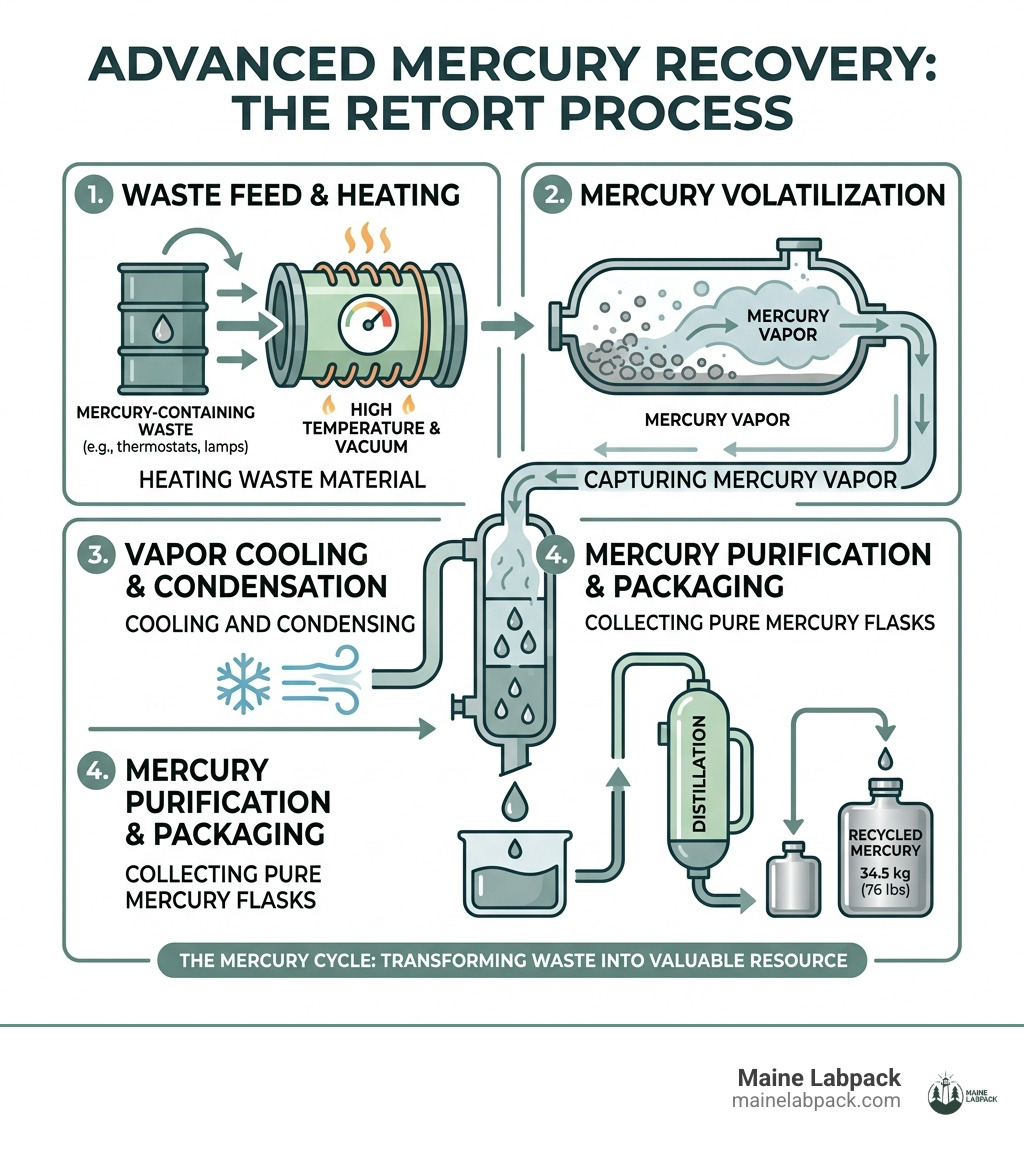
The primary method used in mercury recycling is thermal desorption or the use of high-temperature retorts. In this process, mercury-containing waste is heated in a vacuum. Because mercury has a low boiling point, it volatilizes (turns into gas) while the glass, metal, or plastic remains solid. The mercury vapor is then captured, cooled until it condenses back into a liquid, and purified through distillation.
The Economics of Mercury
The market for recycled mercury is influenced by “flask pricing.” A standard flask of mercury weighs 34.5 kilograms (about 76 pounds). Historically, prices have fluctuated wildly—from $150 per flask in the early 2000s to over $850 in later years. As the global supply of “prime” (mined) mercury decreases due to international agreements like the Minamata Convention, the value of reclaimed mercury from recycling becomes even more critical to the global market.
Frequently Asked Questions about Mercury Recycling
Where can I find a mercury recycling drop-off near me?
For households, check Earth911.com or your local town hall’s waste management page. For businesses in Maine, New Hampshire, or Massachusetts, Maine Labpack provides on-site collection services, coming directly to your facility to handle the logistics.
Is it illegal to throw mercury thermometers in the trash?
In many New England states, yes. Vermont and Maine have specific bans on disposal. Regardless of the law, throwing mercury in the trash is dangerous because it will eventually break and leak into the environment.
What should I do if a mercury-containing bulb breaks?
Do not vacuum! Clear the room of people and pets, open the windows for at least 15 minutes, and use stiff paper or cardboard to scoop up glass fragments and mercury beads. Place everything in a sealed glass jar or plastic bag and take it to a mercury recycling facility.
Ready to Recycle Mercury Safely? Take the Next Step
Mercury is a relic of 20th-century technology that requires 21st-century responsibility. Whether it’s a single thermometer in a desk drawer or a pallet of fluorescent lamps in a warehouse, proper mercury recycling is the only way to protect our communities and stay compliant with environmental laws.
At Maine Labpack, we understand the complexities of hazardous waste management across New England. From Portland to Boston and Burlington to Concord, we provide the expertise needed to manage your “legacy” mercury safely and sustainably. We act as a one-stop shop, coming to your site to handle everything from waste profiling to final disposal.
Ready to clear out your hazardous waste and protect the environment? Schedule professional mercury recycling and disposal services with Maine Labpack today. Together, we can keep New England’s water and air clean for the future.