
Last updated on March 4th, 2026 at 08:35 pm
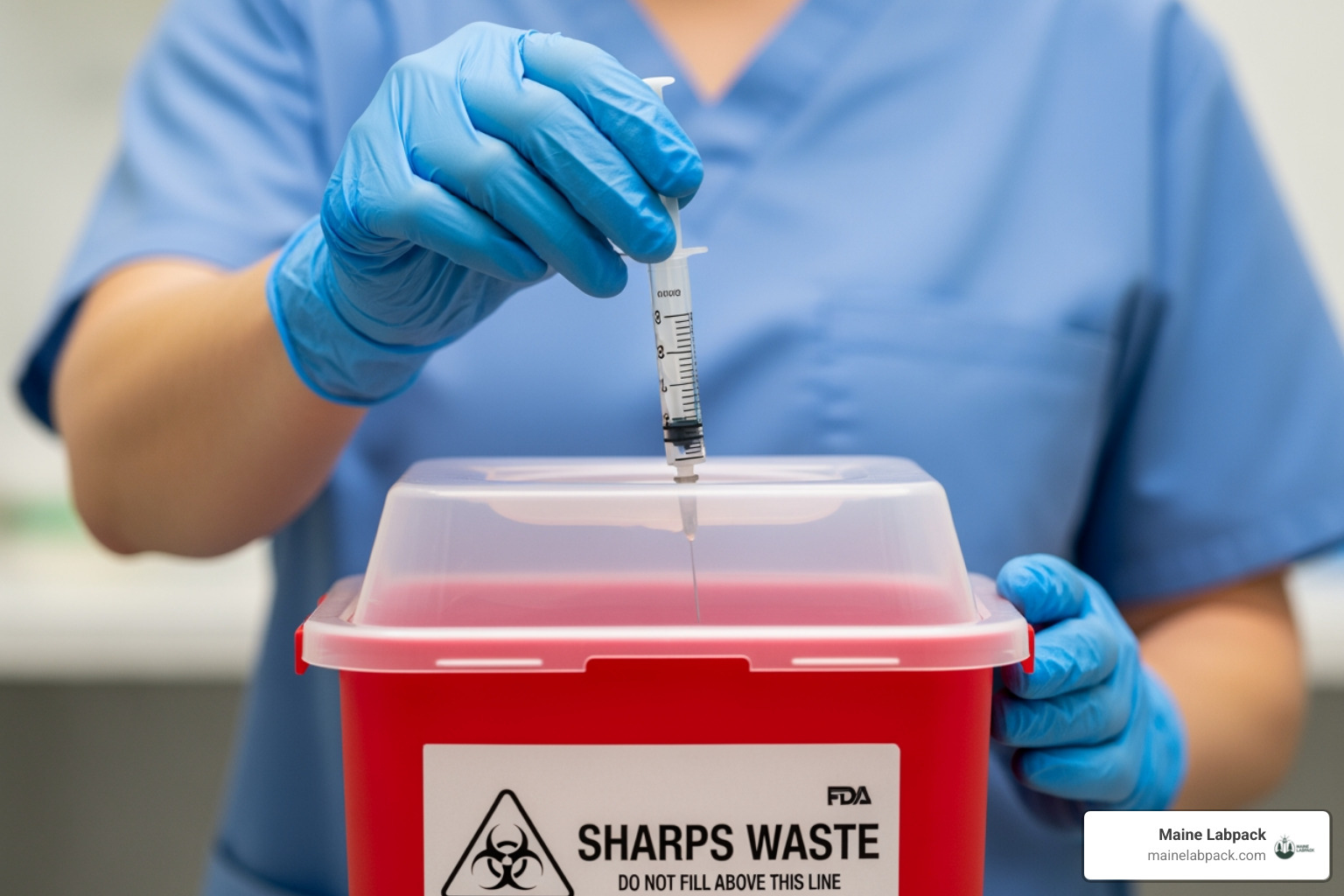
Sharps disposal requires following specific safety protocols to protect yourself, sanitation workers, and your community from needlestick injuries and disease transmission. If you use needles, syringes, lancets, or other sharps, you need to know the safe disposal methods that comply with state laws and protect public health.
Quick Guide to Safe Sharps Disposal:
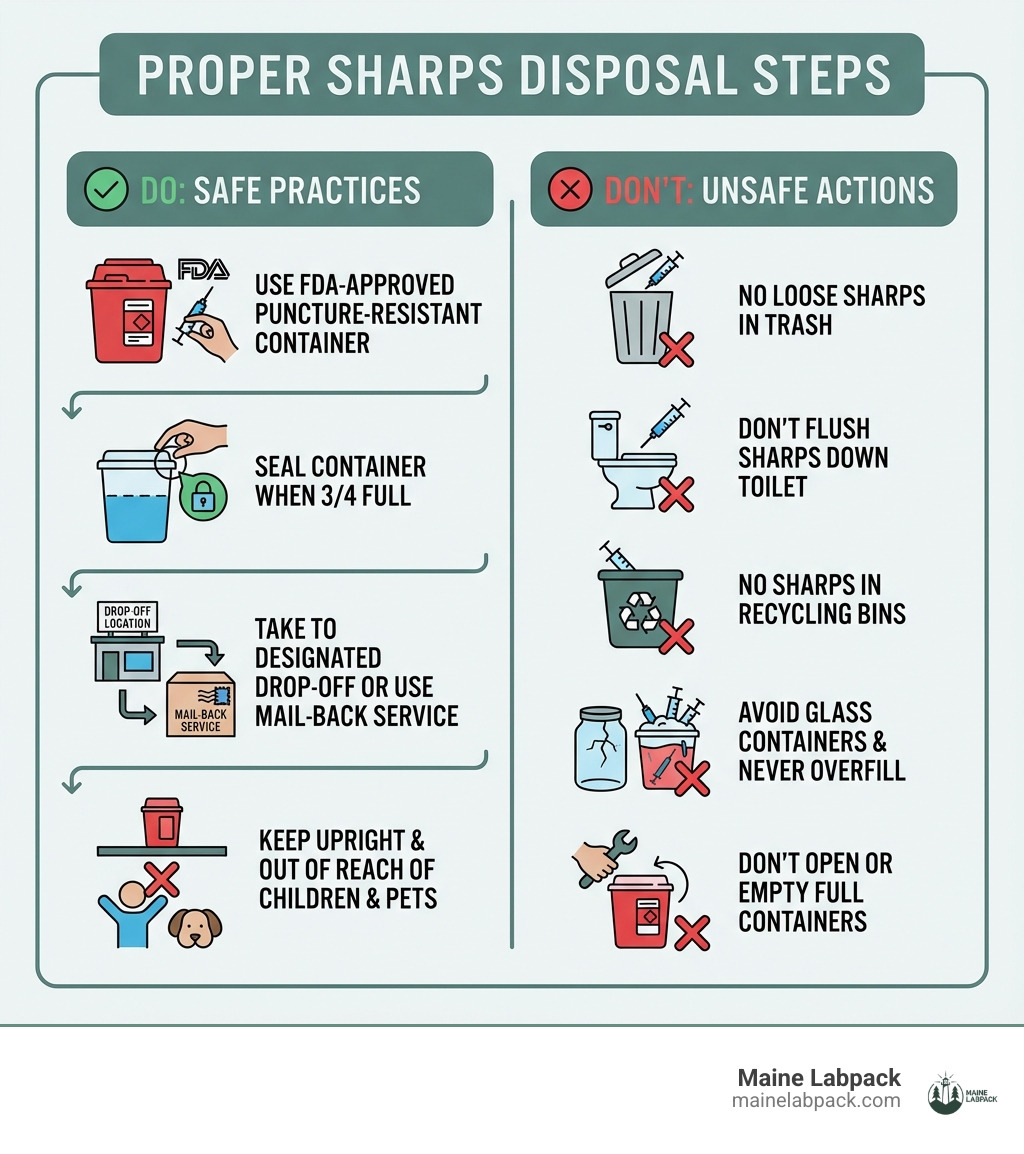
- Use an FDA-cleared sharps container or heavy-duty plastic container (like a laundry detergent bottle)
- Never throw sharps in regular trash, recycling, or flush them down the toilet
- Find a drop-off location at pharmacies, health departments, or household hazardous waste facilities
- Consider mail-back programs that provide prepaid shipping for filled containers
- Seal containers when 3/4 full and label them clearly as “SHARPS”
What are sharps? They’re medical devices with sharp points or edges that can puncture skin:
- Needles and syringes
- Lancets (used for blood sugar testing)
- Auto-injectors (like EpiPens)
- Infusion sets
- Connection needles
The stakes are high. Laws in many states, including Maine, prohibit sharps in regular trash, and for good reason. Used sharps can injure trash collectors, family members, pets, housekeepers, and janitors. They spread serious diseases like HIV/AIDS, hepatitis, and tetanus through accidental needlestick injuries.
The numbers tell the story. Thousands of sanitation workers face needlestick risks every year from improperly disposed sharps. Your children and pets are at risk if needles are stored or thrown away incorrectly. One careless disposal decision can have life-threatening consequences for someone else.
This guide walks you through every step of safe sharps disposal, from choosing the right container to finding local programs and understanding your legal responsibilities.
Understanding Sharps and the Risks of Improper Disposal
Sharps are more than just needles; they encompass any object with sharp points or edges that can cut or puncture skin. This includes common items like hypodermic needles, syringes with attached needles, lancets used for finger pricks, auto-injectors (such as those for allergies or diabetes), and connection needles. These devices are essential for many medical treatments, but their safe handling doesn’t end after use.
Why is their disposal such a critical concern? The primary reason is the significant public health risk they pose when not handled properly. Improper sharps disposal can lead to:
- Needlestick Injuries: These are accidental punctures of the skin by used needles or other sharps. They are a serious occupational hazard for sanitation workers, housekeepers, and janitors who sort through waste. Imagine encountering a hidden needle in a trash bag – it’s a shocking and dangerous surprise.
- Risk to Family and Pets: At home, improperly stored or disposed sharps can easily injure curious children or unsuspecting pets. A loose needle in a wastebasket or on a countertop is an invitation to potential harm.
- Spread of Disease: This is perhaps the most alarming risk. Used sharps can be contaminated with bloodborne pathogens. An accidental needlestick can transmit serious diseases like HIV/AIDS, hepatitis B, and hepatitis C. Even common infections like tetanus can be spread. The potential for such severe health consequences underscores why safe sharps disposal is not just a recommendation, but a necessity.
- Environmental Contamination: When sharps end up in landfills or wastewater systems, they can pose a risk to the environment and the public at large. They are not biodegradable and can persist, potentially harming wildlife or contaminating water sources if not properly managed.
Your Guide to Safe and Compliant Sharps Disposal
Proper sharps disposal begins with the right container. The goal is to contain the sharp, preventing any accidental punctures or spills that could lead to injury or contamination.
Choosing the Right Container
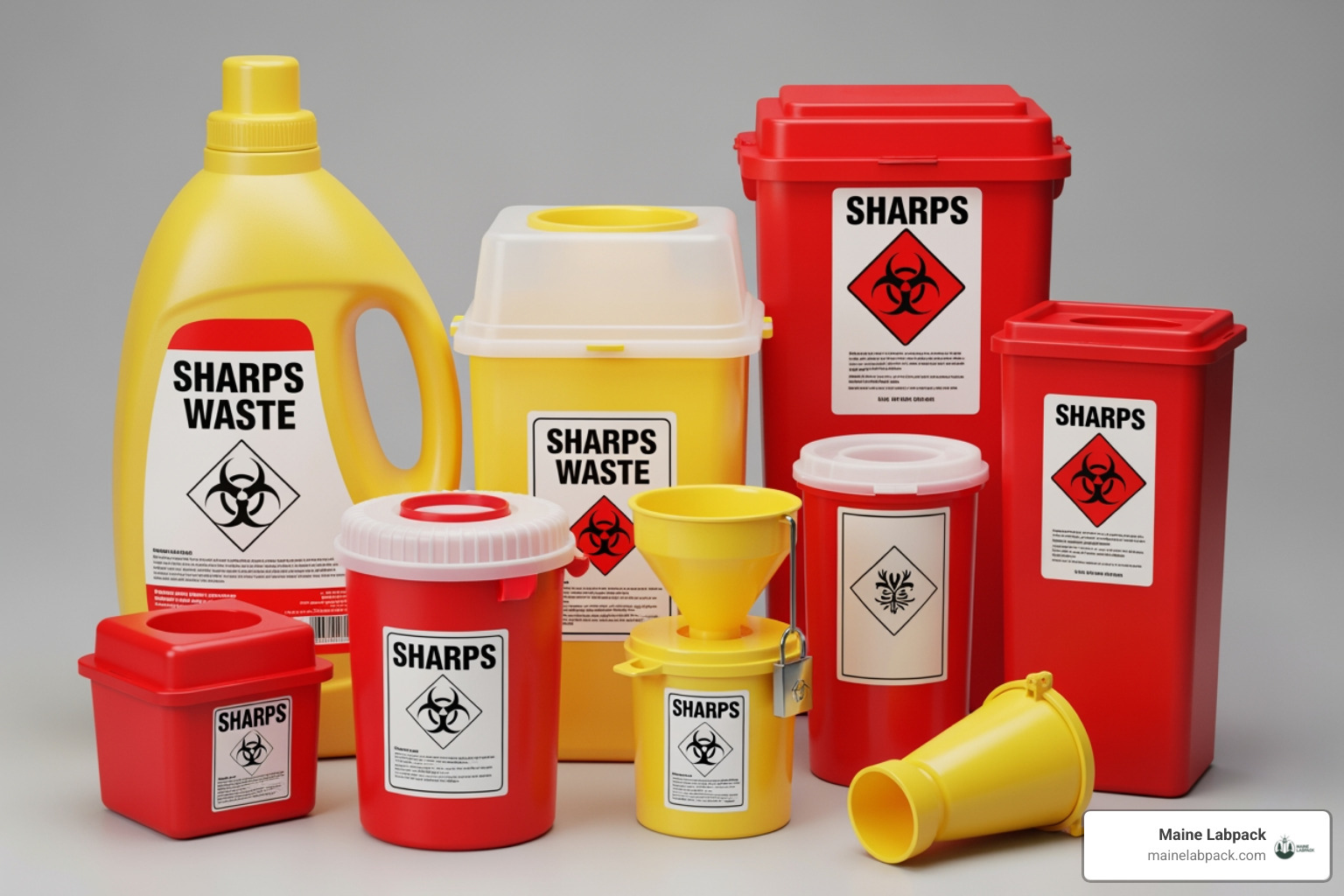
- FDA-cleared Containers: The gold standard for sharps disposal are FDA-cleared sharps containers. These are specifically designed to be rigid, puncture-resistant, and leak-resistant, with a tight-fitting, puncture-resistant lid. They have an opening that allows sharps to enter but is too small for a hand, preventing accidental contact. Many are clearly marked with a biohazard symbol.
- Heavy-Duty Household Containers: If an FDA-cleared container isn’t immediately available, certain heavy-duty household containers can serve as a temporary solution for home-generated sharps. The most commonly recommended alternative is a heavy-duty plastic laundry detergent bottle. These bottles are usually made of thick, puncture-resistant plastic, have a stable base, and a screw-on cap. Be sure to label it clearly with “SHARPS,” “BIOHAZARD,” or “DO NOT RECYCLE.”
- Never Use Glass Containers: Glass containers, though seemingly sturdy, are a definite no-go for sharps disposal. They can break, creating new sharp hazards and exposing the contents.
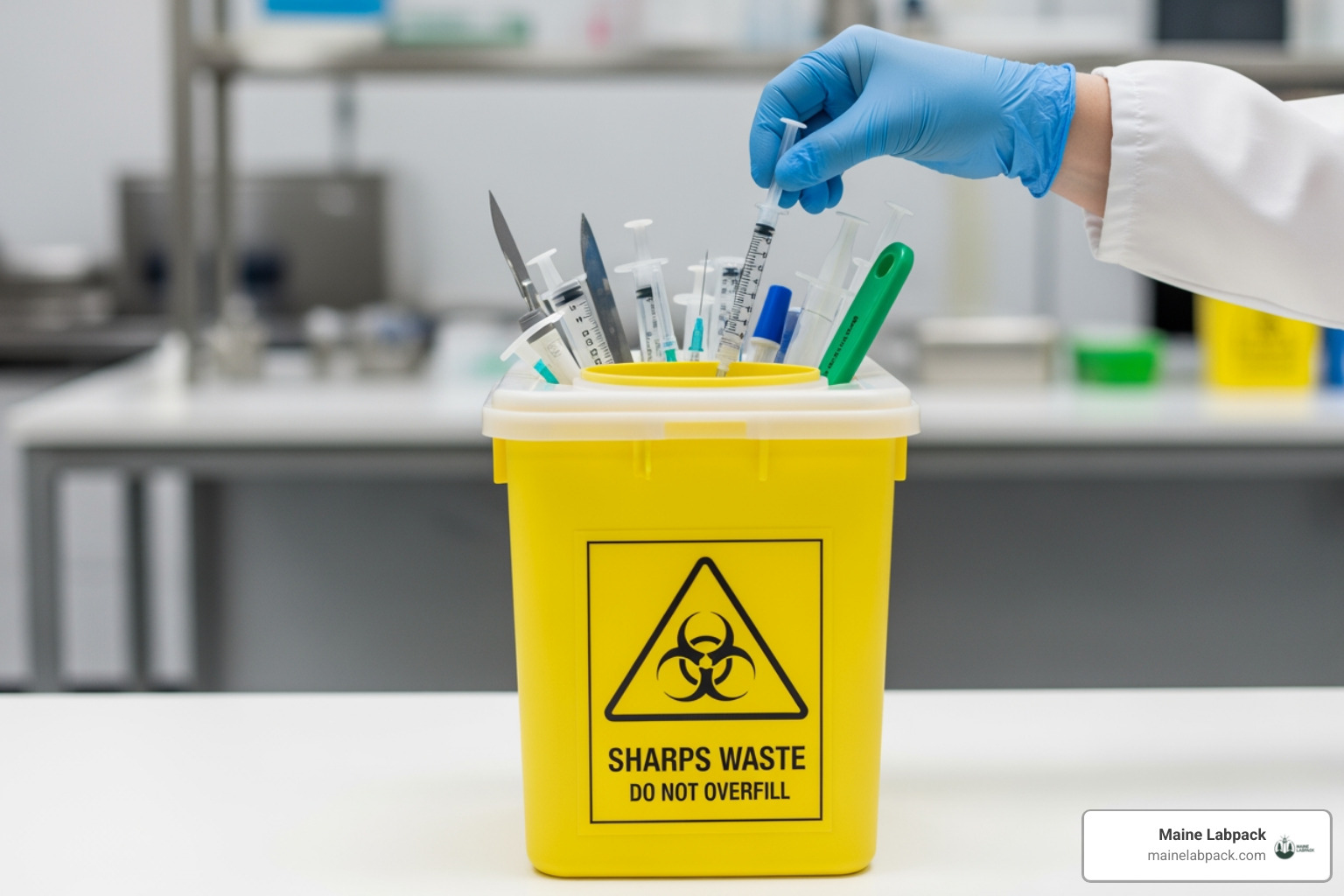
- Never Overfill Containers: Sharps containers, whether FDA-cleared or improvised, should never be filled past the “fill line” (usually about three-quarters full). Overfilling increases the risk of sharps protruding from the container or causing injury when the lid is being secured.
- Sealing and Labeling Containers: Once your container reaches the fill line, or if you’re preparing it for disposal, ensure the lid is tightly sealed. For household containers, reinforce the lid with strong tape. Always label the container clearly with “SHARPS” and keep it out of reach of children and pets.
For more detailed guidance on the safe handling and disposal of sharps outside of healthcare settings, the FDA offers comprehensive information at Disposal of Sharps Outside of Health Care Facilities.
Recommended Methods for Home-Generated Sharps Disposal
Once your sharps are safely contained, the next step is proper disposal. Never throw them loosely into the trash, flush them down the toilet, or place them in recycling bins. In states like Maine, these practices are explicitly prohibited.
Here are the recommended methods for home-generated sharps disposal in New England:
- Drop-off Collection Sites: Many communities offer designated drop-off locations. These can include:
- Pharmacies: Some pharmacies participate in take-back programs, accepting used sharps containers from their customers. It’s always a good idea to call ahead to confirm their policy.
- Hospitals and Clinics: Local hospitals and clinics may have designated drop-off bins, often located in their emergency departments or at specific collection points.
- Household Hazardous Waste (HHW) Facilities: Many municipal or county HHW facilities accept sharps containers during their regular operating hours or at special collection events. Check your local town or county’s waste management website for schedules and requirements.
- Mail-Back Programs: These programs offer a convenient and discreet way to dispose of sharps. You typically order a special kit that includes an FDA-cleared sharps container, a prepaid shipping label, and packaging. Once the container is full, you seal it and mail it back for proper disposal. This is a popular option, especially for those in rural areas or with limited access to drop-off sites.
- In-Home Destruction Devices: While less common for everyday home users, some devices are available that can destroy sharps at home, rendering them unusable and safe for disposal in regular trash (though it’s always best to check local regulations first). These are often used for specific medical needs.
For residents in Maine, the Department of Environmental Protection provides specific guidelines and resources for Safe Disposal of Household Medical Sharps in Maine.
Finding Local Disposal Programs and Services
Locating a convenient and compliant sharps disposal program in your area is crucial. Here’s how individuals in Maine, New Hampshire, Massachusetts, Vermont, and Rhode Island can find options:
- Searching Local Databases and Government Websites: Start with your local town or city’s waste management or public works department website. Many municipalities and counties in New England maintain databases or lists of approved sharps disposal locations, including pharmacies, hospitals, and household hazardous waste facilities. A quick search for “[Your Town/County] sharps disposal” or “[Your State] medical waste disposal” can yield valuable results.
- Contacting Local Health Departments: Your local public health department is an excellent resource for information on sharps disposal programs in your community. They can often provide a list of drop-off sites or guide you to relevant state resources.
- Asking Your Pharmacist or Doctor: Healthcare providers and pharmacists are often well-informed about local sharps disposal options. When picking up your prescriptions, don’t hesitate to ask if they offer a take-back program or can recommend nearby facilities. They may also have pamphlets or information on state-specific guidelines.
- Mail-Back Services: Mail-back programs are available across the country. While specific programs like MED-Project or Sharps Take Back California are prominent examples in other states, similar services exist for New England residents. These can be found through online searches for “sharps mail-back program [Your State]” or by checking with national medical waste disposal companies. These services provide everything you need, from the container to prepaid shipping, for safe and compliant disposal.
For businesses and healthcare facilities in New England looking for comprehensive sharps services, you can find more information at More info about sharps services.
Navigating Regulations and Responsibilities
Sharps disposal isn’t just about good practice; it’s often a matter of law. Regulations vary from state to state, but the underlying principle is universal: protect public health and safety.
In many states, including Maine, it is illegal to dispose of sharps waste in the regular trash. This prohibition ensures that these hazardous items do not endanger sanitation workers or end up in landfills where they could pose an environmental risk. While specific laws differ, the general consensus across the United States is that sharps require special handling. For a broader understanding of how regulations vary, you can consult Sharps Disposal Regulations by State.
Employer Responsibilities
Businesses and employers, particularly those in hospitality, transportation, or any public-facing roles, also bear responsibilities regarding sharps disposal. Even if your business doesn’t directly generate medical waste, you might encounter it from customers or guests.
- Providing Containers in Public Restrooms: Facilities like airports, hotels, restaurants, and office buildings often face a higher risk of discarded sharps in regular trash. To mitigate this, employers should consider providing FDA-cleared sharps disposal containers in restrooms or other designated areas. This offers a safe and proper disposal option for individuals using sharps for personal medical conditions.
- Making Employees and Guests Aware: Simply providing containers isn’t enough. Employees should be trained on how to identify and safely handle discarded sharps (without touching them) and how to direct guests to proper disposal locations. Signage can also help inform guests.
- Registering as a Collection Station: In some jurisdictions, businesses that provide sharps disposal containers may need to register as “sharps collection stations” and comply with state and local waste generator regulations. It’s essential for businesses to contact their state and/or local authorities to understand the legal requirements for waste generated or collected on their premises.
Proper storage of all medical waste, including sharps, is another critical aspect of compliance for businesses. You can learn more about this at Guidelines for Storing Medical Waste.
The Role of Statewide Stewardship Programs
To address the challenges of home-generated sharps disposal, some states have adopted Extended Producer Responsibility (EPR) programs. EPR is a policy approach where manufacturers are given significant responsibility for the treatment or disposal of their products after consumers are done with them. This shifts the burden of waste management from municipalities and consumers back to the producers.
- Industry-Run Programs: Under EPR, industry-run statewide stewardship programs are established to provide safe and convenient disposal options. These programs often result in a network of collection sites or mail-back services that are accessible to the public.
- No-Cost Consumer Options: A key benefit of these stewardship programs is that they typically provide disposal options for home-generated sharps waste at no cost to the consumer. This removes a financial barrier that might otherwise lead to improper disposal. While California is a notable example with comprehensive programs, as seen in their Pharmaceutical and Sharps Waste Stewardship – CalRecycle initiatives, other states are also exploring or implementing similar models.
- How Programs are Funded: These programs are generally funded by fees levied on the manufacturers of sharps products, which are then used to cover the costs of collection, transportation, and environmentally sound disposal.
Key Differences in Sharps Disposal: Healthcare vs. Home
While the underlying goal of safety is the same, sharps disposal practices differ significantly between healthcare facilities and individual home users.
| Feature | Healthcare Facilities (Hospitals, Clinics, Labs) | Home Use (Individuals with medical conditions) |
|---|---|---|
| Volume of Waste | High volume, continuous generation of sharps. | Lower volume, intermittent generation of sharps. |
| Regulatory Oversight | Strict regulations from OSHA (Occupational Safety and Health Administration), EPA (Environmental Protection Agency), and state health departments. Compliance is mandatory. | Generally guided by state and local waste management laws. Focus on public safety and environmental protection. |
| Waste Segregation | Rigorous segregation protocols for various types of medical waste, including sharps, pathological waste, and pharmaceutical waste. | Simpler segregation, primarily separating sharps from general household waste. |
| Container Types | Standardized, large-capacity, FDA-cleared sharps containers, often mounted. | FDA-cleared sharps containers or approved heavy-duty household plastic containers (like laundry detergent bottles). |
| Disposal Methods | Contracted medical waste management companies for pickup, transportation, and specialized treatment (e.g., autoclaving, incineration). | Drop-off locations (pharmacies, HHW sites), mail-back programs, or sometimes in-home destruction devices. |
| Treatment Methods | Professional treatment processes like autoclaving (steam sterilization) or incineration, followed by secure landfilling for treated waste. | Sharps collected from home users are often consolidated and then treated using the same professional methods as healthcare waste, or incinerated if part of a mail-back program. |
| Documentation | Extensive record-keeping, manifests, and compliance reporting required. | No formal documentation required for individual users. |
Healthcare facilities have complex systems and stringent regulations to manage their significant volume of sharps waste. They rely on specialized services to ensure compliance and safety. You can learn more about how professional waste management companies assist in the Safe Disposal of Sharps in Hospitals.
Frequently Asked Questions about Sharps Disposal
What should I do if I find a needle in public?
Encountering a discarded needle in a public space can be unsettling, but it’s important to act calmly and safely.
- Do Not Touch It: The most crucial rule is never to pick up a found needle with your bare hands or any improvised tool. The risk of a needlestick injury and potential exposure to bloodborne pathogens is too high.
- Report to Local Authorities: Immediately contact your local authorities. This could be the non-emergency line for the police department or your local public health department. Provide a clear description of the location and, if possible, the appearance of the needle. Many communities have specific protocols and trained personnel for safely collecting and disposing of found sharps.
Can I use a coffee can or milk jug for my sharps?
No, you should not use coffee cans or milk jugs for sharps disposal. While it might seem like a convenient way to reuse household items, these are not safe options:
- Coffee Cans: Metal coffee cans can be easily punctured by needles, especially if they are thin or corroded. The lids may also not be secure enough to prevent accidental opening.
- Milk Jugs: Plastic milk jugs, while plastic, are typically made of thin, flexible plastic that is not puncture-resistant enough to contain sharps safely. They can easily be pierced, and their caps may not provide a secure, tight seal.
Always use an FDA-approved sharps container or, as a last resort, a heavy-duty plastic bottle like a laundry detergent bottle that is puncture-resistant, has a stable base, and a screw-on cap. Remember to label it clearly.
What happens to sharps after they are collected?
Once sharps are collected through drop-off programs or mail-back services, they enter a regulated medical waste stream for safe processing:
- Medical Waste Treatment: The collected sharps are transported to licensed medical waste treatment facilities. Here, they undergo processes designed to neutralize any biological hazards.
- Autoclaving (Sterilization): One common method is autoclaving, which uses high-pressure steam to sterilize the sharps and render them non-infectious. After autoclaving, the treated waste is often shredded and then disposed of in a secure landfill.
- Incineration: Another method is incineration, where the sharps are burned at very high temperatures. This process destroys both the physical sharps and any pathogens, reducing the waste to ash.
- Secure Landfilling: Following either treatment method, the remaining material (sterilized waste or ash) is safely disposed of in a secure, permitted landfill, minimizing any environmental impact.
These rigorous processes ensure that once sharps leave your hands, they continue to be handled with the utmost care and in compliance with environmental and health regulations.
Trusted Sharps Disposal from Maine Labpack
Safe sharps disposal is one of the simplest ways to prevent needlestick injuries, protect sanitation workers, and keep used needles and lancets out of the trash and environment. The how-to is straightforward: place sharps in a puncture-resistant container, seal it before it’s full, and use a local drop-off or mail-back option that follows your state’s rules.
If you’re a healthcare facility or business in New England, compliant sharps disposal gets more complex fast. Maine Labpack can help you set up a safer, regulation-ready program. Get started here: Contact us for healthcare waste disposal services.
Effective sharps disposal is a responsibility we all share, whether you’re a home user, a healthcare professional, or a business owner. It’s a simple act that has profound implications for public health, environmental safety, and the well-being of sanitation workers and our communities. By understanding what sharps are, recognizing the risks of improper disposal, and following the recommended safe methods, we can collectively prevent countless injuries and the spread of serious diseases.
Always choose appropriate containers, use local drop-off points or convenient mail-back programs, and stay informed about the specific regulations in your state. For businesses and healthcare facilities throughout New England, ensuring compliant and sustainable waste management is paramount. Professional services, like those offered by Maine Labpack, provide the expertise and on-site solutions needed to steer these complexities, guaranteeing safety and adherence to regulations.
If your New England business or healthcare facility needs assistance with professional, on-time, and sustainable chemical and hazardous materials disposal, including sharps, we are here to help. Contact us for healthcare waste disposal services to ensure your waste management practices are safe, compliant, and responsible.