

Hazardous waste barrels are specialized containers for storing, accumulating, and transporting ignitable, corrosive, reactive, or toxic materials. The basics matter:
- Container types: Drums, pails, totes, and boxes, often 55-gallon steel or HDPE
- Regulators: EPA/RCRA rules for on-site management and DOT/PHMSA rules for transport
- Storage limits: 90 days for Large Quantity Generators; 180–270 days for Small Quantity Generators
- Core requirements: Compatible materials, closed lids, labels, secondary containment, and weekly inspections
A 2023 EPA study found that nearly 78% of industrial facilities were storing hazardous materials without proper systems in place, and 43% misclassify their barrel waste. This guide covers the practical steps that help your facility stay compliant and your team stay safe.
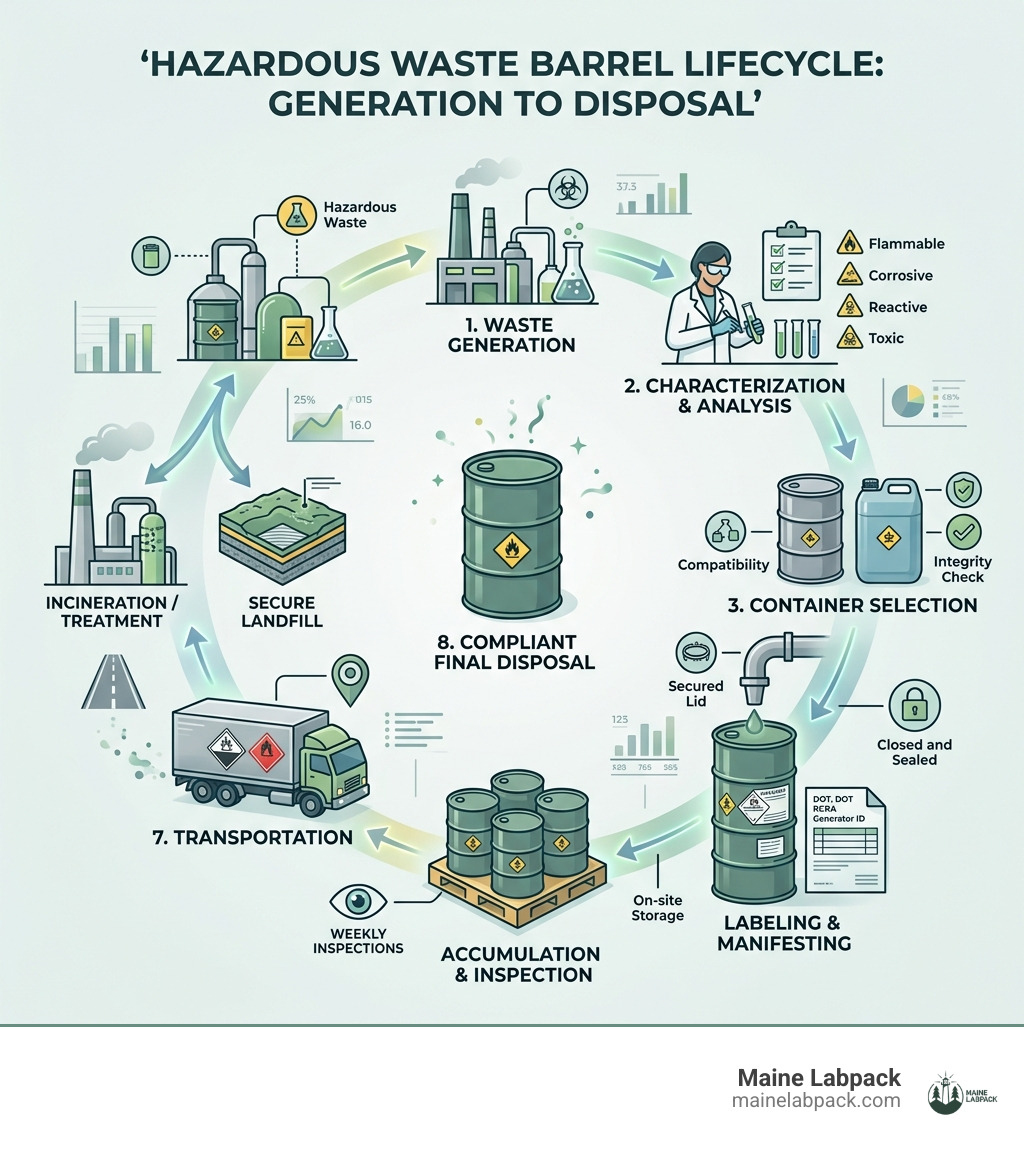
Regulatory Framework For Hazardous Waste Barrels
Managing hazardous waste barrels requires understanding two regulators: the Environmental Protection Agency (EPA), which oversees waste under RCRA, and the Department of Transportation (DOT), which governs shipment through PHMSA. For container-specific requirements, see Title 40 eCFR Subpart I.
Generator status determines how long waste can stay on-site:
| Requirement | Small Quantity Generator (SQG) | Large Quantity Generator (LQG) |
|---|---|---|
| Accumulation Time | 180 days, or 270 if over 200 miles away | 90 days |
| Quantity Limits | 1,000 kg to 6,000 kg total | No limit |
| Inspection Frequency | Weekly | Weekly |
| Personnel Training | Basic training required | Full, documented program required |
Four Characteristics Of Hazardous Waste Barrels
Before selecting a drum, characterize the waste inside. Washington State Ecology’s guide to dangerous waste containers summarizes four primary traits:
- Ignitable: Flash point below 140°F, such as solvents and thinners.
- Corrosive: pH below 2.0 or above 12.5, such as battery acid.
- Reactive: Unstable wastes that may react violently with water or heat.
- Toxic: Heavy metals and organic compounds that create long-term health risks.
UN Ratings And Container Specifications
A transport-ready drum needs a UN rating embossed on the side. For example, “1A1” indicates a closed-head steel drum, while “1A2” indicates an open-head steel drum. Plastic drums and barrels made from HDPE are often used for corrosives because they resist rust and chemical attack.
If a drum leaks, place it in a compliant salvage drum. Overpacks are used for added protection around intact containers during shipment.
Best Practices For Accumulation And Storage
Proper storage starts with a dedicated Central Accumulation Area (CAA) designed to prevent spills, reactions, and releases.
Best practices include:
- Weather Protection: Keep drums under cover to prevent lid corrosion.
- Spacing: Maintain clear aisle space so inspectors and emergency responders can reach containers.
- Separation: Store acids away from bases and flammables away from oxidizers, using barriers or separate pallets when needed.
Managing Satellite Accumulation Points
Satellite Accumulation Points (SAPs) let teams keep up to 55 gallons of hazardous waste, or 1 quart of acutely hazardous waste, at or near the point of generation. As covered in Maine Labpack’s guide to large quantity generator bulk waste disposal, these containers must still be closed and labeled. Once full, the container must move to the CAA within three days.
Secondary Containment For Hazardous Waste Barrels
Secondary containment keeps a failed drum from becoming a release. Per Ecology’s guidance on dangerous waste containers, containment should hold either 10% of total container volume or 100% of the largest container, whichever is greater. Spill pallets often work for smaller operations; larger sites may need coated, sloped concrete containment areas.
Inspection And Compliance: Avoiding Common Violations
The most common RCRA problems are often simple: open lids, poor labels, damaged drums, and missing dates. A container is “closed” only when it can be tipped without spilling, which means bungs are tight and bolt rings are secured.
Weekly CAA inspections should check for:
- Leaks or “sweating” on drum surfaces
- Corrosion, bulging, or pressure buildup
- Correct labels and visible accumulation dates
For inspection details, review Wisconsin DNR’s container and tank labeling and marking guidance.
Labeling And Marking Requirements
A drum without a label becomes a costly “mystery drum.” Every hazardous waste barrel should show:
- The words “Hazardous Waste”
- A clear hazard description or GHS pictogram
- The accumulation start date
- The generator’s name and EPA ID number
Clear labeling also supports safer category bulk waste management because everyone on-site can see what each container holds.
Strategies To Reduce Costs And Volume
Managing hazardous waste barrels is expensive, but smart segregation and volume reduction can lower disposal costs.
Keep hazardous and non-hazardous waste separate so one mixed batch does not make everything hazardous. For compatible materials, barrel compaction may reduce waste volume by as much as 8:1, while dewatering can lower liquid disposal costs.
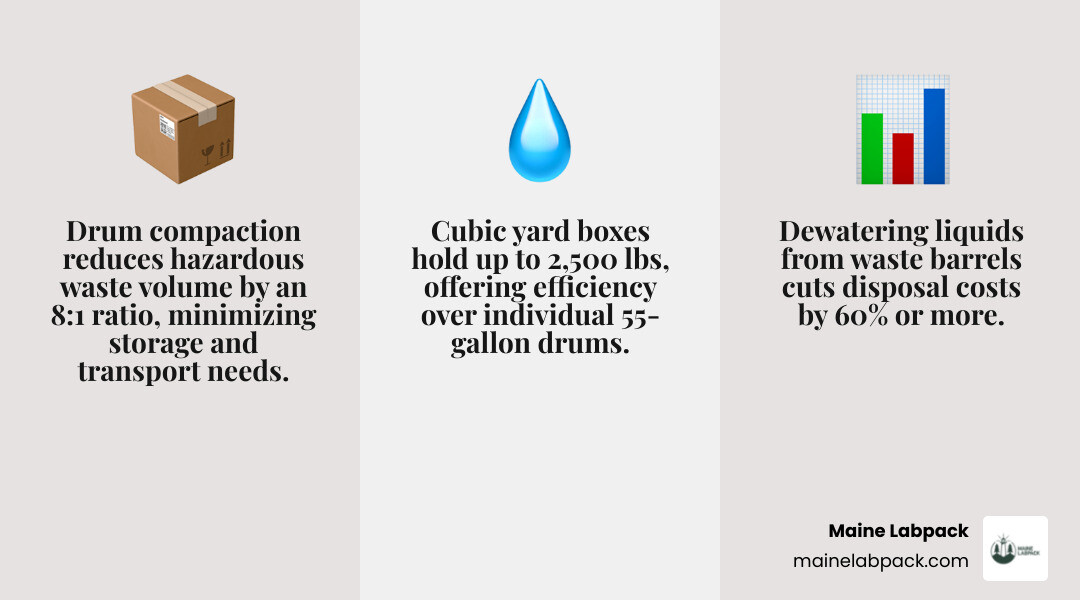
Facilities in New England can also work with a professional hazardous waste disposal provider in Maine to improve waste characterization and reduce unnecessary disposal volume.
Frequently Asked Questions About Hazardous Waste Barrels
How long can I store hazardous waste barrels on-site?
Large Quantity Generators can store hazardous waste for 90 days. Small Quantity Generators can store it for 180 days, or 270 days if waste must be transported more than 200 miles. In a CAA, the clock starts when waste first enters the container; for a satellite drum, it starts when the drum becomes full.
What is the difference between an overpack and a salvage drum?
An overpack protects intact containers during transport. A salvage drum is built to contain a leaking or damaged drum and must be marked “SALVAGE DRUM.”
How do I properly close a hazardous waste drum for transport?
Follow the manufacturer’s closure instructions, including any torque requirements for bungs and bolt rings. If the gasket is not seated correctly, the drum may not be compliant.
Keep Hazardous Waste Barrels Compliant From Pickup To Disposal
Managing hazardous waste barrels takes the right container, label, storage setup, inspection routine, and disposal partner. Maine Labpack helps businesses across Maine, New Hampshire, Massachusetts, Vermont, and Rhode Island handle chemical and hazardous materials disposal safely and sustainably.
Whether you are in Portland, Bangor, Lewiston, Boston, or Burlington, our team can help you move beyond the barrel and into a more efficient waste management strategy.
Request a quote for hazardous waste disposal today and let us handle the complexities of compliance for you.