

What is chemical inventory management is one of the most important questions any facility handling hazardous materials can ask. The answer shapes daily safety, regulatory compliance, purchasing, storage, and disposal.
Chemical inventory management is the systematic process of tracking, organizing, and controlling every chemical within a facility — from arrival through safe disposal. It records what chemicals are on-site, how much is present, where each item is stored, its hazard classification, and its Safety Data Sheet (SDS).
At a glance, it covers:
- Chemical name, CAS number, and physical form
- Quantity, units, and storage location
- Hazard class, SDS, and GHS classification
- Receipt date, expiration date, and disposal status
It sounds straightforward, but many labs and industrial facilities still rely on overstuffed cabinets, unlabeled containers, and outdated spreadsheets. That creates safety risks, regulatory exposure, and unnecessary disposal costs.
Whether you manage a university lab, manufacturing plant, or healthcare facility, chemical inventory management is the foundation of a safer, more compliant operation.
What Is Chemical Inventory Management?
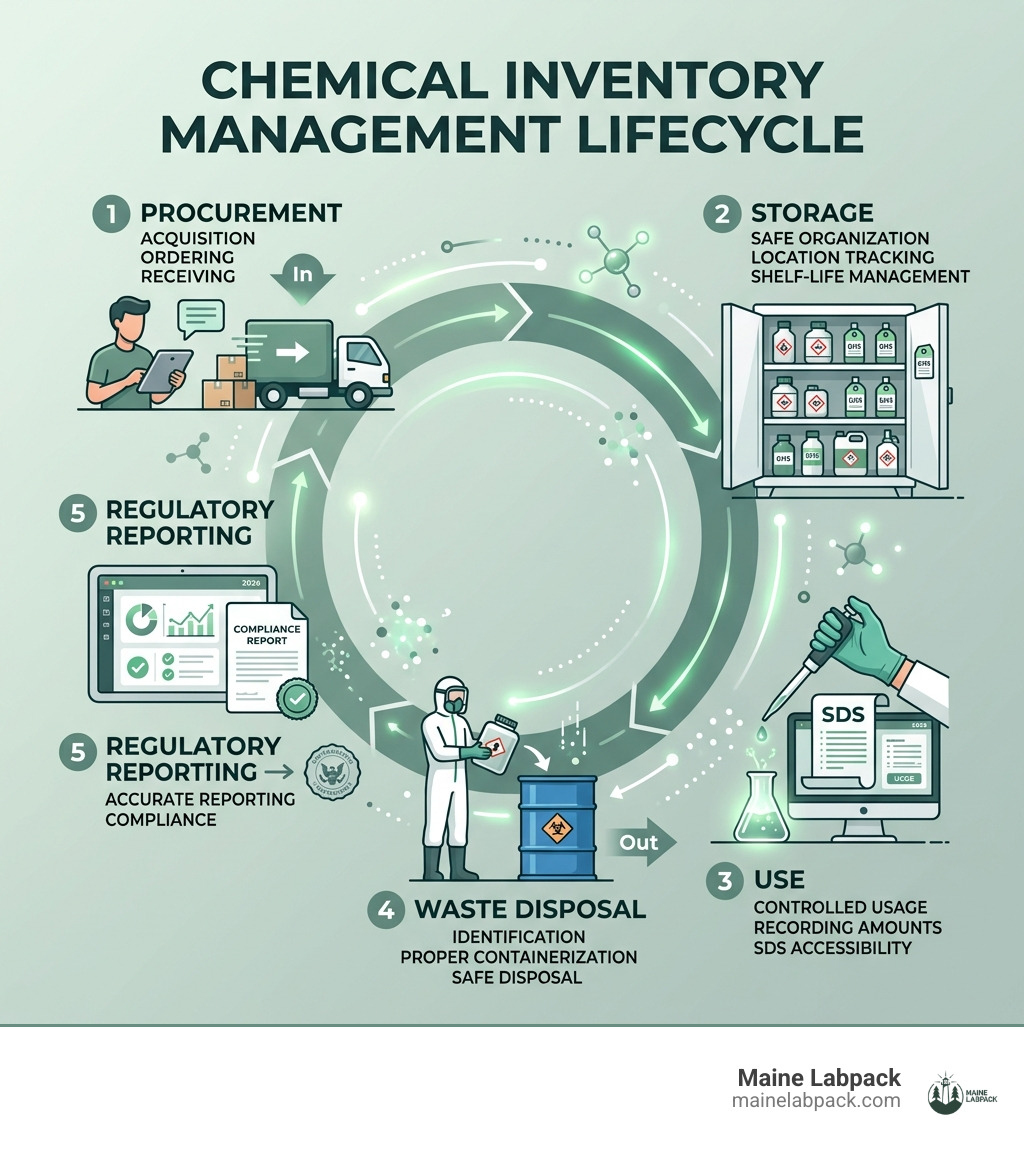
At its core, chemical inventory management is a living record of every hazardous material under your roof. It is not a one-time checklist. It is a continuous process that starts during procurement, continues through storage and use, and ends with hazardous waste disposal.
An effective system gives EHS managers, lab technicians, procurement teams, and emergency responders one shared source of truth. Without it, teams can accidentally over-order chemicals, store incompatible materials together, or lose track of aging containers.
Defining Chemical Inventory Management In The Lab
In a laboratory, inventory management means knowing more than whether a chemical is “in the lab.” Every bottle should have a specific home, such as Shelf 3, Cabinet B, Room 402.
Effective lab management also depends on writing an effective chemical hygiene plan that sets quantity limits and storage rules. Accurate inventory helps labs avoid exceeding fire code or building code limits for flammables, corrosives, oxidizers, and other hazard classes.
The Scope Of Chemical Inventory Management Across Industries
Chemical inventory management looks different by sector:
- Academic Laboratories: High student turnover and many small-quantity chemicals make “lost inventory” a common risk.
- Pharmaceutical and Biotech: Teams must track expiration dates and prevent contamination to protect research integrity.
- Chemical Manufacturing: Bulk storage and lot traceability help prevent production errors.
- Hospitals and Healthcare: Facilities must manage sterilizing agents, hazardous pharmaceuticals, and regulated waste streams.
- Government and Military Facilities: Certain “Chemicals of Interest” can trigger Department of Homeland Security (DHS) security thresholds.
Why Effective Inventory Management Is Critical For Safety And Compliance
Safety is a legal requirement. In the United States, the OSHA Hazard Communication Standard requires employers to maintain information about hazardous chemicals, including accessible Safety Data Sheets and a current chemical list.
A strong inventory program works like an air traffic control system for chemicals, helping teams prevent dangerous “collisions” between incompatible materials and ensuring workers can find SDS information quickly.
Supporting Regulatory Compliance And Reporting
Inventory data supports reporting for OSHA, EPA, DOT, GHS, REACH, HMMPs, and Tier II submissions. If your records are incomplete, those reports become guesswork.
Messy inventory records can also lead to hazardous waste determination errors. Accurate tracking makes it easier to classify waste correctly, document quantities, and avoid preventable compliance issues.
Enhancing Emergency Response And Workplace Safety
During a fire, spill, or evacuation, responders need to know what chemicals are present, where they are stored, and what hazards they pose. Compressed gases, water-reactive materials, oxidizers, and flammables all require different response decisions.
Modern systems often use barcodes or QR codes on containers, cabinets, and doors so staff can identify contents quickly. Clear labels and current records also reduce unknown chemical identification issues before mystery bottles become costly hazards.
Core Components And Best Practices For Modern Systems
A modern chemical inventory system moves beyond the “clipboard and prayer” method. It combines tracking, monitoring, and data management so teams can use what they have before buying more.
| Feature | Manual Spreadsheets | Digital Inventory Software |
|---|---|---|
| Data Accuracy | High risk of human error | Built-in validation and audit trails |
| Access | Often limited to one user | Cloud-based, multi-user access |
| SDS Management | Manual filing or linking | Centralized SDS records |
| Reporting | Time-consuming | Faster, standardized reports |
| Alerts | Usually none | Expiration and stock-level reminders |
| Searchability | Difficult across tabs | Barcode, QR, or keyword search |
Advanced Features Of Digital Management Software
Digital systems can support:
- SDS Data Capture: Hazard details can be extracted from Safety Data Sheets and tied to each chemical record.
- Real-Time Barcoding: Staff can scan containers when they arrive, move, or are emptied.
- Automated Alerts: Teams can receive reminders for expiration dates, low stock, and storage thresholds.
- Hazardous Waste Labeling Integration: Disposal workflows can connect inventory data with hazardous waste labeling requirements.
The Role Of Inventory In Procurement And Waste Disposal
Inventory management connects purchasing with disposal. Poor procurement often leads to over-ordering, especially when teams cannot see what is already on-site. Bulk buying may look cheaper upfront, but expired or unused chemicals can cost far more to dispose of later.
By tracking shelf life and quantities, facilities can use chemicals while they are still viable and avoid unnecessary surplus. When disposal is needed, accurate records make chemical lab packing services faster, safer, and more efficient.
Optimizing The Chemical Life Cycle
A cradle-to-grave approach reduces waste, lowers liability, and supports sustainability. It starts with smarter purchasing and continues through storage, use, and disposal.
Working with a qualified team also matters. When choosing a lab pack service company, look for a provider that understands segregation, consolidation, documentation, and field safety. Good inventory data helps that provider avoid unknown chemical surcharges and streamline pickup.
Frequently Asked Questions About Chemical Inventory Management
How often should a chemical inventory be updated?
OSHA does not set one universal update deadline, but inventory should remain current. Annual updates may work for stable facilities, while busy labs and manufacturing sites often need real-time updates through barcoding. If you are planning a laboratory move, complete a full physical reconciliation before transport.
What chemicals must be included in the inventory?
If it is hazardous and in your building, it belongs in the inventory. That includes liquids, solids, gases, vapors, generated by-products, cleaning supplies, maintenance chemicals, and vendor samples.
How does inventory management reduce disposal costs?
The simplest method is FIFO, or First-In, First-Out. Using older stock first prevents chemicals from expiring on the shelf. Accurate inventory also reduces unnecessary bulk purchasing and helps facilities avoid costly disposal of outdated, unstable, or unknown chemicals.
Make Chemical Inventory Safer, Simpler, And More Compliant
Chemical inventory management is not just an administrative task. It is a practical safety, compliance, and cost-control tool that helps facilities know what they have, where it is, and when it needs attention.
If your current system feels more like a “ticking time bomb” than a reliable control process, Maine Labpack can help. We provide on-site, sustainable hazardous waste disposal, inventory cleanouts, and lab pack support across Maine and New England, including Portland, Bangor, Lewiston, and surrounding communities.