

Last updated on June 3rd, 2026 at 02:52 pm
Cannabis industry waste & testing involves:
- Waste Generation: Identifying and categorizing waste from cultivation, manufacturing, retail, and laboratory operations.
- Regulatory Compliance: Adhering to state-specific regulations for disposal, including rendering cannabis materials unusable and unrecognizable.
- Product Testing: Conducting laboratory analysis to ensure product safety, quality, and potency by checking for contaminants like pesticides, heavy metals, and residual solvents.
- Environmental Impact: Understanding and mitigating the ecological footprint of cannabis production and its waste streams.
- Sustainable Practices: Implementing advanced solutions for waste reduction, recycling, and resource efficiency throughout the supply chain.
The rapid growth of the legal cannabis market is undeniable. Valued at $16.7 billion globally in 2022, with North America accounting for over 78.8% of revenue, this industry is quickly becoming a significant economic force. States like Illinois saw record recreational sales of $1.55 billion in 2022 alone. This boom, however, brings a crucial and often-overlooked challenge: managing cannabis-industry waste & testing.
As the industry expands, so does the volume and complexity of its byproducts. Cannabis waste is not just agricultural refuse; it’s considered “special regulated waste.” This means it must be handled, stored, transported, processed, and tracked in strict compliance with state regulations. For businesses, navigating this complex landscape isn’t just about following rules; it’s about safeguarding their license, protecting the environment, and ensuring public health. Companies like GAIACA aim to keep the cannabis industry green, but it requires careful planning and expert execution. The intricate balance between profitability and environmental stewardship hinges on robust waste management and rigorous product testing protocols.
Decoding Cannabis Waste: From Plant to Product
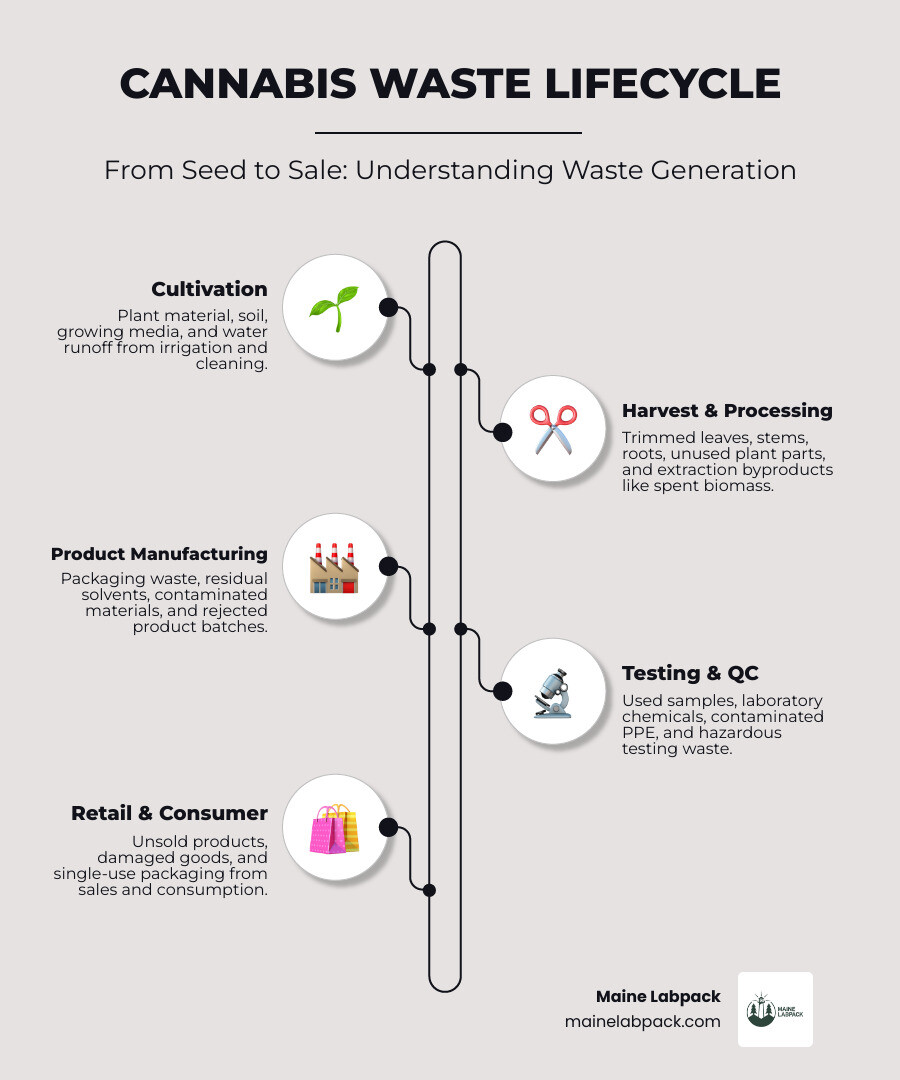
The cannabis industry, from seed to sale, generates a diverse array of waste streams. Understanding these different types is the first step toward effective management and compliance. Whether it’s cultivation, manufacturing, distribution, retail, or laboratory operations, each stage contributes to the overall waste footprint.
Cultivation Waste
Cultivation facilities, the heart of cannabis production, generate significant organic waste. This primarily includes cannabis plant material from routine pruning, trimming, harvesting, cloning, and propagation, encompassing flowers, leaves, stalks, and root balls. Wastewater from irrigation and fertigation, along with used grow media like soil, rockwool, or coco fiber, also contribute to this stream.
Manufacturing Waste
The manufacturing stage, where raw cannabis is transformed into oils, edibles, tinctures, and other products, produces more complex waste. This can include post-extraction biomass, often containing residual solvents, as well as disposable items like gloves, PPE, and filters that have come into contact with cannabis or chemicals. Discarded or wasted product that failed quality control, unused oils and extracts, and even defective or expired vape pens fall into this category. Used machine fluids from equipment cleanout are also a common byproduct.
Distribution and Retail Waste
While often perceived as generating less waste, distribution and retail sectors still contribute. This typically involves defective, returned, expired, or non-compliant cannabis goods. Packaging waste, including single-use plastic containers, mylar bags, and cardboard, is a significant concern at this stage. Retail displays and other operational disposables add to the volume.
Laboratory Waste
Cannabis testing laboratories are crucial for product safety and quality, but also generate specialized waste. This includes unused cannabis product samples after testing, disposable items such as petri dishes, pipette tips, and contaminated wipes, and biotechnology waste containing pathogens from microbial analyses. Crucially, labs also produce hazardous chemical waste from used process liquids such as solvents, acids, and other reactants, as well as defective vape pens with internal lithium-ion batteries.
For a deeper dive into the various types of waste streams, businesses can consult resources like “What Are the Different Types of Waste Streams?“
Primary types of waste generated by the cannabis industry:
- Plant Material: Leaves, stalks, roots, flowers, and trim from cultivation and processing.
- Wastewater: Runoff from irrigation, fertigation, and facility cleaning.
- Grow Media: Soil, rockwool, coco fiber, and other hydroponic substrates.
- Chemical Waste: Spent solvents, pesticides, fertilizers, pH adjusters, and cleaning agents.
- Laboratory Waste: Unused samples, reagents, contaminated glassware, and disposable labware.
- Packaging Waste: Single-use plastics, glass, cardboard, and other product packaging.
- Electronic Waste: Defective vape pens, batteries, and spent lighting.
- Expired/Contaminated Products: Cannabis goods that fail quality control or reach their expiry date.
Differentiating Waste: Hazardous vs. Non-Hazardous
Not all waste is created equal. A critical aspect of cannabis waste management is accurately determining whether a waste stream is hazardous or non-hazardous. This distinction dictates handling, storage, transportation, and disposal methods, all of which are governed by strict regulations, often rooted in the Resource Conservation and Recovery Act (RCRA) definitions. For a solid foundation on these distinctions, understanding the Basics of Hazardous Waste Determination is essential.
Non-Hazardous Cannabis Waste Examples: Non-hazardous waste generally poses a lower risk to human health and the environment. In the cannabis industry, this typically includes:
- Plant Matter: Most cannabis plant material (leaves, stalks, roots, flowers, trim) from pruning, harvesting, and propagation, as long as it’s not contaminated with hazardous substances.
- Wastewater: Wastewater from irrigation, fertigation, and filtration with cannabis residuals, provided it doesn’t contain regulated pollutants above permissible limits.
- Grow Medium: Used soil, rockwool, or coco fiber with cannabis plant residuals, usually considered non-hazardous if free from chemical contamination.
- Post-Extraction Biomass: Cannabis biomass after extraction, if it contains only permissible levels of residual contaminants.
- Disposable Items: Gloves, PPE, and filters with cannabis residuals, provided they are not contaminated with hazardous chemicals or biological agents.
- Discarded/Wasted Product: Products that failed quality control or are expired, if they don’t contain hazardous components (e.g., certain vape pens or infused products with hazardous ingredients).
Hazardous Cannabis Waste Examples: Hazardous waste, by contrast, can pose substantial present or potential hazards to human health or the environment. Its management is significantly more stringent. Common hazardous waste in the cannabis industry includes:
- Solvents: Discarded process liquids like ethanol, isopropyl alcohol, acetone, butane, propane, and other organic solvents used in extraction or cleaning.
- Pesticides and Fertilizers: Discarded or expired pesticides, fungicides, herbicides, and certain fertilizers or pH adjusters that are classified as hazardous due to their chemical properties.
- Batteries and Electronics: Defective, returned, expired, or non-compliant disposable cannabis vape pens with internal lithium-ion batteries. Spent lighting (HID, HPS, MH, fluorescent bulbs) and their ballasts also often contain hazardous materials like mercury or lead.
- Laboratory Chemicals: Used process liquids, reagents, and samples from testing labs that are corrosive, flammable, toxic, or reactive.
- Contaminated Materials: Any material (PPE, rags, equipment) contaminated with hazardous solvents, pesticides, or other chemicals.
The distinction is crucial for compliance. Improper disposal of hazardous waste can lead to hefty fines, legal repercussions, and environmental damage.
The Environmental Impact of Cannabis Waste
The burgeoning cannabis industry, despite its “green” image, has a significant environmental footprint, particularly in terms of waste. As the industry strives for sustainability, understanding these impacts is paramount.
Water Pollution and Soil Degradation: Cultivation, especially large-scale operations, can lead to nutrient runoff from fertilizers and pesticides, polluting local waterways. If improperly managed, this wastewater can stress municipal wastewater treatment facilities. Additionally, conventional agricultural practices can contribute to soil degradation through erosion, nutrient depletion, and altered microbial composition, impacting long-term soil health.
Landfill Burden: A substantial portion of cannabis waste, including plant matter and single-use packaging, often ends up in landfills. The 50/50 waste rendering rule, common in many regulations, can inadvertently hinder composting efforts by requiring plant waste to be mixed with non-marijuana waste, often doubling the volume sent to landfills. This increases greenhouse gas emissions and consumes valuable landfill space.
Energy Consumption: While not directly waste, the energy required for waste processing, transportation, and particularly for indoor cultivation (lighting, HVAC systems) contributes indirectly to environmental impact through associated emissions.
The Single-Use Packaging Problem: The cannabis industry is heavily reliant on child-resistant, often single-use, packaging. This leads to a massive volume of plastic, glass, and other materials that are difficult to recycle due to contamination, regulatory mandates, or lack of infrastructure. This exacerbates landfill problems and contributes to pollution.
Addressing these impacts requires a concerted effort to move beyond mere compliance towards genuinely sustainable practices across the entire supply chain.
Navigating the Regulatory Maze: Compliance and Disposal Mandates
The cannabis industry operates within a complex web of regulations, and waste management is no exception. Cannabis waste is not ordinary trash; it’s “special regulated waste” with specific requirements for storage, handling, transport, processing, and tracking. Failing to adhere to these mandates can result in severe penalties, including fines and license revocation.
One of the most significant regulatory frameworks impacting cannabis waste is the ‘track-and-trace’ requirement. This system, often implemented through state-mandated software, ensures that all cannabis products, from cultivation to sale, are accounted for. This extends to waste, meaning every pound of cannabis waste must be documented and tracked to its final disposal destination. Businesses must maintain detailed manifests and records of all waste activities, which are subject to audits. This meticulous documentation ensures transparency and prevents diversion of cannabis products into illicit markets.
Developing a comprehensive waste management plan is not just good practice; it’s often a regulatory necessity. Such a plan outlines how a business will comply with all local, state, and federal laws pertaining to waste, covering everything from segregation and storage to disposal and record-keeping. Regular hazardous waste audits are crucial for ensuring ongoing compliance and identifying potential issues before they become costly problems. For more information on maintaining compliance, consider “The Importance of Scheduling Regular Hazardous Waste Audits.”
The “Unusable and Unrecognizable” Standard
A cornerstone of cannabis waste regulations across many states is the requirement that all cannabis waste be rendered “unusable and unrecognizable” before disposal. This core compliance principle is designed to prevent discarded cannabis from being diverted or consumed, and to ensure it cannot be identified as cannabis.
The most common method for achieving this is grinding and mixing, often referred to as the “50/50 rule.” This involves grinding cannabis waste and incorporating it with at least 50% non-marijuana waste by volume. Acceptable non-marijuana waste materials can include soil, food waste, paper waste, or other inert materials. The goal is to create a homogenous mixture that is no longer identifiable as cannabis.
While grinding and mixing are prevalent, some states also allow or encourage alternative rendering methods for non-hazardous plant waste, such as:
- Composting: Converting organic cannabis waste into nutrient-rich soil amendment. However, this often depends on specific state regulations regarding the 50/50 rule and potential contaminants.
- Anaerobic Digestion: A biological process that breaks down organic matter in the absence of oxygen, producing biogas and digestate.
- Pyrolyzing into Biochar or Biomass Gasification: Thermal processes that convert biomass into valuable products like biochar or energy, further reducing waste volume.
These methods not only render the waste unusable but also align with more sustainable waste management practices. For detailed guidance on rendering techniques, businesses can refer to resources like Cannabis Waste Management: Rendering.
State-Specific Disposal Requirements at a Glance
Navigating cannabis waste disposal regulations requires a keen understanding of state-specific rules, as they can vary significantly. For businesses operating in New England, focusing on the mandates in Maine and Massachusetts is paramount. Below is a brief comparison of requirements in key states.
| State | Rendering Methods & Requirements | Witness/Holding Rules |
|---|---|---|
| Maine | Must be rendered “unusable and unrecognizable.” The 50/50 grinding and mixing rule is standard. Alternative methods like composting may be allowed under specific conditions. | Video surveillance of waste disposal areas must be kept for at least 72 hours. |
| Massachusetts | Must be rendered “unusable and unrecognizable.” The 50/50 mixing rule is required. All waste must be weighed and tracked. | At least two employees must witness and document the waste destruction process. |
| Colorado | Must be rendered “unusable and unrecognizable.” The 50/50 mixing rule is a common method. All waste must be tracked via the state’s METRC system. | Focus is on comprehensive METRC tracking rather than specific witness rules. |
| California | Must be rendered “unusable and unrecognizable” before leaving the facility. The 50/50 mixing rule is standard practice. | All waste activities must be carefully logged in the California Cannabis Track-and-Trace (CCTT) system. |
For a more detailed breakdown of the rules in Maine, our comprehensive Guide to Cannabis Waste Management in Maine is an essential resource. If you are looking for cannabis waste management services, contact us at Maine Labpack today!