
Understanding the Complexities of Regulated Waste Management
Regulated waste management is the systematic handling, storage, transportation, and disposal of materials that pose potential risks to human health or the environment under federal, provincial, and local regulations. These materials include hazardous chemicals, medical waste, radioactive substances, universal waste like batteries and fluorescent lamps, and asbestos debris.
Key aspects of regulated waste management:
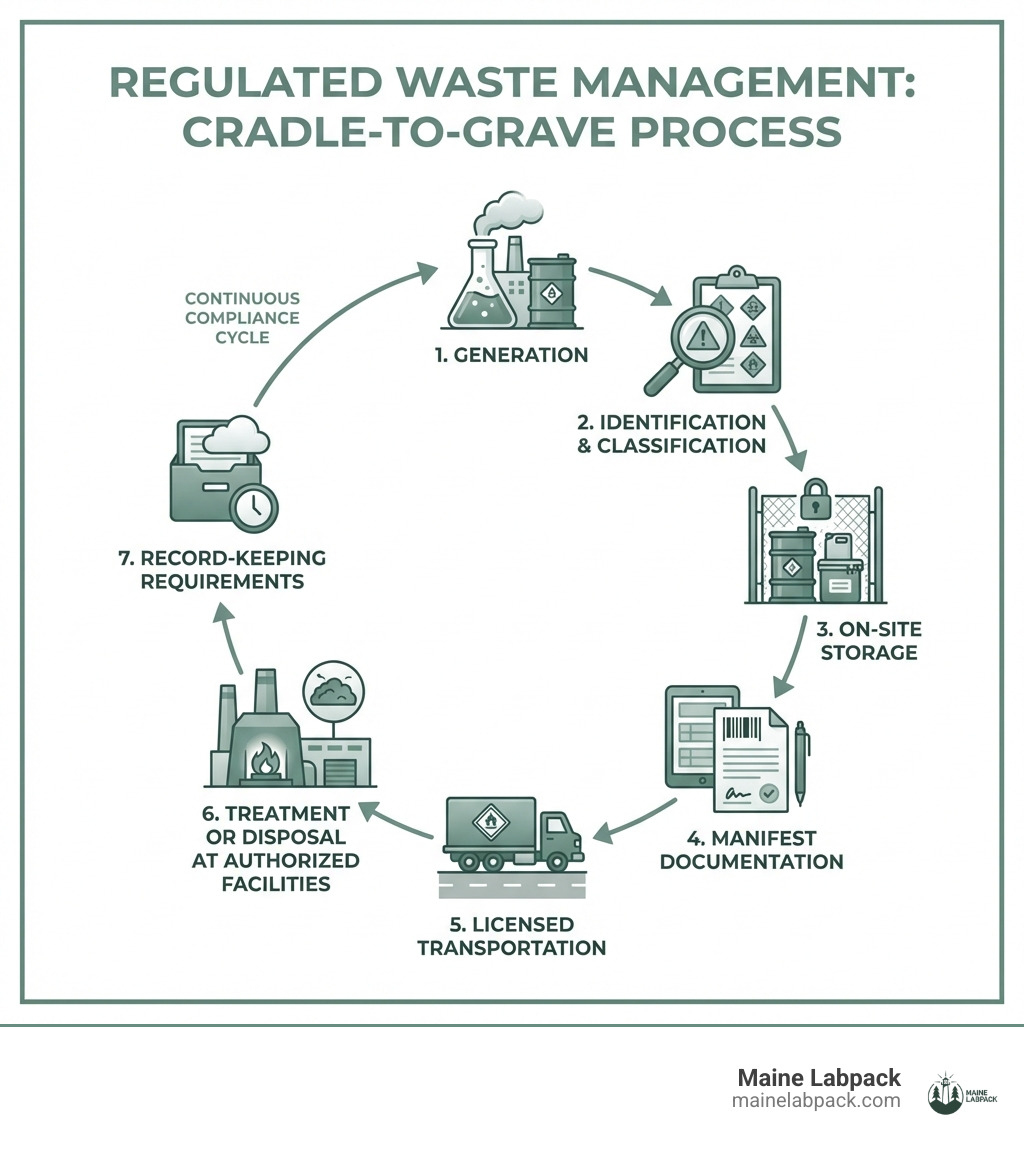
- Cradle-to-grave tracking – From generation through final disposal, every step is documented
- Generator classifications – Facilities are categorized by monthly waste volumes (VSQG, SQG, LQG)
- Compliance requirements – Federal regulations (EPA, RCRA) and provincial rules (Ontario Reg. 347) govern handling
- Specialized disposal – Different waste types require specific treatment methods like incineration, autoclaving, or secure landfilling
- Documentation systems – Manifests and registries track waste movement across jurisdictions
The stakes are high. Improper disposal leads to environmental contamination, serious health risks, and substantial legal penalties. A 2022 industry report shows that facilities managing regulated waste properly treated 1.3 billion pounds of medical waste, diverted 101 million pounds of plastic from landfills, and incinerated 55 million pounds of pharmaceutical waste before disposal.
Whether you operate a hospital generating sharps waste, a manufacturing facility producing spent solvents, or a laboratory handling expired chemicals, understanding your responsibilities under the Resource Conservation and Recovery Act (RCRA) framework in the United States or the Canadian Environmental Protection Act in Canada is essential.
The complexity increases when you consider that waste management is primarily regulated at the provincial level in Canada, while federal oversight controls substances and interprovincial transport. In the United States, the EPA sets baseline standards, but states often implement more stringent requirements.
For facilities with accumulated hazardous chemicals, the path forward requires expert guidance through this regulatory maze while maintaining safety and minimizing operational disruption.
Defining Regulated Waste Across Jurisdictions
Navigating regulated waste management can feel like trying to read a map where the borders keep moving. While the goal is always safety, the definitions and rules shift depending on whether you are standing in Portland, Maine, or across the border in Ontario.
In the United States, the foundational framework is the RCRA framework (Resource Conservation and Recovery Act). The Environmental Protection Agency (EPA) defines hazardous waste as material with properties that make it dangerous or capable of causing harmful effects on human health or the environment. This includes liquids, solids, and even contained gases.
Across the border, the Canadian Environmental Protection Act serves a similar federal purpose, but the day-to-day heavy lifting of regulation happens at the provincial level. For example, Ontario Regulation 347 provides a highly prescriptive legal framework, defining everything from “acute hazardous waste chemical” to “pathological waste.” These general waste management standards ensure that regardless of the province or state, the “polluter pays” principle remains in effect.
The Scope of Regulated Waste Management in North America
Regulated waste isn’t just a concern for massive chemical plants. It touches the Industrial, Commercial, and Institutional (IC&I) sectors, as well as residential streams. While local municipalities often handle your household trash and recycling, the IC&I sector faces much stricter scrutiny.
Federal oversight typically focuses on the “big picture”—interstate or interprovincial transport and the management of high-risk substances. Provincial and state mandates, however, get into the nitty-gritty of how a business in Manchester, New Hampshire, or Springfield, Massachusetts, must store its drums. For businesses in New England, professional hazardous waste disposal services are essential to bridge the gap between local bylaws and federal requirements.
International Standards and Obligations
Waste doesn’t always stay where it’s made. Because of this, international standards play a massive role in how we handle the most dangerous materials. Canada, for instance, is a signatory to the Joint Convention on the Safety of Spent Fuel Management and on the Safety of Radioactive Waste Management.
These international agreements, supported by the IAEA (International Atomic Energy Agency), influence the framework for radioactive waste management and standards set by the CSA Group. They ensure that “transboundary movement”—shipping waste across international lines—doesn’t result in environmental “dumping” in less regulated regions.
Primary Categories of Regulated Materials
To manage waste effectively, you first have to know what you’re looking at. You wouldn’t put a used needle in the same bin as a dead battery (at least, we hope not!), and the law agrees.

Waste Category Comparison Table
| Waste Type | Key Characteristics | Common Disposal Method |
|---|---|---|
| Medical Waste | Biohazardous, infectious, sharps | Autoclaving or Incineration |
| Hazardous Waste | Corrosive, ignitable, reactive, toxic | Chemical treatment or Incineration |
| Radioactive Waste | Contains nuclear substances | Long-term containment/geologic repository |
| Universal Waste | Common hazardous items (batteries, lamps) | Specialized recycling |
| Asbestos | Fibrous, friable, carcinogenic | Secure landfilling (double-bagged) |
Medical and Pathological Waste Streams
In the healthcare world, waste management is a matter of life and death—literally. There are 6 types of regulated medical waste that facilities must track. This includes everything from blood-soaked gauze to pathological waste, which involves human tissues and body parts.
Proper medical waste solutions are vital for clinics in Boston or Worcester. Statistics show that roughly 1.3 billion pounds of medical waste are treated annually. Pharmaceutical waste is another category that requires high-temperature incineration to prevent active compounds from entering the local water supply.
Universal and Radioactive Waste Management
Not all regulated waste is “scary” industrial chemicals. Some of it is sitting in your office right now. Universal waste recycling covers common items like batteries, pesticides, and aerosol cans. Mercury waste disposal is particularly critical for fluorescent lamps, which contain small amounts of mercury vapor that can be released if a bulb breaks in a standard dumpster.
On the more complex end of the spectrum is radioactive waste. Under CNSC frameworks, this is defined as any material containing a radioactive nuclear substance for which no further use is foreseen. Effective radioactive waste stream management requires a “cradle-to-grave” approach that may span decades or even centuries.
Generator Responsibilities and Compliance Standards
If you create the waste, you own the waste. This is the heart of the “cradle-to-grave” responsibility model. Even after the waste leaves your facility in a truck, you are legally responsible for its ultimate fate.
The EPA categorizes generators based on how much waste they produce each month. You can find the full details in the EPA generator regulatory summary, but the basics are:
- VSQG (Very Small Quantity Generator): Generates less than 100 kg of hazardous waste per month.
- SQG (Small Quantity Generator): Generates between 100 kg and 1,000 kg per month.
- LQG (Large Quantity Generator): Generates more than 1,000 kg of hazardous waste or more than 1 kg of acute hazardous waste per month.
In jurisdictions like Ontario, generators must use the HWP Registry. If the paperwork feels overwhelming, many facilities use Authorized Generator Delegates (AGDs)—service providers who can submit information to the registry on the generator’s behalf. Regardless of who handles the paperwork, the anatomy of a hazardous waste label remains a critical compliance point; if it isn’t labeled correctly, it won’t leave the site.
Requirements for Hazardous Waste Generators
Generators must be vigilant about “acute” hazardous waste. While you might be allowed to store 100 kg of standard hazardous waste as a VSQG, producing just 1 kg of acute hazardous waste (like certain pesticides or cyanides) can immediately bump you into a higher, more regulated category.
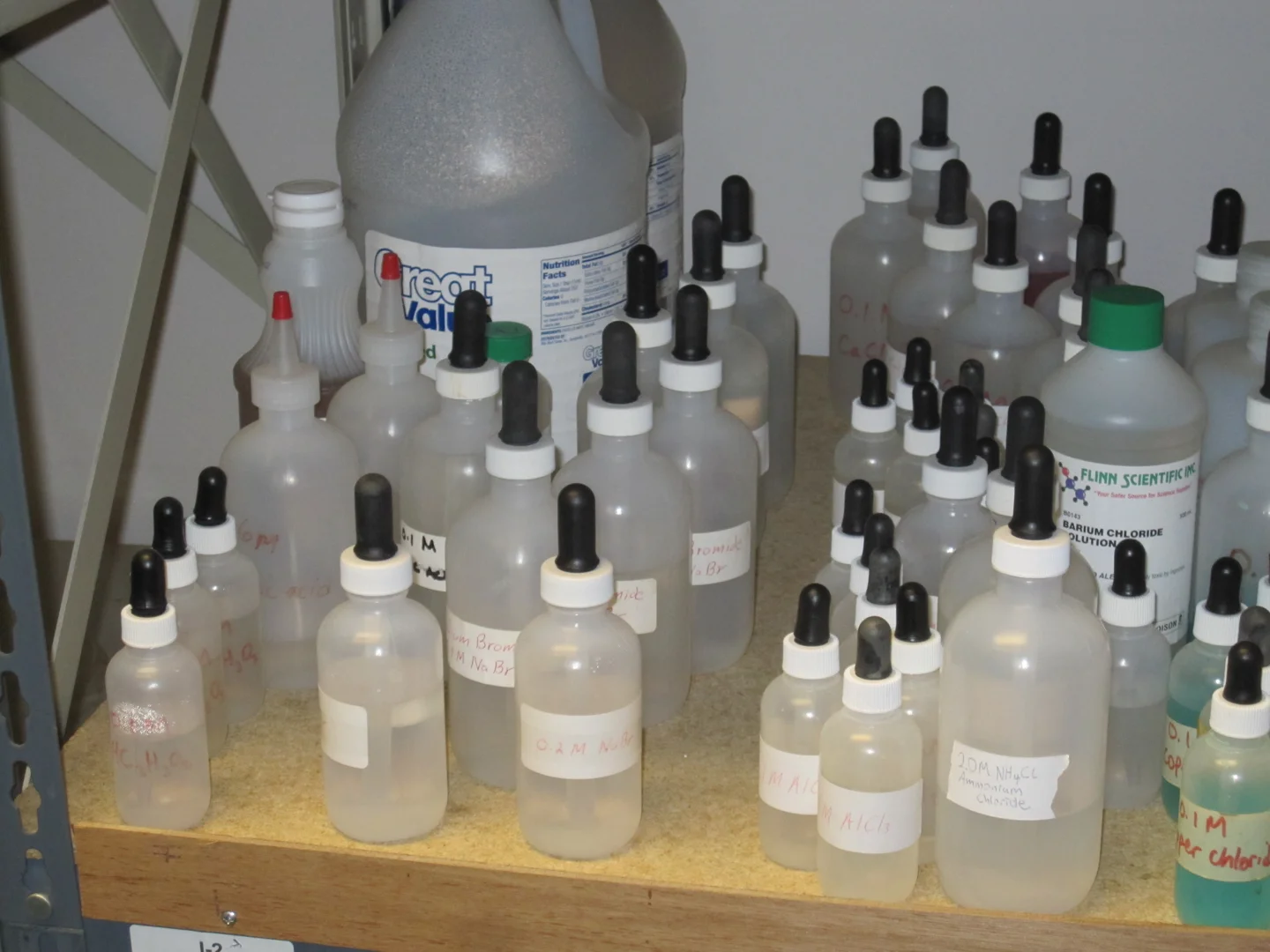
For labs with hundreds of small bottles of various chemicals, chemical lab pack protocols are the standard. This involves inventorying, categorizing, and safely packaging small containers into larger, DOT-approved drums. This is especially relevant for pharmaceutical waste management in research facilities across New England.
Handling and Storage Procedures
Storage isn’t just about putting a lid on a jar. Proper regulated waste management requires:
- Puncture-resistant containers: Essential for sharps disposal best practices.
- Secondary containment: A system that can hold 110% of the volume of the largest container, just in case of a leak.
- Ventilation and security: Waste must be stored in secure, well-ventilated areas to prevent chemical reactions or unauthorized access.
- Drum management: Drum waste storage requires clear aisles for inspections and proper stacking (usually no more than two high for safety).
Best Practices for Regulated Waste Management
The best way to stay out of trouble with the EPA or state environmental departments is to build a culture of compliance. This starts with identification—knowing exactly what is in every container.
When it comes to healthcare waste disposal, segregation is the golden rule. Never mix hazardous waste with regular trash. Not only does this increase your costs (since the whole bag is now “hazardous”), but it also poses safety risks for waste workers.
Personnel training is another pillar of best practice. Everyone from the janitorial staff to the head of the lab should know the spill response plan. For office managers, something as simple as knowing the proper fluorescent light bulb disposal procedure can prevent a costly environmental cleanup.
Handling, Transportation, and Disposal Procedures
Once waste is ready to leave your site, the “transportation” phase begins. This is heavily governed by the Transportation of Dangerous Goods Act and US DOT regulations.
Every shipment of “subject waste” must be accompanied by a manifest. This document acts as a passport for the waste, signed by the generator, the carrier, and finally the receiver. For large-scale cleanups, bulk waste logistics might involve vacuum trucks or roll-off containers, while smaller amounts move via specialized box trucks.
The final destination for waste varies:
- Incineration: High-temperature destruction (often 99.9999% efficiency) for organic chemicals and pharmaceuticals.
- Autoclaving: Using steam and pressure to sterilize medical waste.
- Secure landfilling: For stable wastes like asbestos or treated sludges.
- Specialized repositories: Specifically for radioactive waste disposal, where materials are isolated from the biosphere for the long term.
Frequently Asked Questions About Regulated Waste
What are the consequences of improperly regulated waste disposal?
The consequences are multi-layered. First, there are the environmental impacts: groundwater contamination and soil degradation. Second, there are public health risks, such as needle sticks or chemical exposure. Finally, the legal and financial hits can be devastating. Fines can reach tens of thousands of dollars per day per violation, not to mention the massive cost of remediation and the permanent damage to a company’s reputation.
Who is responsible for managing regulated waste?
Responsibility starts with the original generator. However, the chain of custody includes transfer stations (which become “subsequent generators” when they move waste from their facility), authorized delegates who handle the registry, licensed transporters, and the final permitted receivers. If the chain breaks at any point, the generator is often the first person the regulators call.
How does radioactive waste management differ from other types?
Radioactive waste is managed under a unique set of rules, primarily the Nuclear Safety and Control Act. Unlike most hazardous waste, which can be treated or destroyed, radioactive waste simply has to “decay” over time. This requires “Adaptive Phased Management”—a long-term strategy involving site selection for deep geologic repositories and monitoring that lasts for generations.
Take Control Of Regulated Waste Management
Mastering regulated waste management is a journey toward sustainability and safety. The industry has made incredible strides: diverting 101 million pounds of plastic from landfills and recycling 906 million pounds of paper are proof that “waste” can often be a resource if handled correctly.
For businesses in New England—from the hospitals in Burlington, Vermont, to the laboratories in Providence, Rhode Island—staying compliant doesn’t have to be a solo effort. Whether you are dealing with cannabis waste management or complex chemical lab packs, Maine Labpack provides the “one-stop shop” expertise needed to handle waste safely, on time, and in compliance with the law.
By prioritizing proper identification, storage, and professional disposal, you protect your employees, your community, and the environment for years to come.