
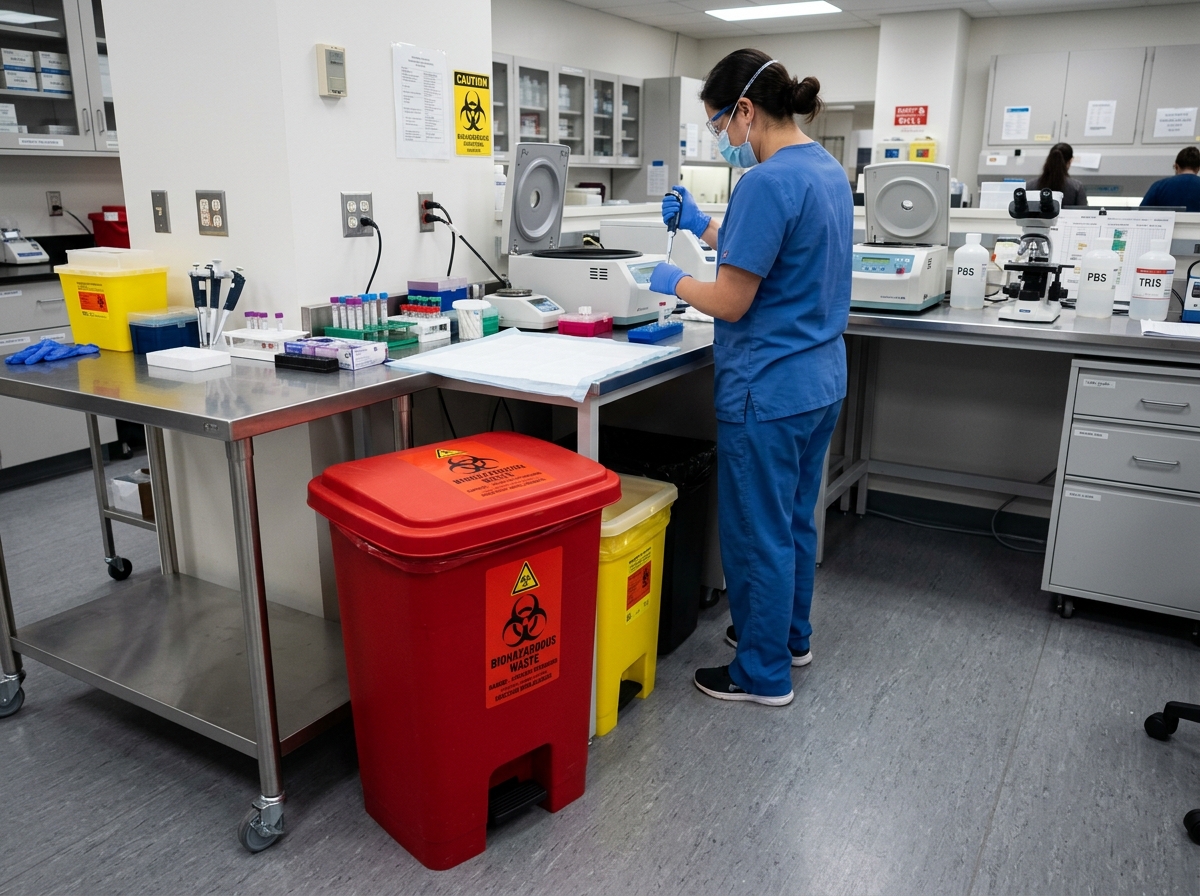
Biohazardous waste is material that contains, or has been contaminated by, biological agents capable of causing infection or disease in people, animals, or the environment.
Common examples include:
- Human blood and regulated body fluids
- Sharps such as needles, scalpels, lancets, and broken contaminated glass
- Pathological waste such as tissues, organs, and surgical specimens
- Microbiological waste such as cultures, live vaccines, and culture dishes
- Animal carcasses or bedding exposed to infectious agents
- PPE and supplies saturated with blood or regulated fluids
Biohazardous waste is also called regulated medical waste, biomedical waste, infectious waste, or clinical waste. The core issue is the same: it must be handled separately because it can spread infection if it is stored, transported, or disposed of incorrectly.
The World Health Organization estimates that about 15% of healthcare waste is hazardous, while the other 85% is ordinary waste. That hazardous portion is what requires strict classification, labeling, storage, treatment, and disposal.
Every generator — from hospitals and research labs to dental offices, veterinary clinics, and mortuaries — is responsible for managing biohazardous waste safely from the point of generation through final disposal. This guide explains the essentials and shows when to bring in a professional healthcare waste disposal partner.
Biohazardous Waste Categories and Common Examples
Biohazardous waste is not one generic trash stream. It includes several material types, each with its own handling requirements based on physical form and infection risk. These materials may contain bacteria, viruses, fungi, prions, or other biological agents that can cause harm.
| Waste Category | Description | Common Examples |
|---|---|---|
| Infectious Waste | Materials suspected to contain pathogens in sufficient concentration to cause disease. | Swabs, bandages, blood-saturated PPE, and isolation waste. |
| Pathological Waste | Human or animal tissues, organs, or body parts. | Biopsy materials, anatomical specimens, and surgical remains. |
| Microbiological Waste | Concentrated stocks of infectious agents and related lab materials. | Culture dishes, specimens, live or attenuated vaccines, and petri dishes. |
Many research facilities also handle recombinant DNA (rDNA). While rDNA is not always infectious in the traditional sense, it is regulated to prevent environmental release. Reviewing trusted biohazardous waste categories can help facilities build a compliant disposal program.
Types of Biohazardous Waste to Identify On-Site
Each waste stream needs the right container to prevent leaks, exposure, or injury.
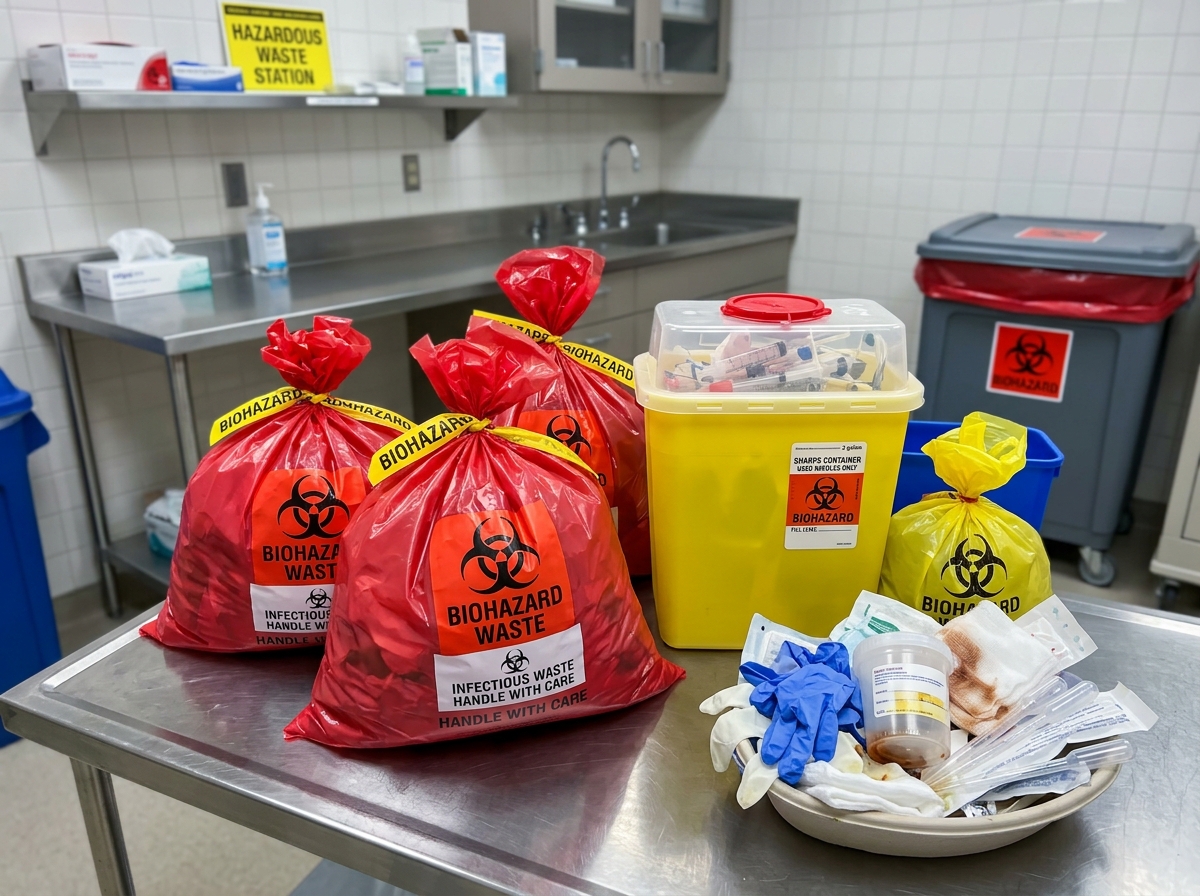
- Sharps: Needles, syringes with needles attached, scalpel blades, lancets, and contaminated broken laboratory glass or capillary tubes.
- Liquid Waste: Bulk blood, blood products, and regulated body fluids, including saliva generated during dental procedures.
- Solid Non-Sharps Waste: Red bag waste such as gloves, gowns, towels, bench paper, pipette tips, and culture plates that have been contaminated.
- Animal Waste: Carcasses, body parts, or bedding from animals exposed to zoonotic diseases or human pathogens during research.
Biohazardous Waste Management for Specialized Facilities
Biohazardous waste appears across many New England industries, including:
- Diagnostic Laboratories: Cultures, specimens, and high-volume microbiological waste.
- Veterinary Clinics: Animal waste and materials that may carry zoonotic disease risk.
- Dental Offices: Blood-contaminated gauze, anesthetic needles, orthodontic wires, and mercury-containing amalgam waste that requires proper capture.
- Research Universities: rDNA, cell cultures, and contaminated lab consumables.
- Mortuaries and Funeral Homes: Pathological waste and blood generated during embalming.
Health Risks and Compliance Standards
Strict biohazardous waste management protects healthcare staff, janitorial teams, disposal workers, patients, and the public. A single needlestick can transmit bloodborne pathogens such as Hepatitis B, Hepatitis C, or HIV. Poor disposal can also spread zoonotic disease or contaminate local soil and water.
Key compliance layers include:
- OSHA 29 CFR 1910.1030: The Bloodborne Pathogens Standard requires an Exposure Control Plan, PPE, training, and proper labeling.
- EPA Title 40: The EPA still regulates areas such as incinerator emissions and multihazardous waste that is both biohazardous and chemically hazardous.
- DOT UN 3291: The Department of Transportation governs medical waste transportation, including packaging, marking, and container durability.
For broader background, see this biomedical waste overview.
Safe Handling, Storage, and Labeling Best Practices
Safety starts at the point of generation. Biohazardous waste should never be mixed with regular trash, chemical waste, or radioactive waste.
Common color-coding includes:
- Red Bags or Containers: Regulated medical waste, blood-soaked items, and pathological waste.
- Yellow Containers: Chemotherapy or trace cytotoxic waste.
- Orange or Yellow Containers: Microbiology lab waste in some state-specific systems.
Storage limits vary by state and waste type. In temperate New England settings, many facilities use 48 hours in summer and 72 hours in winter as a practical baseline unless refrigeration or local rules allow longer holding times. Always confirm current Maine, New Hampshire, Massachusetts, Vermont, or Rhode Island requirements before setting a facility policy.
Required Biohazardous Waste Containers
Containers must be:
- Rigid and leak-proof
- Puncture-resistant for sharps
- Made with red bags that meet ASTM tear and impact standards where required
- Equipped with lids that stay closed when not in use
Never overfill biohazard bags or sharps containers. Close and secure containers at the marked fill line or when they are about 75% full to reduce bursting, leaks, and sharps injuries.
Proper Labeling for Biohazardous Waste
Every container or bag prepared for off-site disposal should include:
- The universal biohazard symbol
- Generator name and address
- Date sealed
- Waste classification, such as regulated medical waste, pathological waste, or sharps
Treatment and Final Disposal Methods
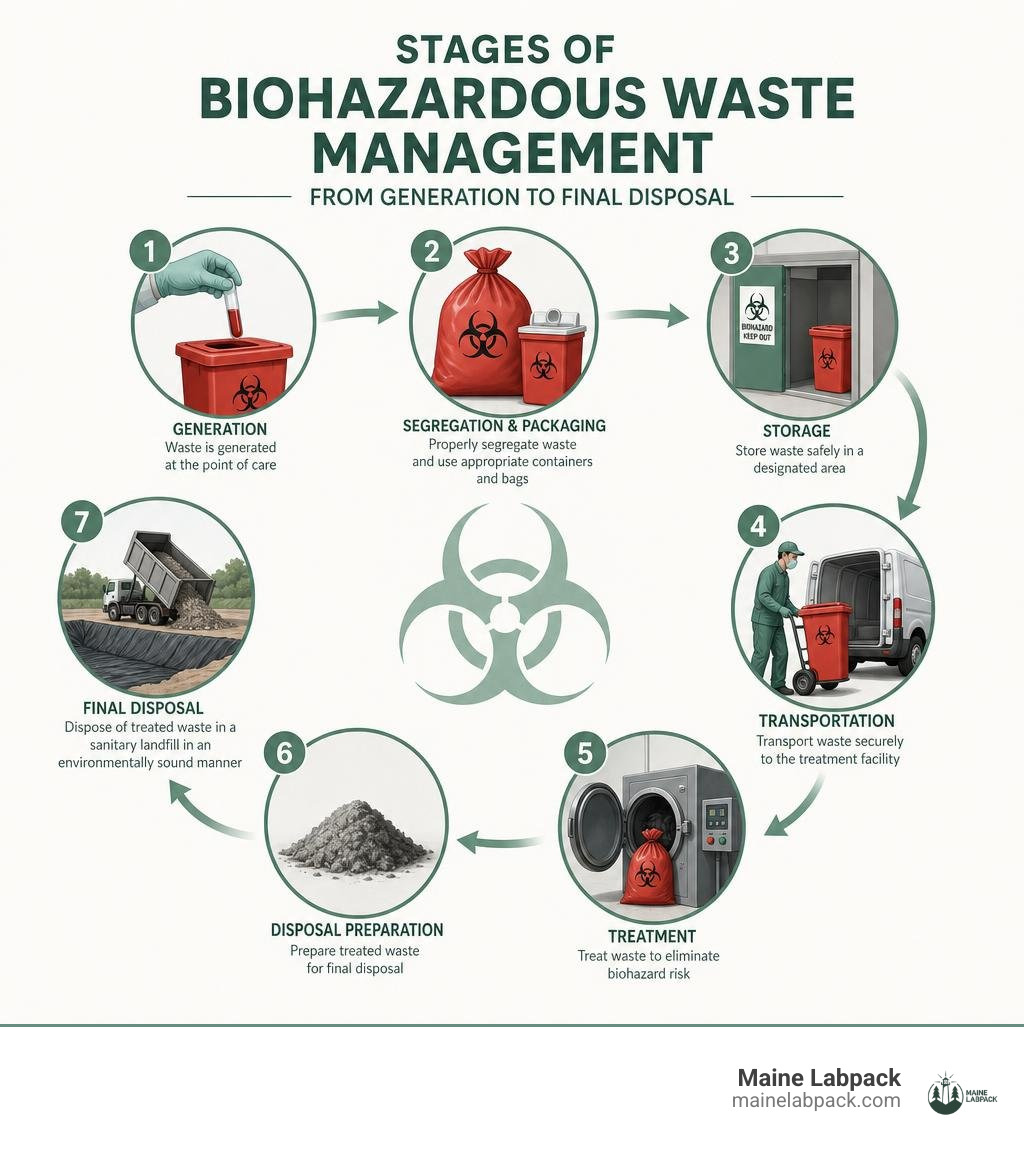
Before biohazardous waste can be landfilled or otherwise disposed of, it must be rendered non-infectious. Common treatment methods include:
- Autoclaving: High-pressure steam at 121°C to 134°C sterilizes red bag waste and many sharps containers.
- Incineration: High-temperature destruction, often used for pathological waste and trace chemotherapy waste.
- Chemical Disinfection: Liquid waste may be treated with an approved disinfectant, then disposed of through a sanitary sewer only when local wastewater rules allow it.
- Alkaline Hydrolysis: Heat, pressure, and potassium hydroxide break down tissues as an alternative to incineration for some pathological waste.
Frequently Asked Questions
How long can biohazardous waste be stored on-site?
Storage limits depend on the state, season, refrigeration, and waste type. Many New England facilities use 48 hours in summer and 72 hours in winter as a baseline, but anatomical or pathological waste may need refrigeration or freezing. Check state-specific rules before setting internal procedures.
What is the difference between medical waste and biohazardous waste?
Medical waste is a broad term for waste generated in a medical setting, including ordinary office paper and packaging. Biohazardous waste is the infectious-risk subset, such as blood-contaminated materials, cultures, sharps, or pathological waste.
When should a sharps container be replaced?
Close and replace a sharps container when it reaches the printed fill line or is about 2/3 to 3/4 full. Overfilling increases the risk of needlestick injuries.
Keep Biohazardous Waste Compliance Simple
Managing biohazardous waste is a serious responsibility, but the right process makes it manageable. Clear segregation, proper containers, accurate labeling, and compliant disposal all help protect staff, patients, and the public.
Maine Labpack supports facilities across Maine, New Hampshire, Massachusetts, Vermont, and Rhode Island with professional hazardous waste management and on-site service. Whether you run a dental office in Bangor, a research lab in Boston, or a veterinary clinic in Concord, the team can help streamline compliant disposal.